
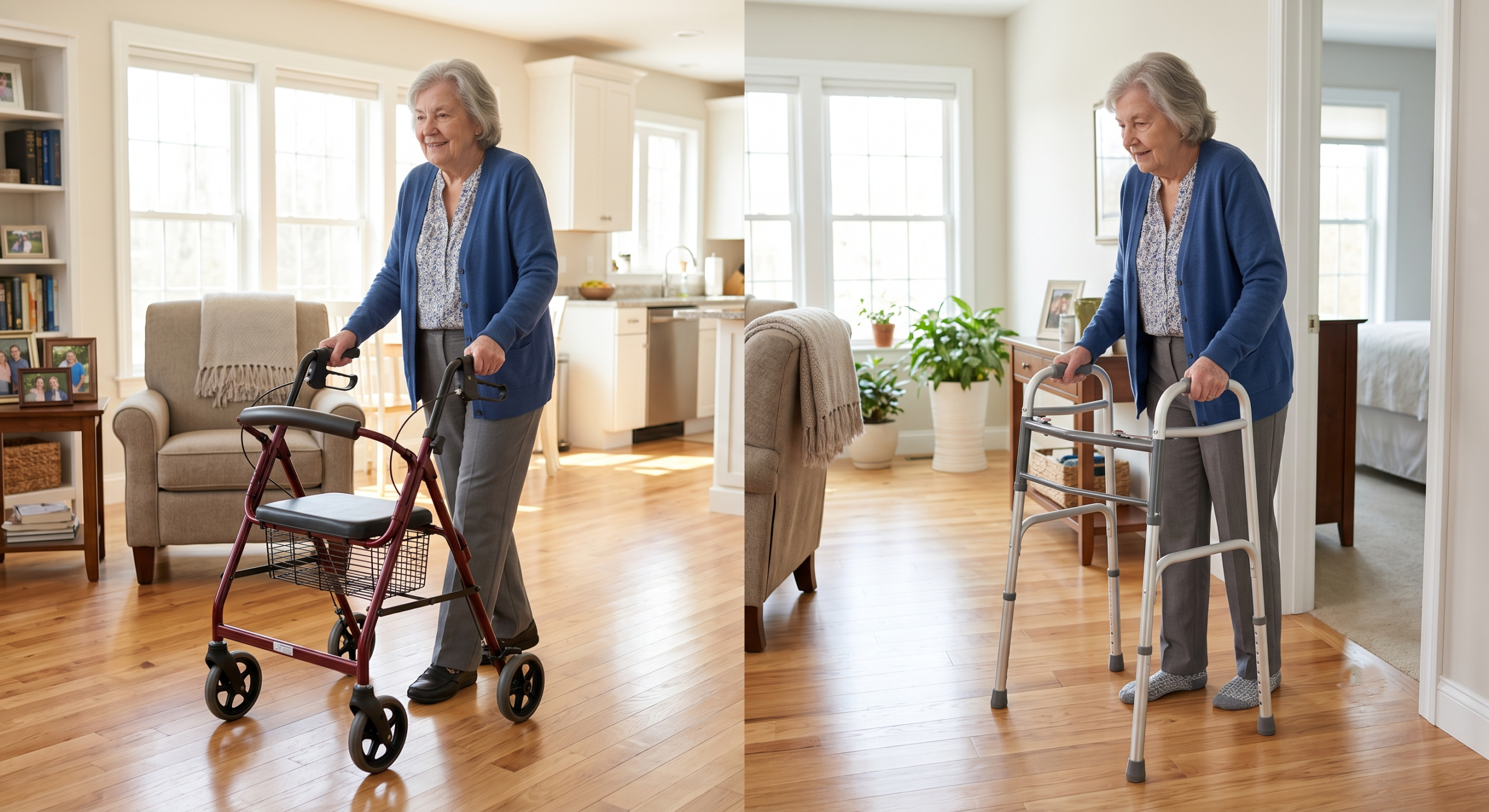
Choosing the right walker for an elderly person starts with understanding what options exist and who each one is designed for. With eight distinct types of walkers available, each serving different mobility needs, making the right choice can significantly improve safety, confidence, and daily independence.
This guide explains all 8 different types of walkers for elderly individuals, what makes each one unique, and how to match the right walker to the right person.
A Note From Margaret Collins
One thing I have learned from working with elderly individuals and their families is that the wrong walker creates as many problems as having no walker at all. I have seen elderly people abandon their walkers entirely because the type they were given did not suit their lifestyle or strength level. Understanding the differences between walker types is the first and most important step in finding something that will actually be used every day.
Why the Type of Walker Matters
Many families make the mistake of choosing the first walker they see or the cheapest option available. In reality, each type of walker is engineered for a specific level of mobility need. A walker that is too stable slows an active senior down. A walker that is not stable enough puts a frail senior at serious risk.
Physical therapists and occupational therapists assess mobility before recommending a walker type for exactly this reason. If a formal assessment is not possible, this guide provides the framework to make an informed decision.
The 8 Different Types of Walkers for Elderly Individuals
- Standard Walker
The standard walker is the most basic and most stable type available. It has four legs with rubber tips and no wheels. The user lifts the entire walker forward with each step.
Who it is for: Elderly individuals who need maximum support, those recovering from hip or knee surgery, or anyone with significant balance problems.
Key features: No rolling parts means no risk of the walker moving unexpectedly. Extremely lightweight, usually between 4 and 6 lbs. Folds flat for storage and transport.
Limitation: Requires lifting with every step, which can be tiring for those with weak arms or shoulders.
Recommended option: The Drive Medical Deluxe Folding Walker is one of the most widely prescribed standard walkers in the United States, known for its simple height adjustment and durable aluminum frame.
- Two-Wheel Walker (Front-Wheeled Walker)
A two-wheel walker has small wheels on the front two legs and rubber tips on the back two. This allows the user to glide it forward without lifting, while the rubber tips prevent it from rolling away.
Who it is for: Elderly individuals who find the standard walker too difficult to lift repeatedly but still need significant support.
Key features: Easier forward movement than a standard walker. Rubber tips on rear legs act as a natural brake. Suitable for indoor use on smooth surfaces.
Limitation: Less stable than a standard walker on uneven or outdoor surfaces.
- Three-Wheel Walker (Tri-Walker)
The three-wheel walker is lighter and more compact than four-wheel models. It has two front wheels and one rear wheel, with a narrower frame that fits through tight spaces easily.
Who it is for: Elderly individuals who are relatively stable and active but need light support for longer walks or in crowded environments.
Key features: Very lightweight, often under 10 lbs. Narrow enough to navigate through doorways and small spaces easily. Usually folds compactly for transport.
Limitation: No built-in seat and less stable than four-wheel walkers. Not appropriate for elderly individuals who need significant support.
- Four-Wheel Walker (Rollator)
The rollator is the most popular walker type for active elderly individuals. It has four wheels, loop or push-down hand brakes, a padded built-in seat, and usually a storage basket or bag underneath.
Who it is for: Active elderly individuals who need balance support for longer distances, outdoor use, or community activities and who also benefit from the ability to rest when needed.
Key features: Smooth, natural walking movement. Built-in seat allows resting without needing to find a chair. Storage basket is practical for shopping and daily activities. Works well both indoors and outdoors.
Limitation: Requires the ability to operate hand brakes safely. Heavier than standard walkers. Brakes must always be engaged before sitting.
Recommended option: The Hugo Mobility Elite Rollator Walker offers large 8-inch wheels for outdoor terrain, a comfortable padded seat, and tool-free height adjustment, making it a well-regarded choice for active elderly users.
- Upright Walker (Forearm Walker)
The upright walker is designed to allow the user to stand fully upright rather than hunching over traditional handles. It uses forearm support pads instead of hand grips, redistributing weight through the forearms.
Who it is for: Elderly individuals with back pain, poor posture, or those who experience discomfort or pain when using standard walker handles.
Key features: Promotes an upright walking posture. Reduces back and neck strain significantly. Usually includes a built-in seat. Some models include a tray for carrying items.
Limitation: Bulkier than standard walkers. More expensive than basic models. Requires an adjustment period to feel comfortable.
Recommended option: The ABLE Life Space Saver Walker is a compact upright walker that promotes natural posture while being narrow enough for indoor home use.
- Hemi Walker
A hemi walker is designed to be used with one hand only. It is wider and more stable than a standard cane, providing a middle level of support between a cane and a full walker.
Who it is for: Elderly individuals who have experienced a stroke, have weakness or limited function on one side of the body, or who only need one-sided support.
Key features: More stable than a quad cane. Requires only one functional arm. Compact and lightweight.
Limitation: Provides less support than a full walker. Only suitable for one-sided weakness.
- Knee Walker (Knee Scooter)
A knee walker is a four-wheeled device where the user kneels on a padded platform with the injured leg while pushing forward with the healthy leg.
Who it is for: Elderly individuals recovering from foot, ankle, or lower leg surgery or injury where the leg must remain non-weight-bearing.
Key features: Keeps the injured leg fully elevated and non-weight-bearing. Faster movement than crutches. Significantly reduces arm and shoulder fatigue compared to crutches.
Limitation: Not suitable for bilateral conditions or general balance issues. Cannot navigate stairs. Requires good balance and strength in the uninjured leg.
- Bariatric Walker
A bariatric walker is a reinforced heavy-duty walker designed for individuals who exceed the weight capacity of standard walkers, which is typically 300 lbs.
Who it is for: Elderly individuals who require a walker with a higher weight capacity, typically between 400 and 700 lbs depending on the model.
Key features: Reinforced frame with wider base for stability. Available in wheeled and non-wheeled versions. Built to the same safety standards as standard walkers with increased load ratings.
Limitation: Heavier and bulkier than standard models. Less portable.
How to Match Walker Type to Individual Need
Choosing the right walker comes down to five factors:
Stability need — How significant are the balance problems? Greater instability requires more support. A standard or two-wheel walker is safest for severe balance issues.
Strength level — Can the person lift a standard walker repeatedly? If not, a wheeled option reduces physical demand.
Activity level — Is the person relatively active and mobile, or do they need support for every step? Active individuals benefit from rollators. Frail individuals need standard walkers.
Environment — Where will the walker primarily be used? Indoors on smooth floors, outdoors on uneven terrain, or both?
Body weight — Always verify the walker’s maximum weight capacity before purchasing.
When to Consult a Physical Therapist
A physical therapist can assess gait, balance, and strength and match those findings to a specific walker type. This is strongly recommended when:
The elderly person has recently fallen
There is uncertainty about which type provides the right level of support
The person has recently had surgery or a stroke
The current walker no longer feels adequate
According to the Centers for Disease Control and Prevention, falls are the leading cause of injury-related death among adults aged 65 and older, with approximately 36 million falls occurring annually in the United States. Using the correct mobility aid is one of the most direct ways to reduce this risk.
Frequently Asked Questions
What are the 8 different types of walkers for elderly people?
The 8 types are: standard walker, two-wheel walker, three-wheel walker, four-wheel rollator, upright walker, hemi walker, knee walker, and bariatric walker. Each is designed for a specific level of mobility need and physical condition.
Which walker type is safest for elderly people with poor balance?
A standard four-leg walker with no wheels provides the maximum stability for elderly individuals with significant balance problems. The absence of wheels means the walker cannot roll away unexpectedly.
What is the difference between a walker and a rollator?
A walker has no wheels or only front wheels and must be lifted or glided. A rollator has four wheels with hand brakes and a built-in seat. Rollators allow more natural walking movement but require the ability to operate brakes safely.
Can elderly people use different walkers for different situations?
Yes. Many elderly individuals use a standard walker at home for maximum stability and a rollator for outdoor walks or shopping trips. A physical therapist can advise on the best approach for specific situations.
How do I know if a walker needs to be replaced?
Replace a walker when rubber tips are worn smooth, when any part of the frame is bent or cracked, when brakes no longer hold firmly on a rollator, or when the walker no longer feels stable during use.
Conclusion
Understanding all 8 different types of walkers for elderly individuals makes it possible to match the right aid to the right person. The standard walker offers maximum stability for those who need it most. The rollator supports active elderly individuals who want to stay mobile and independent. Between these two ends of the spectrum, six other types address specific conditions and lifestyles.
The right walker, chosen correctly and adjusted properly, can make a genuine difference to an elderly person’s daily safety, confidence, and quality of life.