
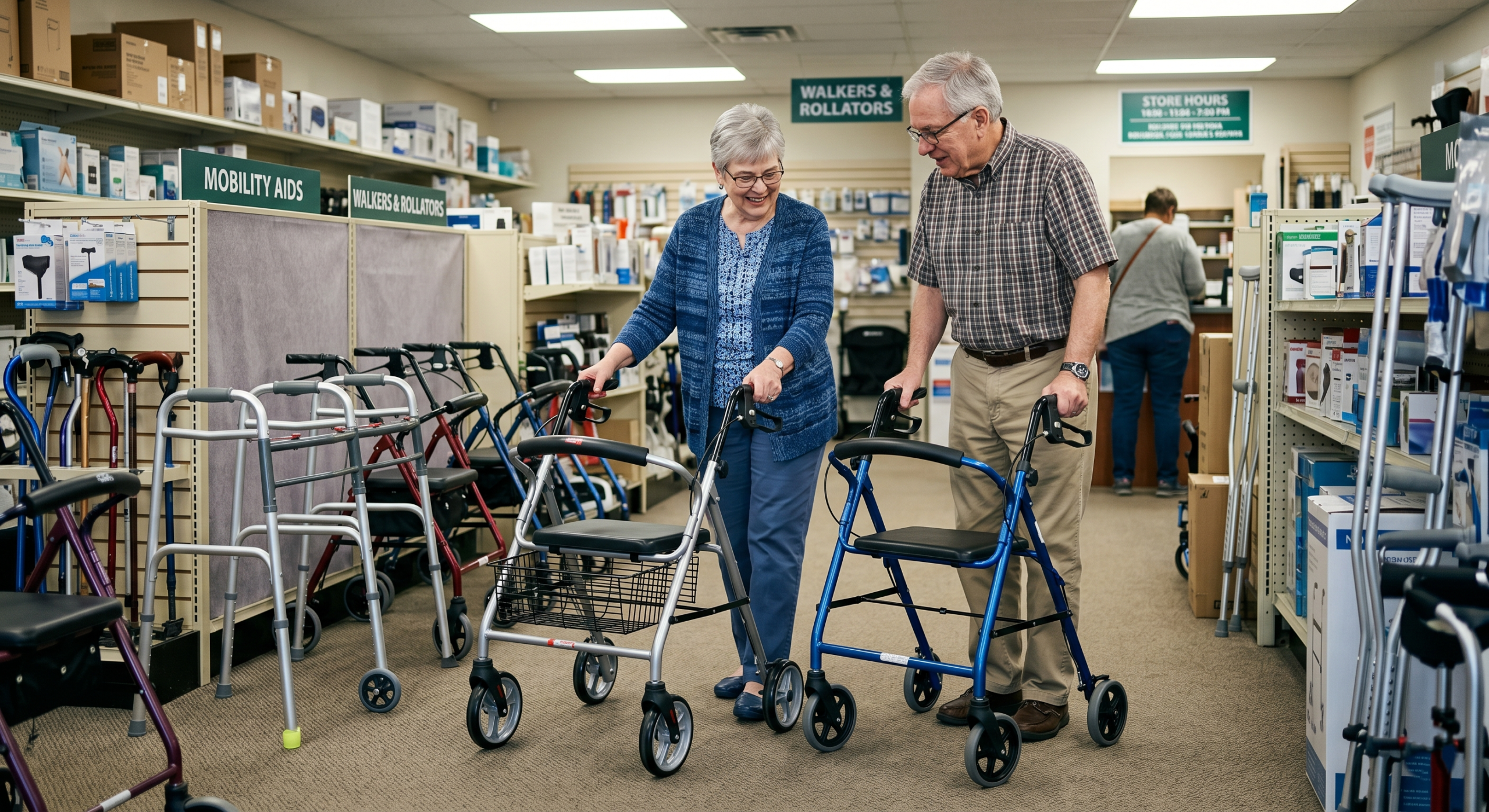
Selecting the correct walker for a senior is one of the most important home safety decisions a family can make. With multiple types, sizes, and features available, the process can feel overwhelming. This guide simplifies the decision into clear, practical steps based on real mobility needs.
A Note From Margaret Collins
The most common mistake I see families make is choosing a walker based on what looks good or what is cheapest. In over 15 years of working with seniors and their families, I have never once seen a senior benefit from a walker chosen for the wrong reasons. The right walker is chosen based on the senior’s specific balance level, strength, environment, and daily routine. This guide walks through exactly that process.
Why Choosing the Right Walker Matters
A walker chosen correctly does three things. It provides reliable support during movement. It builds confidence so the senior continues to stay active. And it reduces fall risk during the most vulnerable moments of daily life.
A walker chosen incorrectly does the opposite. It frustrates the senior, goes unused, and in some cases creates new safety risks.
According to the Centers for Disease Control and Prevention (CDC), falls are the leading cause of injury-related death among adults aged 65 and older, with approximately 36 million falls occurring annually in the United States. The correct mobility aid is one of the most direct and effective ways to reduce this risk.
Step 1 — Assess the Senior’s Current Mobility Level
Before looking at any walker, make an honest assessment of the senior’s current situation.
Mild balance issues — The senior walks independently most of the time but occasionally feels unsteady. A lightweight rollator or two-wheel walker may be appropriate.
Moderate balance issues — The senior needs support for most walking. A standard walker or two-wheel walker is most appropriate.
Significant balance issues or post-surgery recovery — The senior needs maximum stability at all times. A standard four-leg walker with no wheels is the safest option.
Active senior with good basic strength — The senior is mobile but needs balance support for longer distances. A four-wheel rollator with a seat is ideal.
Step 2 — Decide Where the Walker Will Be Used
Indoor use only — Standard walkers and two-wheel walkers are best suited for indoor use. They are narrower and easier to maneuver through doorways and tight spaces.
Outdoor use — Rollators with four wheels handle uneven surfaces, pavements, and slight inclines significantly better than standard walkers.
Both indoor and outdoor — A lightweight rollator with good brakes is the most versatile option for seniors who move between indoor and outdoor environments regularly.
Step 3 — Check the Weight Capacity
Every walker has a maximum weight capacity. Standard walkers typically support up to 300 lbs. Bariatric walkers support up to 500 to 700 lbs with reinforced frames.
Always verify the weight capacity before purchasing. A walker used beyond its rated capacity is unsafe.
Step 4 — Choose the Right Wheel Configuration
No wheels — Maximum stability. The senior lifts the walker with every step. Best for seniors who need the most support or are recovering from surgery.
Two front wheels — Easier forward movement than a no-wheel walker. The rubber tips on the back legs act as a natural brake. Good middle option for seniors who struggle to lift but need strong support.
Four wheels with brakes (rollator) — Smoothest movement. Requires the ability to use hand brakes safely. Best for active seniors who need balance support rather than significant weight-bearing support.
Step 5 — Set the Correct Walker Height
Correct height adjustment is critical. An incorrectly sized walker causes the senior to hunch forward or reach upward, both of which increase fall risk and cause pain.
How to measure correct walker height:
- Have the senior stand upright in their normal shoes
- Let their arms hang naturally at their sides
- The walker handle should be level with the crease of their wrist
- When holding the walker, the elbows should be slightly bent at approximately 15 to 20 degrees
Most walkers are adjustable. Always check and adjust before first use.
Step 6 — Consider Key Features
Seat — A built-in seat is valuable for seniors who tire easily or walk longer distances. Rollators typically include padded seats.
Brakes — Loop brakes require squeezing to slow down. Push-down brakes activate by pushing down on the handles. Push-down brakes are better for seniors with weak grip.
Folding mechanism — Check that the folding mechanism is simple enough for the senior to operate independently.
Storage — Many rollators include a basket or bag under the seat, practical for carrying shopping, medication, or personal items.
Weight of the walker — Lighter walkers are easier to lift and transport. For seniors who regularly put a walker in a car, lighter is almost always better.
Walker Recommendations by Mobility Level
For maximum stability (post-surgery or significant balance issues): The Drive Medical Deluxe Folding Walker is one of the most widely prescribed standard walkers in the United States. It features a lightweight aluminum frame, simple push-button height adjustment, and weighs just 5 lbs.
For active seniors who need balance support: The Hugo Mobility Elite Rollator Walker offers large 8-inch wheels suitable for outdoor terrain, a comfortable padded seat, loop hand brakes, and an under-seat storage bag. It is one of the most recommended rollators for active seniors.
For seniors who need something lightweight and portable: The Medline Freedom Lightweight Rollator weighs under 13 lbs and is one of the easiest rollators to lift into a car independently, making it ideal for seniors who travel or attend regular appointments.
When to Involve a Physical Therapist
A physical therapist can conduct a formal mobility assessment and recommend the most appropriate walker type. This is strongly recommended when:
- The senior has recently fallen
- There is uncertainty about which walker type is appropriate
- The senior is recovering from surgery or a stroke
- The current walker no longer feels stable or adequate
Signs That a Walker Is Needed
Many seniors resist using a walker until after a serious fall. These signs indicate a walker is needed before that fall happens:
- Holding onto walls or furniture while moving through the home
- Shuffling or dragging feet instead of lifting them clearly
- Expressing fear about falling or avoiding walking
- Fatigue after very short distances
- Any previous fall, regardless of severity
Frequently Asked Questions
How do I know which walker is right for my parent? Assess their balance, strength, and where they will use the walker most. If unsure, consult a physical therapist for a professional recommendation based on a formal mobility assessment.
What is the most stable type of walker for seniors? A standard four-leg walker with no wheels provides maximum stability. It is the safest choice for seniors with significant balance problems or those recovering from surgery.
How much should a good walker cost? A quality standard walker costs between $30 and $80. A good rollator costs between $80 and $200. Bariatric walkers cost more due to reinforced construction.
Can a rollator be used indoors? Yes, but rollators are wider than standard walkers and may be more difficult to maneuver in small bathrooms or narrow hallways. Always measure doorways before purchasing.
How do I know when to replace a walker? Replace a walker when rubber tips are worn smooth, when any part of the frame is bent or cracked, when brakes no longer hold firmly, or when the walker no longer feels stable during use.
Conclusion
Choosing the right walker for a senior requires honest assessment of their mobility level, environment, and daily routine. The correct walker — adjusted to the right height and matched to the right mobility need — provides reliable support and genuine independence.
Take the time to choose correctly. The investment of getting it right the first time prevents frustration, improves daily safety, and gives the senior the confidence to stay active and independent for longer.