
Walkers are designed to improve stability and reduce fall risk, but improper use can actually make walking more dangerous. Many seniors unknowingly develop habits that reduce the effectiveness of their walker or increase the chance of injury. Understanding common walker mistakes helps seniors use mobility aids safely and confidently.
This guide highlights the most frequent walker mistakes seniors should avoid and explains how proper use improves safety at home.
Using a Walker That Is the Wrong Height
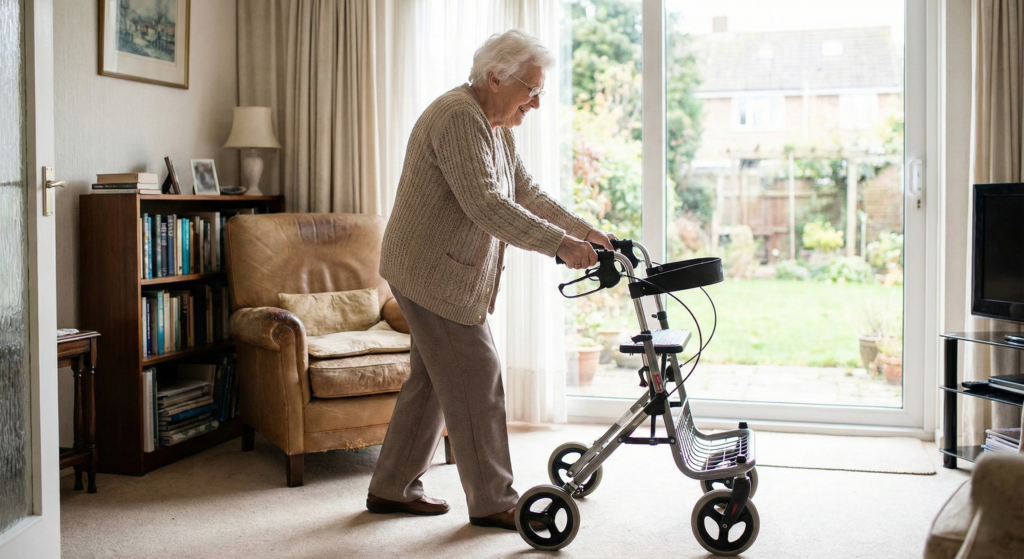
One of the most common mistakes is using a walker that is set too high or too low. Incorrect height can force poor posture, strain the wrists and shoulders, and reduce balance.
A properly adjusted walker allows the hands to rest comfortably while keeping the elbows slightly bent. This position improves control and stability.
Walker Height Adjustment: Why It Matters for Senior Safety
Leaning Too Far Forward While Walking
Leaning forward places excessive weight on the walker and shifts the body’s center of gravity. This increases the risk of tipping or losing balance.
Seniors should stand upright and move the walker forward only a short distance before stepping.
Moving Too Quickly
Rushing while using a walker reduces reaction time and balance control. Walkers are meant to provide steady support, not speed.
Moving slowly and deliberately helps maintain stability, especially on smooth indoor surfaces.
Ignoring Worn or Damaged Walker Parts
Rubber tips, wheels, and grips wear down over time. Using a walker with worn parts reduces traction and control.
Regularly checking walker components helps ensure continued safety.
Forgetting to Lock Brakes on Rollators
For seniors using rollators, forgetting to engage the brakes before sitting or standing is a major safety risk. Unlocked brakes can cause the walker to roll unexpectedly.
Seniors should always check brake engagement before changing positions.
Rollator vs Standard Walker: Which Is Safer for Seniors?
Using a Walker Incorrectly Indoors
Indoor spaces often require careful maneuvering. Common indoor mistakes include bumping furniture, navigating tight hallways without proper clearance, and using walkers on cluttered floors.
Choosing a walker designed for indoor use and maintaining a clear walking path improves safety.
How to Choose the Right Walker for Indoor Use
When to Reassess Walker Use
If a senior experiences discomfort, near-falls, or increasing fatigue, it may be time to reassess walker setup or type. Mobility needs change over time, and adjustments can improve safety.
When Should a Senior Switch from a Cane to a Walker?
Final Thoughts
Avoiding common walker mistakes helps seniors stay safe, comfortable, and confident while moving around the home. Proper setup, mindful movement, and regular checks ensure walkers provide the support they are meant to offer.
A walker is a valuable mobility tool — when used correctly, it supports independence and reduces fall risk.
1 thought on “Common Walker Mistakes Seniors Should Avoid”
Comments are closed.