
Mobility Aids
When Should a Senior Start Using a Walker?
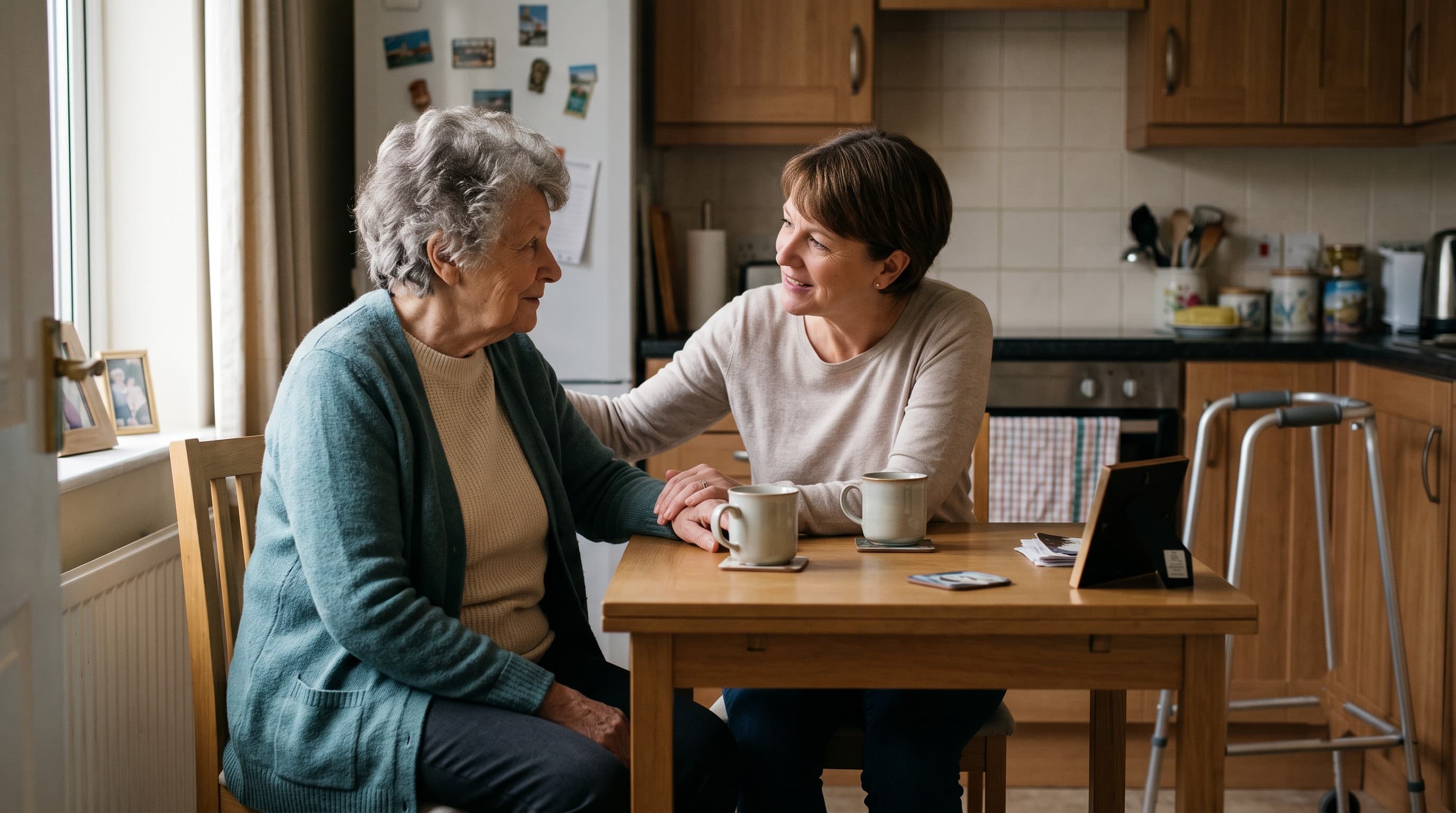
There's rarely one single obvious moment that signals it's time for a walker — instead, it's usually a pattern that builds gradually, which makes it easy for both the older adult and their family to adapt around it rather than recognize it directly. This guide walks through the signs worth watching for. It is written for adult children, spouses, and caregivers who want clear recommendations without sales pressure or medical jargon. Once the decision is made, our complete guide to choosing and using a walker safely covers the next steps.
Some links may be affiliate links. We may earn a commission at no extra cost to you. See our affiliate disclosure.
Early warning signs
The earliest signals are often subtle: a hand reaching for a wall or counter that wasn't needed before, a slightly wider stance while standing, hesitation before crossing an open room without something nearby to hold onto, or noticeably slower movement in general. Individually, any one of these could be explained away (tiredness, a bad night's sleep), but together, and especially if they represent a change from how the person moved even six months earlier, they're worth taking seriously rather than dismissing.
"Furniture walking" — using furniture, walls, and doorframes as informal support points while moving through the house — is a particularly clear early sign, since it indicates the person has already recognized, even if unconsciously, that they need more support than they currently have.
After illness or hospitalization
A hospital stay, even a short one, or a significant illness like the flu or pneumonia, commonly causes real deconditioning — a measurable loss of strength and balance from days of reduced activity, separate from whatever the original illness was. This kind of post-illness weakness is often temporary and improves with time and activity, but it can also be the point at which a walker becomes appropriate, at least during recovery, even if one wasn't needed before the illness.
This is also a common point where families miss the signal, assuming the person will simply "bounce back" to their prior baseline — and often they do, but a walker during the recovery window can prevent a fall during that vulnerable period, which itself could set recovery back much further.
Fear of falling as a signal
A growing reluctance to leave the house, skip a usual walk, or avoid stairs isn't just an inconvenience — fear of falling is itself a recognized risk factor for future falls, since it often leads to reduced activity, which in turn causes further deconditioning and worse balance, creating a cycle that can be hard to break without intervention. If someone has started avoiding activities they used to do without concern, that avoidance is worth treating as seriously as a physical balance sign.
In this situation, a walker can sometimes restore confidence enough to resume activity, breaking the fear-avoidance-deconditioning cycle rather than reinforcing it, which is worth discussing explicitly as a reason to consider one, not just as an admission of decline. Our fall prevention exercises guide covers building the underlying strength and balance alongside the walker itself.
How to talk about it respectfully
Bringing up a walker is often more emotionally loaded than other home safety topics, since it can feel to the person like a marker of losing independence rather than a tool for preserving it. Leading with a specific, recent, non-judgmental observation — "I noticed you held onto the counter through the whole kitchen yesterday" — tends to land better than a general statement like "I think you need a walker," since it's harder to dismiss and doesn't feel like a broad judgment about aging.
Framing the walker around what it enables (staying active, continuing to garden, visiting friends without exhaustion or fear) rather than what it implies about decline tends to reduce resistance, and involving a respected outside voice — a doctor, physical therapist, or trusted friend who has faced a similar decision — can help when family suggestions alone aren't landing.
What to expect in the first two weeks
Adjusting to a walker takes real practice, and it's normal for it to feel awkward, slow, or even embarrassing at first — this initial adjustment period shouldn't be mistaken for the walker being the wrong choice. Expect some trial and error with height and technique in the first few days, gradual improvement in confidence and speed over roughly two weeks of regular use, and occasional frustration, particularly in tight spaces like bathrooms until the specific movements (turning, sitting, doorways) become more automatic.
It's reasonable to expect the person to use the walker inconsistently at first — leaving it behind for "just a quick trip" across the room — and gentle, consistent encouragement rather than frustration tends to build the habit faster than repeated reminders framed as criticism.
When to involve professionals
If there's genuine uncertainty about whether a walker is needed yet, or which type would be appropriate, a physical therapist evaluation directly assesses gait, balance, and strength rather than relying on family observation alone, and is often available through a simple doctor's referral. This is particularly worth pursuing after any fall (even one without injury), following a hospitalization, or if fear of falling has noticeably changed the person's daily activity level.
Common misconceptions worth clearing up
A few widely held beliefs about walkers actually get in the way of a timely, safe decision. One is that using a walker will make someone weaker or more dependent — in reality, the opposite is often true: a walker that restores confidence tends to increase activity, which maintains strength, while avoiding a walker out of pride often leads to reduced activity and faster decline. Another is that a walker is only for people who have already fallen — but the whole point of considering one early is to prevent that first serious fall rather than react to it.
A third misconception is that needing a walker "sometimes" means it isn't really needed yet. In fact, intermittent instability — steady on good days, unsteady when tired, ill, or on certain medications — is a common and legitimate reason to have a walker available for the harder moments, even if it isn't used every hour of every day.
The role of a proper assessment
While the signs in this guide help families recognize when to start the conversation, an actual physical therapist assessment removes the guesswork about both timing and device type. A PT can measure gait speed, balance, and strength objectively, identify whether a cane might suffice or a walker is genuinely warranted, and recommend the specific category that fits — information that's genuinely hard to determine from observation alone, however attentive. Our cane vs. walker guide covers that specific comparison in more depth.
This is especially valuable because the goal isn't just "a walker or no walker" but "the right level of support at the right time." Too much support too early can reduce activity unnecessarily, while too little support too late risks a fall, and a professional assessment helps thread that needle more reliably than a well-meaning guess.
Key takeaways
- Watch for a pattern (furniture walking, wider stance, hesitation in open spaces) rather than waiting for one dramatic moment before considering a walker.
- Illness or hospitalization commonly causes temporary deconditioning that can make a walker appropriate during recovery, even if one wasn't needed before.
- Fear of falling is itself a risk factor, since it drives reduced activity and further deconditioning — a walker can help break that cycle rather than only marking decline.
- Intermittent instability is a legitimate reason to have a walker available; a walker doesn't have to be needed every hour to be worth having for the harder moments.
Next steps for caregivers
If several of the signs above have been present for a few weeks, rather than a single off day, it's a reasonable time to raise the conversation, ideally anchored to a specific recent observation rather than a general concern. A PT evaluation is a low-pressure way to get an objective answer if the person is receptive to that framing rather than a direct walker suggestion.
Frequently asked questions
Who should read this guide about when should a senior start using a walker??
Is this a substitute for medical advice?
How soon should we make changes after a fall or near-fall?
Related guides
Mobility Aids
Types of Walkers for Seniors: How to Choose the Right One
Compare the 8 different types of walkers for seniors, from standard and rollator to knee and folding walkers, plus how to choose the right one for safe mobility.
Mobility Aids
Lightweight Walkers Explained: Pros and Cons for Seniors
Learn the pros and cons of lightweight walkers for seniors and how they support safe and comfortable mobility.
Mobility Aids
How to Choose the Right Walker for Indoor Use
Learn how to choose the best walker for indoor use. Discover key features, safety tips, and which walker types work best inside the home.
Mobility Aids
Walker Height Adjustment: Why It Matters for Senior Safety
Learn why proper walker height adjustment is essential for senior safety, balance, and comfort. Avoid strain and reduce fall risk with correct setup.