
Mobility Aids
Rollator vs Standard Walker: Which Is Safer for Seniors?
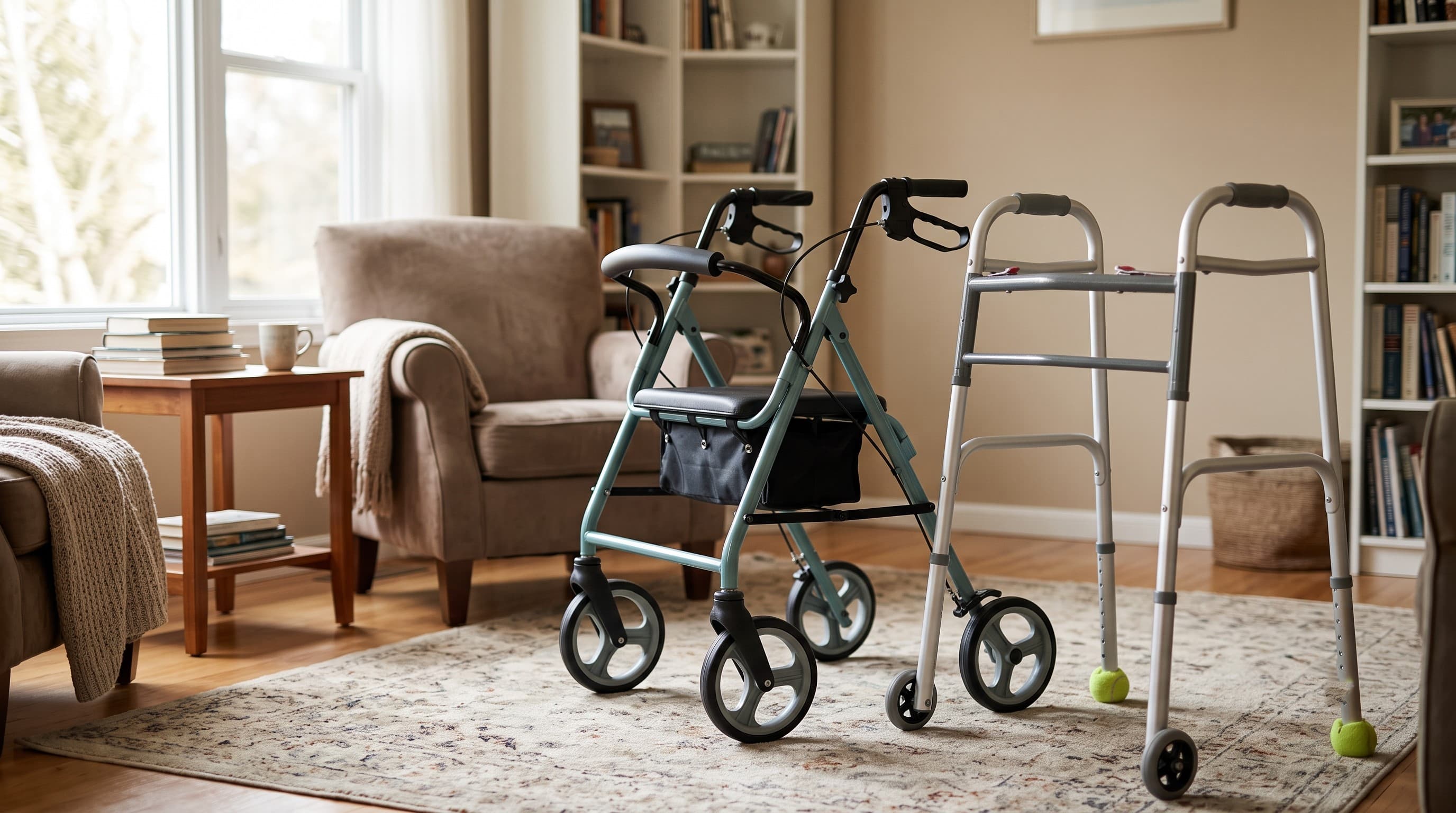
"Which is safer" doesn't have a single universal answer for rollators versus standard walkers — safety depends heavily on the specific person's balance, cognition, and how the device is actually used, not on one category being inherently better. This guide breaks down where each option genuinely has the edge. It is written for adult children, spouses, and caregivers who want clear recommendations without sales pressure or medical jargon. Whichever category is chosen, our common walker mistakes guide covers the daily habits that matter just as much as the device itself.
Some links may be affiliate links. We may earn a commission at no extra cost to you. See our affiliate disclosure.
What each device is designed to do
A standard walker has no wheels, requiring the user to lift and place it with each step, which provides maximum stability since it never moves unless deliberately lifted. A rollator has four wheels and hand brakes, moving with far less physical effort but requiring active engagement (squeezing brakes, controlling roll speed) to stay stable, which shifts some of the safety burden from the frame itself to the user's coordination and judgment.
Neither design is universally "safer" — a standard walker's stability advantage only holds if the user has the arm strength to lift it reliably every step, and a rollator's mobility advantage only holds if the user can operate its brakes consistently and safely.
Balance and fall history
For someone with significant, global balance instability — frequent near-falls, difficulty standing without support, or a recent fall history — a standard walker's fixed, non-rolling base generally provides more consistent, predictable support, since it simply cannot roll away unexpectedly the way a rollator theoretically could if brakes aren't engaged in time. This matters most for someone whose balance loss can be sudden and severe.
For someone whose balance is more moderately affected — general unsteadiness, fatigue-related instability over distance, but not sudden severe loss of balance — a rollator's wheels reduce overall exertion, and lower exertion itself can improve safety by reducing fatigue-related missteps that accumulate over a longer walk.
Brakes, seats, and cognition
A rollator's brakes are only a safety feature if they're used correctly and consistently, which requires adequate hand strength, coordination, and the cognitive follow-through to engage them at the right moments (before sitting on the seat, on a slight incline, when stopping). Someone with cognitive changes affecting sequencing or judgment, or significant hand tremor or arthritis limiting grip strength, may not reliably operate rollator brakes even if their general balance would otherwise suit one — in that specific situation, a standard walker's simplicity is the safer match despite requiring more physical lifting effort.
The seat is a genuine, meaningful benefit for anyone who fatigues over a distance and needs a place to rest, but the seat itself is only safe to use if the brakes are reliably engaged first — an unlocked rollator seat is a fall risk of its own. Our rollator buying guide covers what to look for in seat height, brake quality, and frame stability if a rollator seems like the right direction.
Home and community environments
Standard walkers tend to fit better in tighter indoor spaces (small bathrooms, narrow older-home hallways) since they have a smaller footprint and no wide wheelbase to maneuver around corners. Rollators generally perform better for community or outdoor use — sidewalks, stores, longer walks to a mailbox — where the reduced lifting effort and available seat become more valuable over greater distances.
Some households reasonably use both: a standard or two-wheel walker for tight indoor routes, and a rollator kept for outdoor errands or longer community outings, rather than forcing a single device to handle every situation equally well.
Energy and confidence
Beyond the purely physical comparison, it's worth considering which device the person will actually use consistently and confidently. A rollator that reduces fatigue may encourage more regular activity and less resistance to going out, which has its own safety and health value, while a standard walker that feels genuinely more secure to someone anxious about falling may encourage more consistent indoor use even though it's more tiring.
A device that's technically appropriate but that the person resents or avoids using isn't actually the safer choice in practice — consistent use of the "second-best" option often beats inconsistent use of the technically ideal one.
Try both before deciding
Because the right answer depends so heavily on individual factors rather than one device being objectively better, it's worth arranging a trial of both categories if at all possible before committing to a purchase — many medical supply retailers and some insurance plans support a trial period specifically because this comparison is hard to judge from a showroom visit or online research alone. Watching how the person actually handles turning, braking, and sitting with each option in their own home, rather than a store aisle, often reveals a clearer answer than reading feature comparisons.
Decision checklist
Weighing all of the above: consider fall history and balance severity first, then honestly assess hand strength and cognitive reliability for brake operation, then factor in the home's tightest spaces and typical outdoor distance needs, and finally weigh which option the person will genuinely use consistently rather than resist. When these factors point in different directions, a physical or occupational therapist evaluation can settle the question with an objective gait and strength assessment rather than a guess. If it's still unclear whether a walker is needed at all yet, our guide on when a senior should start using a walker covers the earlier warning signs.
Transitioning between the two over time
The choice between a rollator and standard walker isn't always permanent, and it's common for the right device to change over time in either direction. Someone recovering from surgery or illness might start with a standard walker for maximum stability during the most fragile period, then transition to a rollator as strength and balance return and the priority shifts toward endurance and independence over distance. Conversely, someone with a progressive condition affecting balance might move from a rollator toward a standard walker as the need for maximum stability grows.
Recognizing that the appropriate device can change means treating the choice as a periodic reassessment rather than a one-time decision — particularly after any fall, hospitalization, or noticeable change in strength, coordination, or cognition. A device that was clearly right a year ago may no longer be the best match, and a quick reassessment (ideally with a PT after any significant health event) keeps the person on the device that fits their current ability rather than a past one.
The role of consistent use
Whichever device is chosen, its safety benefit only materializes with consistent use. A rollator left at home because it's cumbersome to transport, or a standard walker abandoned because lifting it feels tiring, provides no protection at all — which is part of why the "device the person will actually use" consideration carries real weight alongside the technical comparison. Sometimes the more consistently used option genuinely is safer in practice, even if the other would be marginally better on paper for someone who used it perfectly every time.
Key takeaways
- Neither rollators nor standard walkers are universally safer — the right choice depends on balance severity, hand coordination, and cognitive reliability for brake use.
- Standard walkers suit tighter spaces and more severe or sudden balance instability; rollators suit longer distances and more moderate, fatigue-related instability.
- A rollator's brakes and seat are only safety features if used correctly and consistently — unreliable brake operation can make a rollator less safe than a standard walker for a specific person.
- The appropriate device can change over time in either direction; reassess after any fall, hospitalization, or noticeable change in strength or balance.
Next steps for caregivers
If fall history, hand coordination, or home layout clearly favor one option, that's a reasonable starting point. If the decision genuinely feels close, a PT evaluation directly tests grip strength, balance, and gait pattern rather than leaving the choice to guesswork, and it's a worthwhile appointment before committing to either purchase.
Frequently asked questions
Who should read this guide about rollator vs standard walker: which is safer for seniors??
Is this a substitute for medical advice?
How soon should we make changes after a fall or near-fall?
Related guides
Mobility Aids
Types of Walkers for Seniors: How to Choose the Right One
Compare the 8 different types of walkers for seniors, from standard and rollator to knee and folding walkers, plus how to choose the right one for safe mobility.
Mobility Aids
Lightweight Walkers Explained: Pros and Cons for Seniors
Learn the pros and cons of lightweight walkers for seniors and how they support safe and comfortable mobility.
Mobility Aids
How to Choose the Right Walker for Indoor Use
Learn how to choose the best walker for indoor use. Discover key features, safety tips, and which walker types work best inside the home.
Mobility Aids
Walker Height Adjustment: Why It Matters for Senior Safety
Learn why proper walker height adjustment is essential for senior safety, balance, and comfort. Avoid strain and reduce fall risk with correct setup.