
Home Safety
Bathroom Flooring Safety for Seniors: Best Options to Prevent Slips
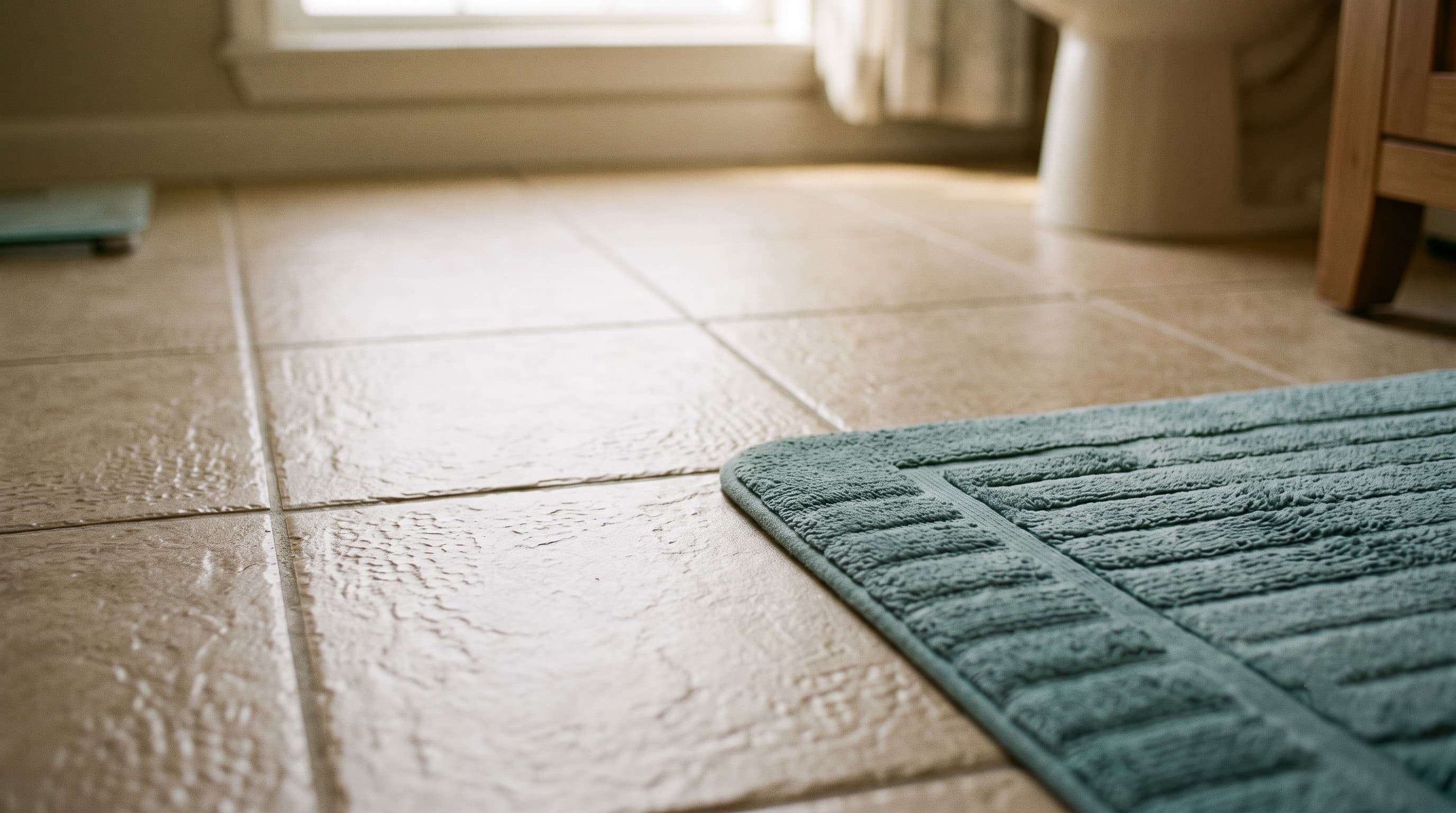
This guide explains bathroom-only flooring choices and wet-area traction in detail — for a broader look at flooring across the whole home, see our room-by-room flooring guide instead. It is written for adult children, spouses, and caregivers who want clear recommendations without sales pressure or medical jargon.
Some links may be affiliate links. We may earn a commission at no extra cost to you. See our affiliate disclosure.
What makes bathroom flooring different
Bathroom floors face a challenge no other room in the house does: they're expected to get wet regularly and still provide reliable footing, often while someone is standing on one leg to dry off or reaching for a towel with reduced balance. A material that feels perfectly grippy dry can become dangerously slick with just a thin film of water and soap residue, which is why "looks non-slip" and "is non-slip when wet" are genuinely different questions.
The honest test for any bathroom floor material isn't how it feels in a showroom — it's how it performs wet, with soap film, which is a condition most flooring samples in a store are never actually tested under.
Better material directions
Textured porcelain or ceramic tile with a matte (not glossy) finish generally outperforms polished tile significantly, since the texture provides mechanical grip that glossy surfaces lack entirely once wet. Within tile, smaller tiles with more grout lines can actually help, since grout itself has more texture than the tile surface and the additional lines break up large slick areas.
Vinyl flooring designed specifically for bathrooms, particularly textured or "slip-resistant rated" sheet vinyl, is often a lower-cost and lower-maintenance alternative to tile that still performs well wet, and it has the advantage of fewer seams (in sheet form) where water and grime can otherwise accumulate. Natural stone, by contrast, varies enormously by finish — polished marble is genuinely one of the more hazardous common bathroom materials when wet, while honed or flamed-finish stone can perform reasonably well.
Shower floor specifics
The shower floor deserves separate attention from the rest of the bathroom, since it's wet far more consistently and often has less even lighting. Small mosaic tiles (commonly 1-2 inches) are frequently used specifically in shower floors because the higher density of grout lines relative to a larger tile provides meaningfully more traction underfoot.
Proper drainage slope also matters more than most people realize: a shower floor that doesn't slope correctly toward the drain leaves standing water pooling in low spots, which both prolongs the wet-and-slick period after each use and can hide a slick patch under what looks like a dry floor from a quick glance.
Rugs and temporary fixes
While a full flooring replacement is being planned or saved for, a secured bath mat with a genuinely non-slip rubber or silicone backing (not just a fabric-backed rug marketed as "bathroom" style) can meaningfully reduce risk in the meantime. The mat should be checked periodically, since backing does wear down and lose grip over repeated washing cycles, and a mat that's lost its grip provides a false sense of security while actually adding a new sliding hazard.
Adhesive, cuttable non-slip strips or dots applied directly to an existing shower or tub floor are a genuinely useful low-cost interim measure specifically for the shower/tub floor itself, buying time before a larger renovation without requiring any construction.
Transitions and thresholds
The line where bathroom flooring meets hallway flooring is a commonly overlooked trip point, especially when the two materials sit at slightly different heights — even a quarter-inch lip can be enough to catch a foot or a walker wheel, particularly at night when the edge isn't clearly visible. A beveled or ramped transition strip removes this hazard far more effectively than hoping the height difference goes unnoticed.
The same applies to any interior threshold within the bathroom itself, such as stepping over a tub wall onto bathroom flooring, or a curbed shower entry — these transition points deserve the same attention as the door threshold, since they combine a height change with the wet-surface risk already present in the room.
Materials to avoid
A few materials are worth flagging specifically as poor choices for a senior bathroom, even though they're common in general home design. Polished natural stone (marble, polished granite) looks striking but is genuinely one of the more hazardous common choices once wet, since the polish that gives it its shine also removes most of the surface texture that would otherwise provide grip. Large-format glossy tile carries a similar risk, and the larger tile size means fewer grout lines to break up the slick surface.
High-gloss vinyl or laminate marketed for its water resistance is also worth checking carefully — water resistance (not warping or staining) and slip resistance (providing grip when wet) are two entirely different properties, and a product can genuinely excel at one while performing poorly at the other.
Maintenance habits
Even the best flooring choice degrades in performance if soap film, mineral deposits from hard water, or worn-down texture are allowed to accumulate over time. A regular cleaning routine that specifically addresses the shower and tub floor (not just wiping visible grime, but actually removing the invisible soapy residue that builds traction-robbing film) preserves whatever slip resistance the material started with.
It's also worth periodically re-testing traction by hand — running a palm across the wet floor and noting how much resistance is felt — since gradual wear can be hard to notice day to day but adds up to a meaningfully less safe surface over a year or two.
Key takeaways
- Test or research any bathroom flooring choice specifically for wet performance, not dry showroom feel — the two are genuinely different.
- Small mosaic tile and matte-finish (not glossy) surfaces generally outperform large glossy tile and polished stone for wet traction.
- The shower floor and any transition thresholds deserve separate attention from the rest of the bathroom, since they combine the highest wet-exposure with height changes.
- Maintenance (removing soap film buildup) preserves the traction a good material starts with — even the best flooring choice degrades if it's never properly cleaned.
Next steps for caregivers
If a full flooring replacement isn't currently in the budget, start with the lowest-cost interim fixes — a properly backed bath mat and adhesive non-slip strips on the shower floor — while planning the larger project. Our budget renovation guide breaks down flooring replacement alongside other bathroom upgrades by cost tier if a fuller project is on the table.
Frequently asked questions
Who should read this guide about bathroom flooring safety for seniors: best options to prevent slips?
Is this a substitute for medical advice?
How soon should we make changes after a fall or near-fall?
Related guides
Home Safety
How to Make a Bathroom Safety for Seniors
Learn simple ways to improve bathroom safety for seniors and reduce the risk of slips and falls at home.
Home Safety
Bathroom Safety Products for Seniors: Complete List
Discover the complete list of bathroom safety products for seniors including grab bars, shower chairs, raised toilet seats, non-slip mats, and more. Keep seniors safe at home.
Home Safety
Senior Bathroom Renovation Ideas on a Budget: Complete Guide
Discover practical senior bathroom renovation ideas on a budget covering grab bars, non-slip mats, shower chairs, raised toilet seats and walk-in shower conversions by cost level.
Home Safety
Best Non-Slip Flooring for Seniors: Room by Room Guide
Discover the best non-slip flooring for seniors room by room including bathrooms, bedrooms, kitchens and hallways. Covers full replacement options and affordable quick fixes.