
Mobility Aids
Best Rollator Walkers for Seniors: What to Look For
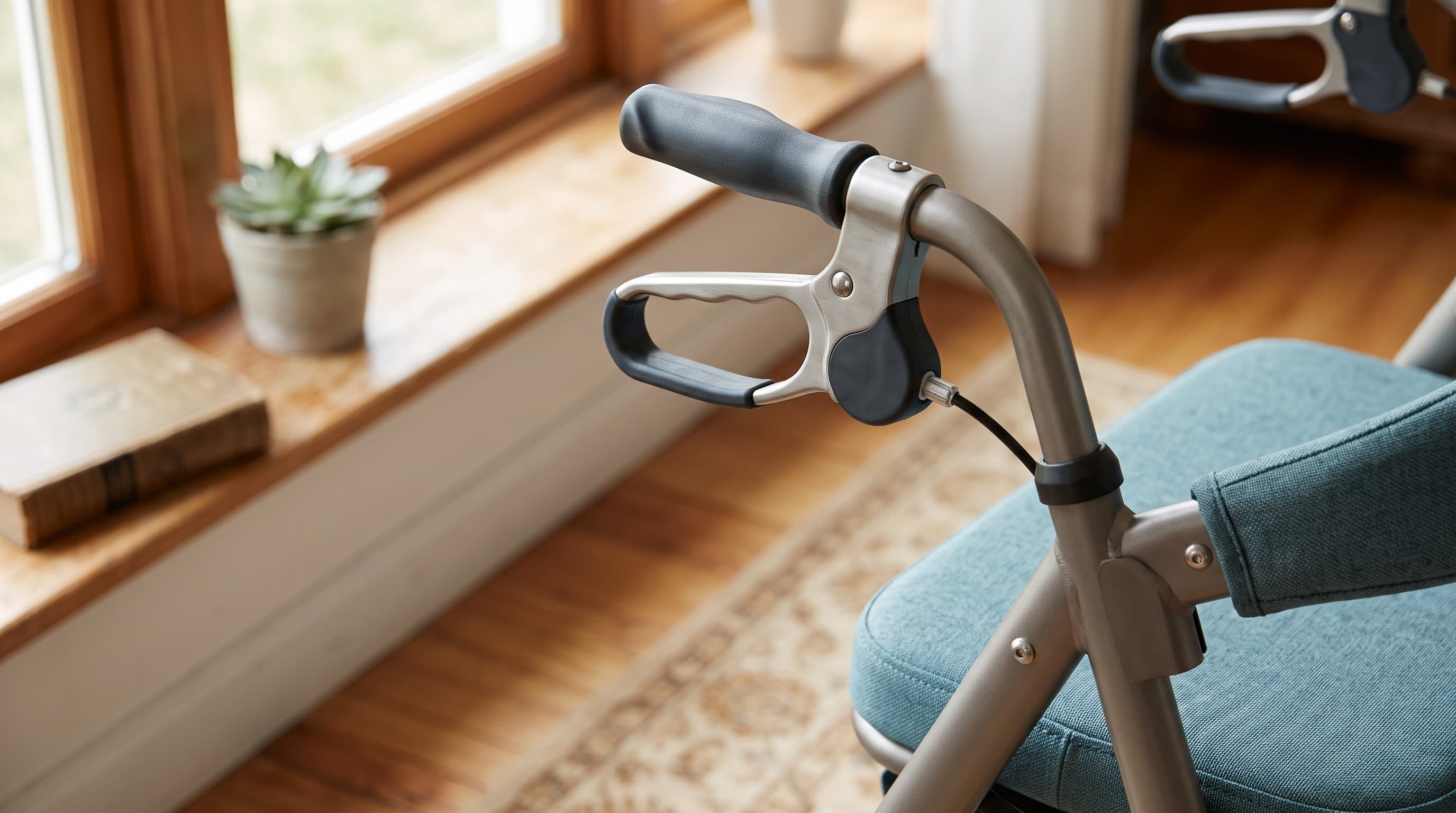
Rollator marketing tends to emphasize style, color options, and accessory bundles, but the features that actually determine safety and day-to-day usefulness are more specific and less flashy. This guide covers what genuinely matters when comparing models. It is written for adult children, spouses, and caregivers who want clear recommendations without sales pressure or medical jargon. If a rollator isn't yet the confirmed choice, our rollator vs. standard walker guide covers that decision first.
Some links may be affiliate links. We may earn a commission at no extra cost to you. See our affiliate disclosure.
Frame stability and weight capacity
A rollator's base width (the distance between the rear wheels) affects how resistant it is to tipping sideways — a narrower base is easier to maneuver through tight doorways but offers less side-to-side stability, while a wider base is more stable but requires more turning room. Checking a model's specific base width against the home's narrowest doorway, rather than assuming "standard" width fits everywhere, avoids a frustrating mismatch after purchase — our indoor walker fit guide covers how to measure this properly.
Weight capacity ratings vary meaningfully between models, typically from around 250 lbs on standard rollators up to 400-500+ lbs on bariatric or heavy-duty models — checking this rating against the actual user's weight, with reasonable margin rather than cutting it close to the maximum, matters for both frame durability and genuine stability under real load.
Brakes you can trust
Loop-style hand brakes (similar to bicycle brakes) are the most common design, and the key feature to test in person rather than trust from a spec sheet is how much hand force is needed to engage them firmly — someone with arthritis or reduced grip strength may struggle with brakes that require a firm squeeze, even if the brakes themselves are well-made. Push-down locking brakes, which lock in place with a firmer downward push rather than a sustained squeeze, can be easier for some users to operate reliably, particularly for parking the rollator securely rather than just slowing it.
Testing the brakes on a slight incline (even a driveway slope) before committing to a purchase reveals whether they hold reliably under real-world conditions, which a flat-floor showroom test won't necessarily show.
Wheel size and terrain
Smaller wheels (typically 6 inches or less) work fine on smooth, even indoor flooring but can catch on cracks, small stones, or uneven pavement outdoors, potentially stopping suddenly and throwing the user off balance. Larger wheels (8 inches or more) roll over minor terrain irregularities more smoothly and are generally the better choice for anyone who regularly uses their rollator outdoors on sidewalks, driveways, or yards.
For someone who splits use between indoor and outdoor environments, it's worth prioritizing the environment where a stumble would be most consequential — outdoor uneven terrain generally carries more fall risk than smooth indoor flooring, which can make the case for larger wheels even for a rollator used mostly indoors but occasionally outside.
Seat height and depth
The seat should sit at a height that allows the person to sit down and stand back up without excessive knee strain — typically similar to a normal dining chair height, though this varies by individual leg length and hip flexibility. Seat depth matters too: a seat too deep can make standing back up more difficult (requiring a scoot forward first), while one too shallow may feel unstable or insufficiently supportive during actual seated rest.
It's worth having the actual user sit on a candidate model, if at all possible, rather than relying on published dimensions alone, since comfort and ease of standing from a seat are genuinely difficult to judge from a spec sheet.
Storage and accessories
A basket or under-seat pouch adds real convenience for carrying small items (a water bottle, keys, a phone) without needing a free hand, which matters since both hands are typically needed for the brakes and frame while walking. It's worth checking that any storage doesn't obstruct brake access or add enough front-loaded weight to affect the rollator's balance when navigating turns.
Tray attachments, cup holders, and similar accessories are reasonable additions once the core fit and function are confirmed, but they shouldn't factor into the initial model choice ahead of frame stability, brake quality, and correct seat and handle sizing.
Price ranges and what they buy
Basic rollators with standard features typically run $80-150, while premium models with larger wheels, adjustable seat height, and heavier weight capacity often run $150-300. The price difference usually reflects genuine build quality differences — sturdier frame materials, more reliable brake mechanisms, and better bearings in the wheels — rather than purely cosmetic features, which makes mid-range models a reasonable starting point for most users rather than defaulting to the cheapest option available.
Home fit trial
Beyond specifications, the most reliable way to confirm a rollator is right is a real trial in the actual home and its typical routes: through the narrowest doorway, around the tightest turn, up any ramp or slight incline outside, and with the actual user operating the brakes themselves rather than a caregiver demonstrating them. Many medical supply retailers offer a trial period specifically because these real-world factors are hard to judge from a showroom.
Folding and transport
Most rollators fold for transport, but the folding mechanism and folded dimensions vary meaningfully between models — some fold flat side-to-side, others fold front-to-back, and the folded size determines whether it fits a particular car trunk or storage space. For anyone who'll regularly load the rollator into a vehicle, checking both the folded dimensions against the actual trunk space and the weight of the rollator (since it must be lifted in and out) is worth doing before purchase, since a rollator that's difficult to fold or too heavy to lift comfortably tends to get used less consistently.
The ease of the fold itself matters too: a mechanism that requires significant hand strength or an awkward two-handed motion can be genuinely difficult for the same person who needs the rollator in the first place, so testing the fold-and-unfold personally, rather than trusting a product description, is worth the few minutes it takes.
Maintenance and longevity
A rollator has more moving parts than a simple walker, which means a bit more upkeep to stay safe. Wheels should roll freely without wobble or excessive play, brakes should engage firmly and hold reliably, and the folding mechanism should lock solidly into the open position every time. Checking these periodically — and addressing any looseness, sticking, or weak braking promptly rather than adapting around it — keeps the rollator performing the way it did when new.
Wheels and brake pads are wear items that can be replaced as they age, extending the useful life of an otherwise good rollator, so it's worth noting the model number for ordering matched replacement parts when the time comes rather than replacing the whole rollator over a worn wheel or brake.
Key takeaways
- Base width and turning radius matter as much as any listed feature — check against the home's actual narrowest doorway before buying.
- Test brakes in person, ideally on a slight incline, since ease of squeeze and reliability vary meaningfully between models regardless of listed brake type.
- Larger wheels (8 inches+) handle outdoor uneven terrain better; smaller wheels are fine for smooth indoor use only.
- Check folded size, weight, and ease of folding if the rollator will be transported often, and keep up with wheel and brake maintenance to preserve safety over time.
Next steps for caregivers
Prioritize testing over reading specifications: bring the actual user to try brakes, seat height, and turning through a doorway similar in width to the home's narrowest point, rather than choosing based on marketing photos or accessory bundles. A short trial period, if the retailer offers one, is worth using deliberately for this real-world testing. Once a model is chosen, our walker accessories guide covers which add-ons are actually worth buying.
Frequently asked questions
Who should read this guide about best rollator walkers for seniors: what to look for?
Is this a substitute for medical advice?
How soon should we make changes after a fall or near-fall?
Related guides
Mobility Aids
Types of Walkers for Seniors: How to Choose the Right One
Compare the 8 different types of walkers for seniors, from standard and rollator to knee and folding walkers, plus how to choose the right one for safe mobility.
Mobility Aids
Lightweight Walkers Explained: Pros and Cons for Seniors
Learn the pros and cons of lightweight walkers for seniors and how they support safe and comfortable mobility.
Mobility Aids
How to Choose the Right Walker for Indoor Use
Learn how to choose the best walker for indoor use. Discover key features, safety tips, and which walker types work best inside the home.
Mobility Aids
Walker Height Adjustment: Why It Matters for Senior Safety
Learn why proper walker height adjustment is essential for senior safety, balance, and comfort. Avoid strain and reduce fall risk with correct setup.