
Mobility Aids
Walker Accessories for Seniors: What You Actually Need
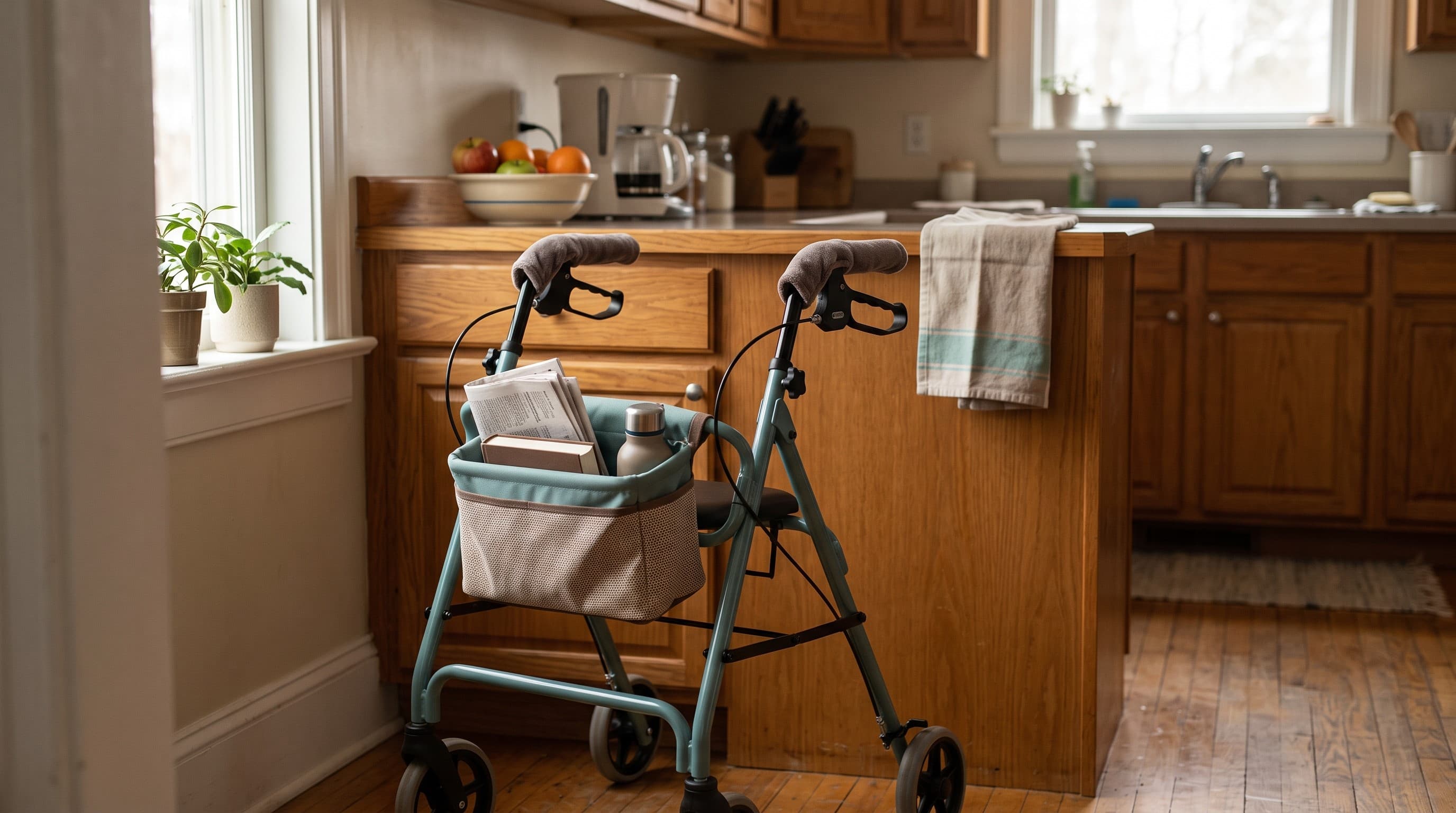
Walker accessory catalogs are long, and not everything on them is worth buying — some genuinely improve daily safety and comfort, while others add clutter or even introduce new risk. This guide sorts the useful from the skippable. It is written for adult children, spouses, and caregivers who want clear recommendations without sales pressure or medical jargon. For the base walker itself, our complete guide to choosing and using a walker safely covers the foundational choice this article builds on.
Some links may be affiliate links. We may earn a commission at no extra cost to you. See our affiliate disclosure.
Start with the problems you actually have
Rather than buying a general accessory bundle, it's worth identifying what specific daily task currently feels awkward or unsafe with the walker as-is. Struggling to carry a drink or small item while walking points toward a tray or bag; hand discomfort during use points toward grip covers; difficulty moving smoothly on a specific flooring type points toward glides or different tips. Starting from an actual problem, rather than a generic "everyone needs these" list, keeps spending focused on what will genuinely help.
Grips and comfort
Foam or gel grip covers can meaningfully reduce hand and wrist discomfort for someone with arthritis or reduced grip strength, since they increase the contact surface and cushion pressure points compared to a standard hard plastic or rubber grip. This is a low-cost accessory (typically $10-20) with a real, direct comfort benefit for anyone who reports hand soreness after regular use.
It's worth confirming any grip cover doesn't change the effective diameter enough to make gripping harder for someone with smaller hands — trying it in person, if possible, rather than ordering based on a product photo alone, avoids an accessory that solves one problem while creating another.
Glides, balls, and tips
Standard rubber tips work well on hard, even flooring, but glide caps (which reduce friction, letting the walker slide slightly rather than requiring a full lift) can make movement smoother on carpet for someone using a non-wheeled walker who finds lifting tiring. Tennis-ball-style glides serve a similar function and are a low-cost, widely available option, though purpose-made glide caps designed specifically for walkers tend to fit more securely and predictably than a repurposed tennis ball.
The right choice depends on flooring: hard surfaces generally do fine with standard rubber tips, while a home with significant carpet coverage may benefit from glides specifically in those rooms — some households use different tip types on the same walker legs as needed, though this requires tips designed for easy swapping.
Bags, trays, and baskets
A stable, walker-mounted bag or basket solves a genuinely common problem: carrying anything at all while both hands are needed for the walker itself. The key word is stable — a bag that swings, shifts weight to one side, or hangs low enough to catch on the walker's legs or wheels creates a new hazard rather than solving the original inconvenience.
A tray attachment, which sits flat across the front of the walker, works well for carrying a drink or plate a short distance (bedroom to living room, for example) without risk of spilling, though it's generally less useful for outdoor or longer-distance use where a zippered bag secures items more reliably.
What to skip
Accessories that require hanging additional weight from the walker's handles (heavy bags looped directly over the grips rather than mounted to the frame) can shift the walker's balance point enough to affect stability, particularly for lighter-weight walker models — this is worth avoiding even though hanging bags are commonly sold and marketed for exactly this use. Similarly, novelty attachments (phone holders positioned in a way that requires looking down and away from the walking path, for example) can distract from safe walking more than they help.
Wheels or attachments not designed and rated for the specific walker model are also worth avoiding — aftermarket parts not matched to the frame's design can affect stability or fail unexpectedly under load in ways the original manufacturer's tested components don't.
Outdoor visibility additions
For anyone who regularly uses their walker outdoors, particularly near dusk, early morning, or after dark, reflective tape applied to the frame's legs and a small clip-on light are inexpensive additions that improve visibility to drivers and other pedestrians without affecting the walker's function or balance at all. These are worth prioritizing over decorative accessories for anyone whose outdoor walking routine includes any low-light conditions.
A simple accessories checklist
Once the base walker is correctly fitted and in good working condition, a reasonable accessory starting point is: grip covers if hand comfort is an issue, a properly mounted (not hand-hung) bag or basket for carrying small items, and glides or tips matched to the home's actual flooring. Reflective tape or a small clip-on light is worth adding for anyone who uses their walker outdoors near dusk or after dark, purely for visibility to others, including drivers.
As with the walker itself, it's worth periodically checking accessories for wear — a grip cover that's compressed flat or a bag with a failing clasp no longer provides the benefit it did when new, and replacing worn accessories is a small, inexpensive habit worth keeping up alongside general walker maintenance.
Replacement parts as accessories
Some of the most valuable "accessories" aren't add-ons at all but replacement wear parts that keep the walker safe over time. Fresh rubber tips for a standard or two-wheel walker, replacement wheels or wheel bearings for a rollator, and new brake cables or pads for a rollator whose braking has weakened all fall into this category — and keeping a spare set of tips on hand means a worn tip can be swapped immediately rather than waiting, during which time the walker is meaningfully less safe.
These parts are inexpensive and widely available, and matching them to the specific walker model matters — a tip or wheel not designed for the frame can fit poorly or wear unevenly. It's worth noting the walker's brand and model number somewhere accessible so replacement parts can be ordered correctly without guesswork when the time comes.
Seasonal and situational additions
A few accessories only make sense for specific situations rather than everyday use. Ice grips or all-terrain tips can be worth having for someone who uses their walker outdoors in winter climates, though these should be removed indoors where they can reduce traction on smooth flooring. A rain cover for a rollator's seat and storage keeps things dry for someone who's frequently out in wet weather — see our rollator buying guide for the base features worth prioritizing first. Cup holders and phone mounts, while genuinely useful for some, are worth positioning carefully so they don't require looking away from the walking path or reaching in a way that affects balance.
The general principle stays the same across all of these: an accessory should solve a real, specific problem the person actually has, and shouldn't compromise the walker's stability or the user's ability to watch where they're going.
Key takeaways
- Start from an actual daily problem (hand discomfort, carrying items, flooring friction) rather than buying a generic accessory bundle.
- Grip covers and flooring-matched tips or glides are low-cost, high-value additions for comfort and ease of movement.
- Choose frame-mounted, stable bags or baskets over hand-hung ones, which can shift weight and affect balance.
- Keep spare wear parts (tips, wheels, brake components) matched to the walker's model, so worn parts can be replaced promptly rather than used past their safe life.
Next steps for caregivers
Identify the one or two things that currently feel most awkward about daily walker use, and address those specifically rather than buying a full accessory set at once. A properly fitted, well-maintained base walker with a couple of well-chosen accessories generally serves better than a heavily accessorized one where the added items haven't been checked for stability. Our common walker mistakes guide covers other daily-use habits worth checking at the same time.
Frequently asked questions
Who should read this guide about walker accessories for seniors: what you actually need?
Is this a substitute for medical advice?
How soon should we make changes after a fall or near-fall?
Related guides
Mobility Aids
Types of Walkers for Seniors: How to Choose the Right One
Compare the 8 different types of walkers for seniors, from standard and rollator to knee and folding walkers, plus how to choose the right one for safe mobility.
Mobility Aids
Lightweight Walkers Explained: Pros and Cons for Seniors
Learn the pros and cons of lightweight walkers for seniors and how they support safe and comfortable mobility.
Mobility Aids
How to Choose the Right Walker for Indoor Use
Learn how to choose the best walker for indoor use. Discover key features, safety tips, and which walker types work best inside the home.
Mobility Aids
Walker Height Adjustment: Why It Matters for Senior Safety
Learn why proper walker height adjustment is essential for senior safety, balance, and comfort. Avoid strain and reduce fall risk with correct setup.