
Mobility Aids
Types of Walkers for Seniors: How to Choose the Right One
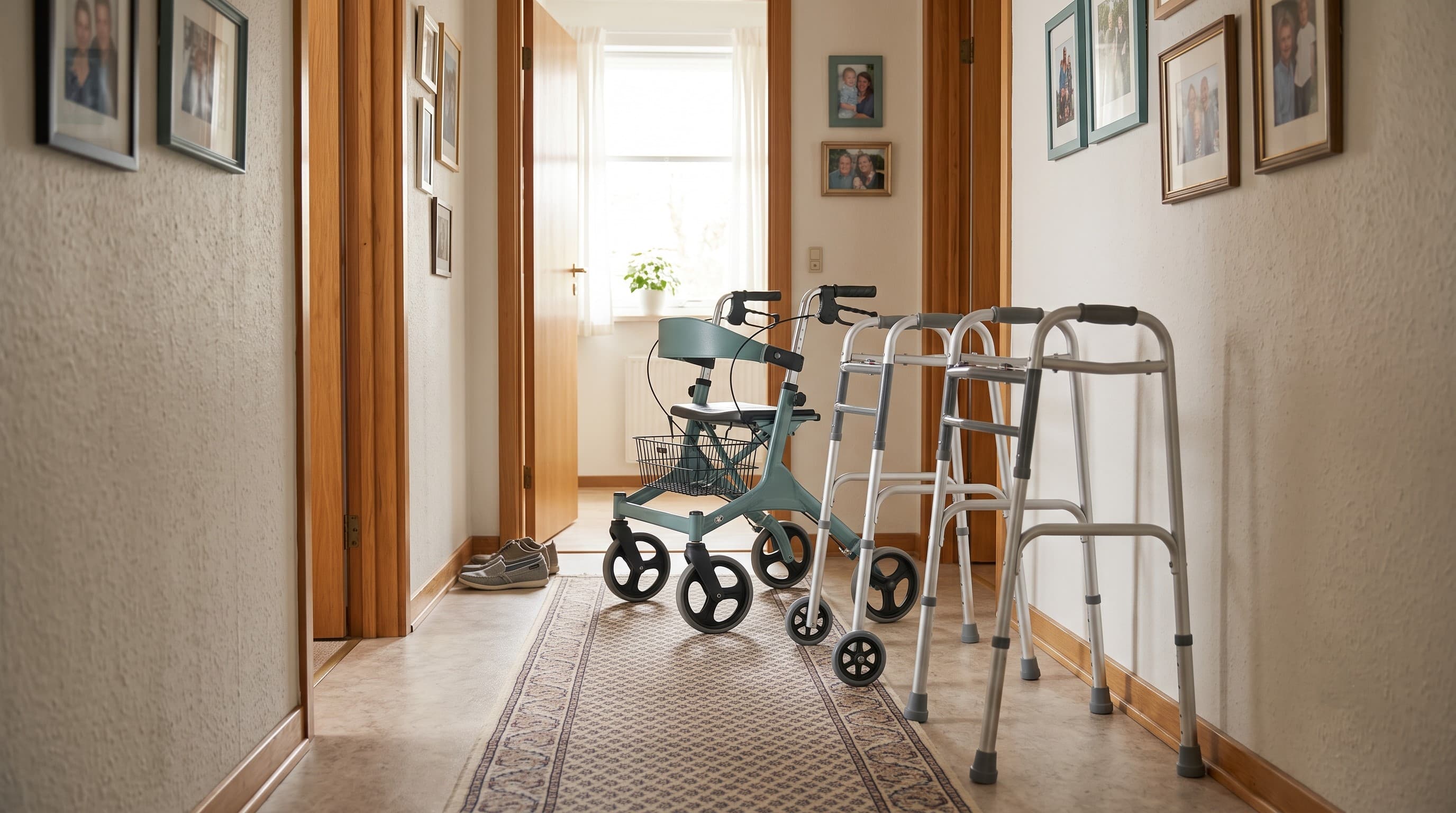
This guide explains the main walker categories and a practical decision path for families. It is written for adult children, spouses, and caregivers who want clear recommendations without sales pressure or medical jargon.
Some links may be affiliate links. We may earn a commission at no extra cost to you. See our affiliate disclosure.
Why walker type matters more than brand
Every walker on the market solves a different balance problem, and picking the wrong category is a common (and preventable) mistake. A walker that's too stable can slow someone down and encourage them to skip using it; a walker that's too mobile can roll out from under someone who needs firmer support.
The real decision points are: how much weight-bearing support is needed on each step, whether the person can safely lift a frame, how far and how often they walk in a single stretch, and whether the walker mostly stays indoors or needs to handle sidewalks, thresholds, and ramps. Getting these four answers first makes the rest of this guide much easier to apply.
A physical or occupational therapist can assess grip strength, gait pattern, and endurance in about 20-30 minutes, and that assessment is often covered by Medicare or private insurance with a doctor's referral. If one is available before purchase, it typically prevents the most expensive mistake in this category: buying a walker the person is either too weak to lift safely, or too strong to need.
Standard walkers without wheels
A standard (or "pickup") walker has four rubber-tipped legs and no wheels at all, which makes it the most stable option on the market. The tradeoff is that the user must lift the entire frame with each step, which requires reasonable upper-body strength and stamina and is noticeably slower than a wheeled option.
This style tends to work best for people recovering from hip or knee surgery, those with significant balance deficits who need maximum support, or anyone using it mainly for short indoor distances like bedroom to bathroom. It's a poor fit for someone with weak arms, arthritis in the hands or wrists, or anyone who needs to cover longer distances, since constant lifting becomes exhausting and can itself become a fall risk once fatigue sets in.
Standard walkers are also the least expensive category, typically running $30-$60 for a basic aluminum frame, and they fold flat for storage or car trips.
Two-wheel and front-wheel walkers
A two-wheel walker keeps the rear legs stationary with rubber tips while adding wheels to the front two legs. Instead of lifting the frame, the user pushes it forward in a smoother gliding motion, then the back legs act as a brake when weight is placed on the walker.
This middle-ground design suits people who found a standard walker too tiring to lift repeatedly, but who still want more stability than a fully wheeled rollator provides, since the rear tips prevent the walker from rolling away unexpectedly. It's a common recommendation after the first few weeks of recovery, once someone has progressed past needing maximum support but isn't yet steady enough for four wheels and no built-in brake.
Rollator walkers
A rollator has four wheels, hand brakes, and almost always includes a built-in seat and a small storage pouch or basket. Because all four legs roll, it moves with far less effort than either style above, which makes it the preferred choice for people who are relatively steady on their feet but need support and endurance for longer walks, errands, or getting to the mailbox and back.
The seat is a genuine advantage for anyone who tires over a distance and needs to rest partway, and the hand brakes let the user control speed on ramps or slight inclines. The tradeoff is that rollators require the coordination and hand strength to squeeze a brake reliably — someone with significant hand tremors, weak grip, or cognitive difficulty following a two-step "squeeze then lock" sequence may find the brakes unsafe rather than helpful, and a two-wheel or standard walker may actually be the safer choice for that person despite being less convenient.
Look for a wheel diameter of at least 6 inches if the walker will be used outdoors on uneven pavement, cracks, or grass — smaller wheels tend to catch and stop suddenly, which can throw the user off balance. For a deeper look at frame stability, brakes, and seat sizing, see our rollator buying guide.
Knee walkers and specialty options
A knee walker (sometimes called a knee scooter) is designed for a very different situation: a single-leg, below-the-knee injury, such as a broken ankle or foot surgery, where the person needs to keep all weight off one leg entirely rather than support both legs equally. The injured leg rests bent on a padded platform while the person steers and pushes with the healthy leg, similar to a scooter.
A hemi-walker, by contrast, is a compact, one-handed device for someone who has lost significant strength or coordination on one side of the body, often after a stroke. It offers a wider, more stable base than a cane but doesn't require two functioning hands the way a standard walker does.
Both of these are situational tools rather than general mobility aids, and both work best when recommended by a physical therapist or doctor who has assessed the specific injury or condition, since using the wrong specialty device can actually slow recovery or create new strain on the "good" side of the body. If a single-hand device might be enough on its own, our guide on choosing a cane covers that comparison in more depth.
How to choose in five practical steps
1. Map the real environment. Walk through the home (or have the caregiver do it) and note doorway widths, thresholds, throw rugs, stairs, and whether the walker needs to handle an uneven driveway or just flat indoor floors.
2. Confirm arm and hand strength honestly. Someone who can't comfortably lift 5-8 lbs repeatedly will struggle with a standard walker regardless of how stable it looks on paper.
3. Test the actual walking distance needed. A walker that only needs to go from bed to bathroom has different requirements than one that needs to make it to the mailbox and back.
4. Get the height right before anything else. Regardless of walker type, the handgrips should sit at wrist-crease height when the person stands normally with arms relaxed at their sides. A walker set too high or too low changes posture and increases strain with every step — see our walker height adjustment guide for the full fitting method.
5. Do a real trial, not a showroom demo. Most medical supply stores and some insurance plans allow a trial period. A walker that feels fine for two minutes in a store can feel very different after the fatigue of a full afternoon at home.
Key takeaways
- Match support level to real weight-bearing needs, not to how sturdy a walker looks — over-supporting a fairly steady person can be as risky as under-supporting an unsteady one.
- Confirm the person can physically operate the walker's mechanism (lifting, gliding, or braking) before buying, not after.
- Get a proper height fitting; an incorrectly adjusted walker undermines the benefit of any category.
- Reassess the choice after any fall, hospital stay, or noticeable change in strength or balance — the right walker six months ago may not be the right one today.
Next steps for caregivers
If a PT or doctor's evaluation is available, use it before buying — it's the single fastest way to avoid the most expensive mistake in this category. If one isn't readily available, start with the environment mapping and honest strength check above, then choose the narrowest category that still meets the need rather than defaulting to whichever walker looks most "complete."
Keep the original box, receipt, and return window in case the fit isn't right after a few real days of use at home — most mobility equipment retailers allow returns or exchanges within a set window, and a walker that isn't the right match is rarely obvious in the first five minutes. Once a walker is chosen, our guide on common walker mistakes to avoid covers the daily-use habits that matter just as much as the purchase itself.
Frequently asked questions
Who should read this guide about types of walkers for seniors: how to choose the right one?
Is this a substitute for medical advice?
How soon should we make changes after a fall or near-fall?
Related guides
Mobility Aids
Lightweight Walkers Explained: Pros and Cons for Seniors
Learn the pros and cons of lightweight walkers for seniors and how they support safe and comfortable mobility.
Mobility Aids
How to Choose the Right Walker for Indoor Use
Learn how to choose the best walker for indoor use. Discover key features, safety tips, and which walker types work best inside the home.
Mobility Aids
Walker Height Adjustment: Why It Matters for Senior Safety
Learn why proper walker height adjustment is essential for senior safety, balance, and comfort. Avoid strain and reduce fall risk with correct setup.
Mobility Aids
Rollator vs Standard Walker: Which Is Safer for Seniors?
Compare rollators and standard walkers to learn which option is safer for seniors based on balance, control, and indoor mobility needs.