
Mobility Aids
How to Choose a Cane for Seniors: Complete Guide
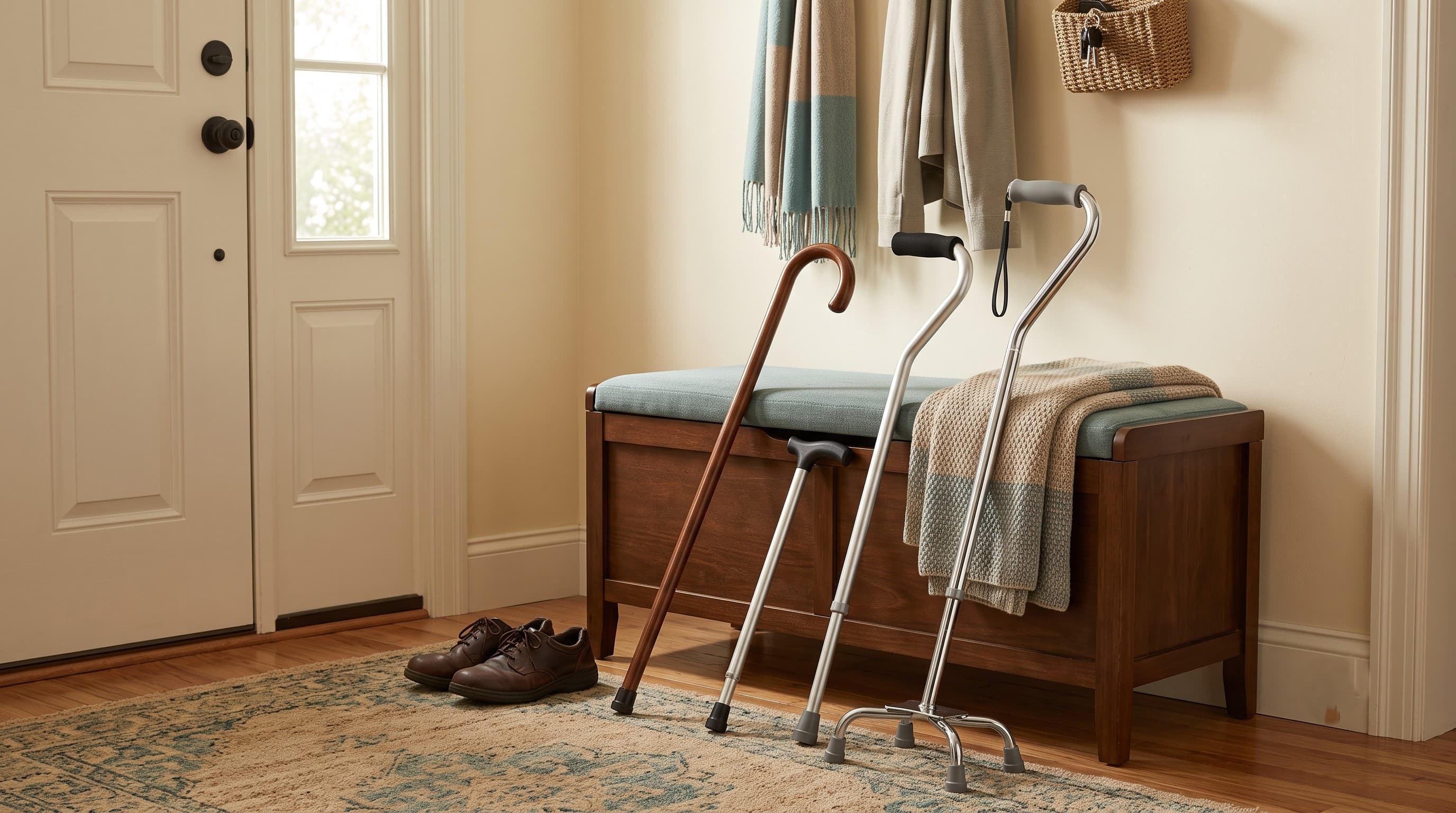
A cane looks like a simple device, but choosing the right type, setting the correct height, and using proper technique all meaningfully affect how much real support it provides. This guide covers each piece. It is written for adult children, spouses, and caregivers who want clear recommendations without sales pressure or medical jargon. If it's still unclear whether a cane or walker is the better fit, our cane vs. walker guide covers that decision first.
Some links may be affiliate links. We may earn a commission at no extra cost to you. See our affiliate disclosure.
Cane types explained
A single-point cane (one rubber tip) is the lightest, most common style, suited to mild balance support or reducing weight on one leg when overall stability is fairly reliable. A quad cane, with four small feet in a small base, offers more stability than a single-point cane and can stand upright on its own, but it's bulkier and can actually be less stable on uneven or outdoor terrain, since all four feet need to contact the ground evenly, which a perfectly flat single point doesn't require.
An offset cane (with a curved shaft that positions the handle directly over the shaft's centerline) distributes weight more evenly through the hand and wrist than a straight-shaft cane, which matters for anyone using the cane frequently throughout the day or who has some hand or wrist discomfort with a standard straight cane.
Measuring cane height
The same wrist-crease method used for walkers applies to canes: with the person standing normally, arms relaxed at their sides, wearing their typical footwear, the top of the cane's handle should align with the crease at the wrist. This positions the elbow at a slight, natural bend (roughly 15-20 degrees) when gripping the cane, which provides the most stable, least fatiguing support.
Adjustable canes allow fine-tuning after the initial estimate, and it's worth rechecking height with a real walking test — a static standing measurement is a good start, but watching for a hunched or overly extended arm during actual walking catches an imperfect fit that a standing check alone might miss.
Which hand should hold the cane
A common and important mistake is holding the cane on the same side as the weaker leg — the cane should be held in the hand opposite the weaker leg or hip, since this allows the cane and the weaker leg to work together, both moving forward at roughly the same time, providing support exactly when the weaker side needs it most. Holding it on the same side as the weakness actually removes support at the critical moment rather than providing it.
This detail is easy to get backward, and it's worth double-checking with a doctor or physical therapist if there's any uncertainty about which side is actually weaker, since the "obvious" side isn't always the correct one, particularly with conditions like arthritis that can affect joints unevenly in ways that aren't immediately apparent.
Walking and stair technique basics
The basic walking pattern moves the cane forward at the same time as the weaker leg, then steps forward with the stronger leg while the cane and weaker leg both bear weight — a "cane and bad leg together" rhythm that's worth practicing deliberately until it becomes automatic. For stairs, a commonly taught technique is "up with the good leg, down with the bad leg," meaning the stronger leg leads going up and the weaker leg (along with the cane) leads going down, using the handrail as the primary support and the cane as secondary support during stair use specifically.
Practicing this stair technique on a low, safe step (or with someone present for support) before relying on it for a full staircase helps build confidence and correct habits before they're needed in a higher-stakes situation.
When a cane is not enough
A cane's single point of ground contact provides real but limited support — recurring near-falls, a growing pattern of grabbing furniture or walls for additional support, or instability affecting both legs rather than one side are all signals that a walker's wider base may be needed instead. This isn't a failure of the cane or the person using it; it simply means the balance need has changed beyond what a single point of contact can address safely. Our walker types guide covers the options at that point.
Care and replacement
The rubber tip wears down with regular use and should be checked periodically — a worn, smooth tip provides meaningfully less grip than a fresh one, and tips are inexpensive and simple to replace without needing a whole new cane. It's worth checking the tip specifically after any change in typical walking surface (a move, new flooring) or after an extended period of heavy daily use, since wear isn't always obvious from a quick glance.
For a folding cane, the joints and locking mechanism deserve periodic checking too, since a joint that's developed play or doesn't lock fully straight can flex unexpectedly under weight in a way a solid one-piece cane never would.
Handle and grip options
The handle is where the hand meets the cane, and its shape affects both comfort and safety more than its appearance suggests. A rounded crook handle (the classic curved shape) is easy to hang on an arm or a chair when not in use but concentrates pressure on a smaller area of the palm, which can be uncomfortable for extended use or for someone with arthritis. An ergonomic or contoured handle, shaped to fill the palm and distribute weight across a larger surface, tends to be more comfortable for regular, all-day use and reduces pressure on any single point of the hand.
For someone with significant hand or wrist arthritis, a handle that keeps the wrist in a more neutral position (rather than bent) can reduce strain considerably. It's worth having the person actually hold a few handle styles if possible, since comfort here is genuinely individual and hard to predict from a description — the most comfortable handle for one person can feel awkward for another with different hand size or joint sensitivity.
Material and weight considerations
Canes come in wood and various metals, most commonly aluminum, and the practical differences come down to weight, adjustability, and portability. Aluminum canes are lightweight and usually height-adjustable via a push-button mechanism, which makes them easy to fine-tune and a practical default for most people. Wooden canes are sturdy and often preferred for their appearance, but they must be cut to the correct length (not adjustable afterward), so getting the height right at purchase matters more with wood than with an adjustable aluminum cane.
Folding canes, which collapse into several segments, are worth considering for anyone who needs a cane only intermittently or wants one that packs away for travel — though, as noted above, the folding joints add points that should be checked periodically to ensure they lock solidly and don't develop play over time.
Key takeaways
- Choose cane type (single-point, quad, or offset) based on stability needs and how much time is spent on uneven versus flat terrain.
- Measure height using the wrist-crease method with the person standing in typical footwear, and verify with an actual walking test.
- Hold the cane in the hand opposite the weaker leg or hip — a commonly reversed detail worth double-checking with a professional if there's any uncertainty.
- Handle shape and material affect comfort and safety; have the person try a few handle styles, and get wooden cane height right at purchase since it can't be adjusted afterward.
Next steps for caregivers
Confirm cane type, height, and which-hand technique together in one session, since getting one right while getting another wrong (for example, correct height but wrong hand) still leaves significant support on the table. If uncertainty remains about type or hand side, a quick check with a doctor or physical therapist settles it more reliably than guessing.
Practicing on stairs and turns in a low-stakes setting, before relying on the cane for a genuinely challenging staircase or a crowded space, builds the muscle memory needed to use it correctly and confidently when it matters most. For a wider view of how canes compare to other mobility aids, see our mobility aids comparison guide.
Frequently asked questions
Who should read this guide about how to choose a cane for seniors: complete guide?
Is this a substitute for medical advice?
How soon should we make changes after a fall or near-fall?
Related guides
Mobility Aids
Cane vs Walker: Which Is Better for Seniors?
Cane vs walker for seniors — learn the key differences, when to switch from a cane to a walker, and how to choose the right mobility aid for safety.
Mobility Aids
Mobility Aids for Seniors: Complete Comparison Guide
Compare all mobility aids for seniors including canes, walkers, rollators, wheelchairs, and scooters. Find out which aid is right for your specific needs with this complete guide.
Mobility Aids
Walker Accessories for Seniors: What You Actually Need
Discover the walker accessories for seniors that actually make a difference — bags, glides, grip covers, trays, and maintenance tips for safe daily use.
Mobility Aids
Walker for Elderly: How to Choose and Use One Safely
Learn how to choose the right walker for elderly individuals, set the correct height, use it safely, and avoid common mistakes. Complete guide for families and caregivers.