
Home Safety
Fall Prevention Exercises for Seniors at Home
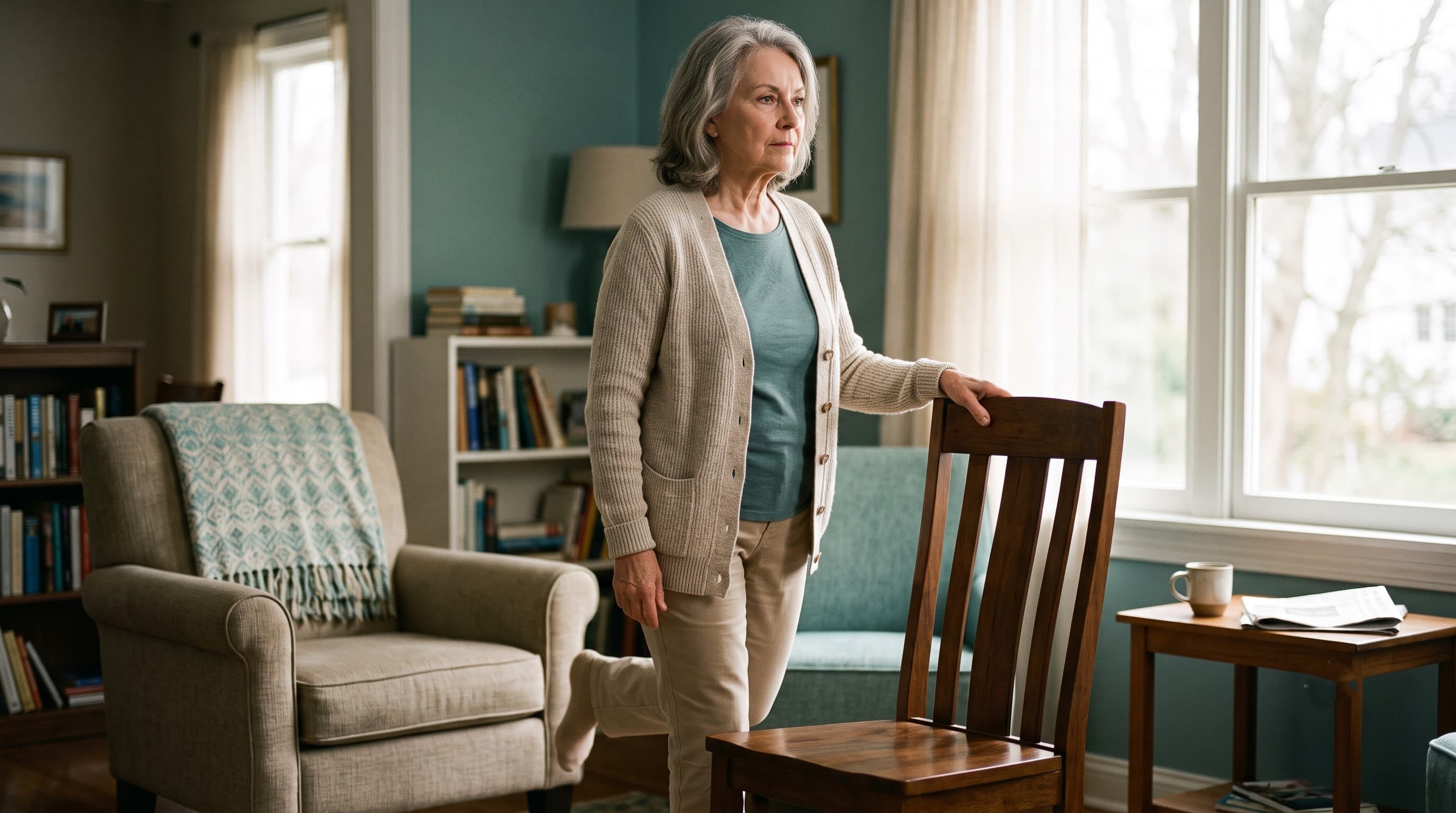
Exercise is one of the few fall-prevention tools that addresses the underlying strength and balance behind a fall, rather than just removing hazards from the environment. This guide covers general categories of exercise worth discussing with a doctor or physical therapist, not a specific prescribed routine. It is written for adult children, spouses, and caregivers who want clear recommendations without sales pressure or medical jargon. Pair this with our home fall-prevention guide for the environmental side of the same goal.
Some links may be affiliate links. We may earn a commission at no extra cost to you. See our affiliate disclosure.
Safety first before any routine
Before starting any new exercise routine, it's worth checking in with a doctor first, particularly if there's a history of falls, dizziness, joint pain, heart or lung conditions, or recent surgery — a doctor can flag anything that needs a modified approach or professional supervision rather than a general home routine. Having a sturdy chair or counter within arm's reach for any standing exercise, and never attempting balance work without something stable nearby to grab if needed, are baseline safety rules regardless of which exercises are chosen.
Starting at an easier level than feels necessary and progressing gradually over weeks, rather than starting at a challenging level immediately, reduces the risk of a fall or injury during the exercise itself, which would defeat the entire purpose.
Strength basics that matter for standing
Leg and hip strength directly affect the ability to stand up from a chair, catch balance after a stumble, and climb stairs safely, which makes them a reasonable general focus. Sit-to-stand practice — rising from a chair without using the arms for support, then sitting back down slowly and with control — directly builds the specific strength used dozens of times a day for this exact movement, and can be done holding onto a counter or chair back initially for support while building confidence.
Gentle leg-strengthening movements like slow marching in place while holding a counter, or seated leg lifts, also support the muscles used for walking and stair climbing without requiring any equipment.
Balance practice with support
Balance exercises should always be done near a sturdy support — a counter, a wall, or a heavy piece of furniture — that can be grabbed instantly if needed. Standing on one foot briefly while holding a counter, gradually reducing hand support as confidence builds, is a commonly used balance exercise, as is a heel-to-toe standing position (one foot directly in front of the other) held for a few seconds near support.
Balance work is often the category with the most direct fall-prevention benefit, since it practices the exact skill (recovering from a shift in weight) that determines whether a stumble becomes a catch or a fall — but it's also the category where safety precautions matter most, given the exercises deliberately challenge stability.
Seated options
For anyone with more significant balance concerns, recent falls, or conditions that make standing exercise inadvisable without direct supervision, seated exercises still provide meaningful benefit: seated marching (lifting knees alternately while seated), gentle ankle circles, and seated leg extensions all support strength and circulation without the fall risk that standing exercises inherently carry.
Seated exercise is also a reasonable starting point for anyone newly beginning a routine, with a gradual, doctor- or PT-guided progression toward standing exercises once comfort and strength build.
How often to practice
General guidance from health organizations like the National Institute on Aging suggests balance and strength activities several times a week, though the right frequency and intensity for a specific person depends on their current health and any conditions a doctor or PT should weigh in on. Short, consistent sessions (10-15 minutes, a few times a week) tend to be more sustainable and safer than infrequent, longer sessions that might push too hard on a day the person is more fatigued or less steady than usual.
Pairing exercise with an existing daily habit — right after breakfast, or during a favorite TV program's commercial breaks — tends to build consistency better than treating it as a separate task to remember on top of an already full day.
When to get professional guidance
A physical therapist can design a specific, personalized program based on an actual assessment of strength, balance, and any existing conditions, which is considerably more precise than a general routine from an article. This is particularly worth pursuing after any recent fall, if dizziness accompanies standing or exercise, if joint pain limits movement, or if there's any uncertainty about which exercises are appropriate given a specific health condition — a home exercise routine should never substitute for that kind of individualized guidance when it's genuinely needed. The same assessment can also help answer whether a mobility aid like a walker is needed alongside the exercise plan.
Many Medicare and private insurance plans cover a PT evaluation and a set number of follow-up sessions with a doctor's referral, particularly following a fall or hospitalization, which makes this a more accessible option than it might initially seem for a family concerned about cost.
Key takeaways
- Check with a doctor before starting any new routine, particularly with a history of falls, dizziness, or existing health conditions.
- Always have sturdy support (a counter, wall, or chair) within reach for any standing or balance exercise.
- Strength (especially sit-to-stand practice) and balance work near support are the two categories most directly tied to fall prevention.
- A physical therapist can design a personalized program — worth pursuing after any recent fall or if dizziness, pain, or uncertainty comes up.
- Consistency matters more than intensity — short, regular sessions build lasting benefit better than infrequent, harder pushes.
Next steps for caregivers
Start with a conversation with the person's doctor about which general categories of exercise are appropriate given their specific health picture, rather than starting a routine sourced only from general reading. From there, begin with seated or supported standing options and progress gradually, prioritizing consistency over intensity.
Keeping a simple log — which exercises, how many repetitions, and how the person felt afterward — can help a doctor or PT fine-tune the routine over time, and it also makes it easier to notice gradual improvement that might otherwise go unremarked week to week. Our home safety checklist is a good companion for tackling the environmental side at the same time.
Frequently asked questions
Who should read this guide about fall prevention exercises for seniors at home?
Is this a substitute for medical advice?
How soon should we make changes after a fall or near-fall?
Related guides
Home Safety
How to Prevent Slips and Falls at Home for Seniors
Learn how to prevent slips and falls at home for seniors with this room-by-room guide covering bathrooms, bedrooms, staircases, lighting, and more.
Home Safety
Home Safety Checklist for Seniors: Room by Room Guide
Use this complete room by room home safety checklist for seniors to identify and fix every fall risk in the home — from bathroom to bedroom, kitchen to staircase.
Home Safety
Best Night Lights for Seniors to Prevent Falls
Discover the best night lights for seniors, where to place them, and which types prevent falls most effectively. A complete guide to senior home night lighting.
Home Safety
Bedroom Safety for Seniors: Complete Guide to Preventing Nighttime Falls
Complete bedroom safety guide for seniors covering bed height, bed rails, night lighting, flooring, furniture placement, and emergency access to prevent nighttime falls.