
Mobility Aids
Cane vs Walker: Which Is Better for Seniors?
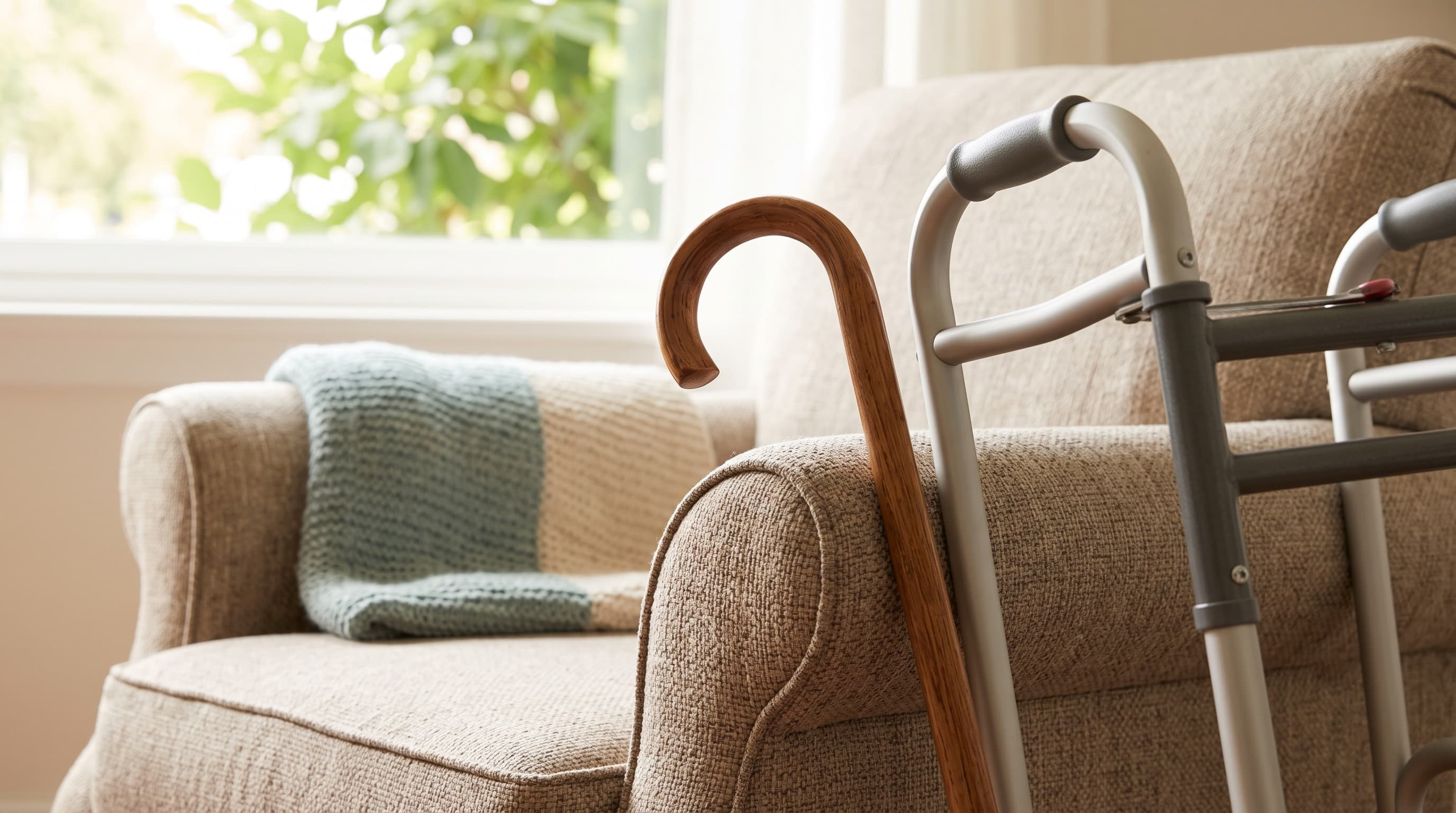
This guide explains deciding between a cane and a walker without guesswork. It is written for adult children, spouses, and caregivers who want clear recommendations without sales pressure or medical jargon. If a cane turns out to be the right fit, our guide to choosing a cane covers types, height, and technique in more depth.
Some links may be affiliate links. We may earn a commission at no extra cost to you. See our affiliate disclosure.
What a cane can and cannot do
A cane's job is to widen a person's base of support just enough to correct mild unsteadiness or take pressure off one weaker leg or hip — it is a supplement to normal walking, not a replacement for it. Used correctly, the cane is held on the stronger side of the body (not the weaker side, which is a common and important mistake), and it moves forward at the same time as the weaker leg.
Because a cane only contacts the ground at a single point, it offers meaningful help with mild balance problems, arthritis pain in one leg, or general steadiness on familiar ground — but it can't compensate for significant instability in both legs, poor trunk control, or the kind of unpredictable balance loss that can happen after a stroke or with certain neurological conditions. In those situations, a single point of contact simply isn't enough base to catch a real loss of balance.
When a walker becomes the safer option
The clearest signal that a cane is no longer sufficient is a pattern, not a single event: repeated near-falls, a growing habit of grabbing furniture or walls while walking (sometimes called "furniture surfing"), or a genuine fear of open spaces without something solid nearby. Any one of these on its own might be manageable, but together they usually mean the person needs a wider, four-point base than a cane can offer.
Weakness that affects both legs rather than one side is another strong signal — a cane is specifically designed to offload one side, so if both legs are involved, a walker's symmetrical support makes more sense. The same is true after a hospital stay or extended bed rest, where general deconditioning (not a specific injury) has reduced overall strength and endurance. Our walker types guide covers the options once a walker becomes the better fit.
Signs it is time to reassess
Balance needs aren't static, and a device that was right six months ago may not be right now. Watch for new dizziness (especially when standing up quickly, which can signal blood pressure changes or medication side effects worth flagging to a doctor), longer recovery time after a cold or minor illness, a new reluctance to leave the house, or a fall — even a minor one that didn't cause injury.
Any new medication, especially ones affecting blood pressure, blood sugar, or sedation, is also worth flagging, since dizziness is a common side effect that changes balance needs almost overnight. Reassessing doesn't need to wait for a scheduled appointment — a quick call to the prescribing doctor or a home visit from a physical therapist can settle the question faster than guessing.
Home layout and social factors
Equipment choice isn't purely physical — dignity and self-image matter, and dismissing that tends to backfire. It's common for someone to accept a cane readily but resist a walker, associating it more strongly with dependence or old age, even when a walker would genuinely be safer for them.
Rather than framing the conversation around what a person "can't do anymore," it tends to go better when framed around what the walker makes possible: staying active, continuing to garden or visit friends, or avoiding a fall that could mean a hospital stay and a much bigger loss of independence. Bringing in a trusted voice — a doctor, physical therapist, or someone the person already respects on this topic — often lands better than a family member repeating the same suggestion.
Trying before buying
Both canes and walkers are worth testing on the actual flooring used at home before committing to one, since carpet, hardwood, and tile all behave differently underfoot and under rubber tips. Many medical supply stores offer a short trial period, and some private insurance plans or Medicare will cover a home visit from a physical therapist specifically to evaluate gait and recommend the right device and the right height.
If a formal evaluation isn't available, a reasonable substitute is watching the person use the device on stairs, getting up from a favorite chair, and moving through the narrowest doorway in the home — three situations that reveal problems a flat hallway demo won't show.
A caregiver conversation framework
Lead with a specific, recent moment rather than a general statement — "I noticed you grabbed the counter twice this week" lands very differently than "I think you need a walker." Specific observations are harder to dismiss and don't feel like a judgment about aging in general. Our guide on recognizing when a walker is needed covers other early warning signs worth watching for.
Frame the goal as staying active and avoiding a fall-related injury, since a fall serious enough to require a hospital stay is often what actually accelerates loss of independence — not the walker itself. If the person pushes back, it's reasonable to suggest a short trial period rather than a permanent decision; agreeing to "just try it for two weeks" is a much smaller ask than agreeing to change how they see themselves.
Key takeaways
- A cane offloads one side; a walker offloads both sides and offers a wider base — match the device to which pattern of weakness is actually present.
- Recurring near-falls or furniture-surfing are a stronger signal than any single fall to reassess the current device.
- New medications, illness, or hospital stays are common (and often overlooked) reasons balance needs change quickly.
- Frame the switch around staying active, not around loss — it changes how the conversation goes.
Next steps for caregivers
If there's any uncertainty about which device fits the current level of need, a physical therapist evaluation is worth the appointment — it typically takes under an hour and directly answers the cane-vs-walker question based on actual gait and strength testing, rather than guesswork from a store aisle.
If a walker is the right call but the person is resistant, a trial period framed as temporary is often the easiest way to get real-world evidence everyone can agree on.
Frequently asked questions
Who should read this guide about cane vs walker: which is better for seniors??
Is this a substitute for medical advice?
How soon should we make changes after a fall or near-fall?
Related guides
Mobility Aids
How to Choose a Cane for Seniors: Complete Guide
Learn how to choose the right cane for seniors including cane types, correct height measurement, which hand to use, stair technique, and when to switch to a walker.
Mobility Aids
Mobility Aids for Seniors: Complete Comparison Guide
Compare all mobility aids for seniors including canes, walkers, rollators, wheelchairs, and scooters. Find out which aid is right for your specific needs with this complete guide.
Mobility Aids
Walker Accessories for Seniors: What You Actually Need
Discover the walker accessories for seniors that actually make a difference — bags, glides, grip covers, trays, and maintenance tips for safe daily use.
Mobility Aids
Walker for Elderly: How to Choose and Use One Safely
Learn how to choose the right walker for elderly individuals, set the correct height, use it safely, and avoid common mistakes. Complete guide for families and caregivers.