
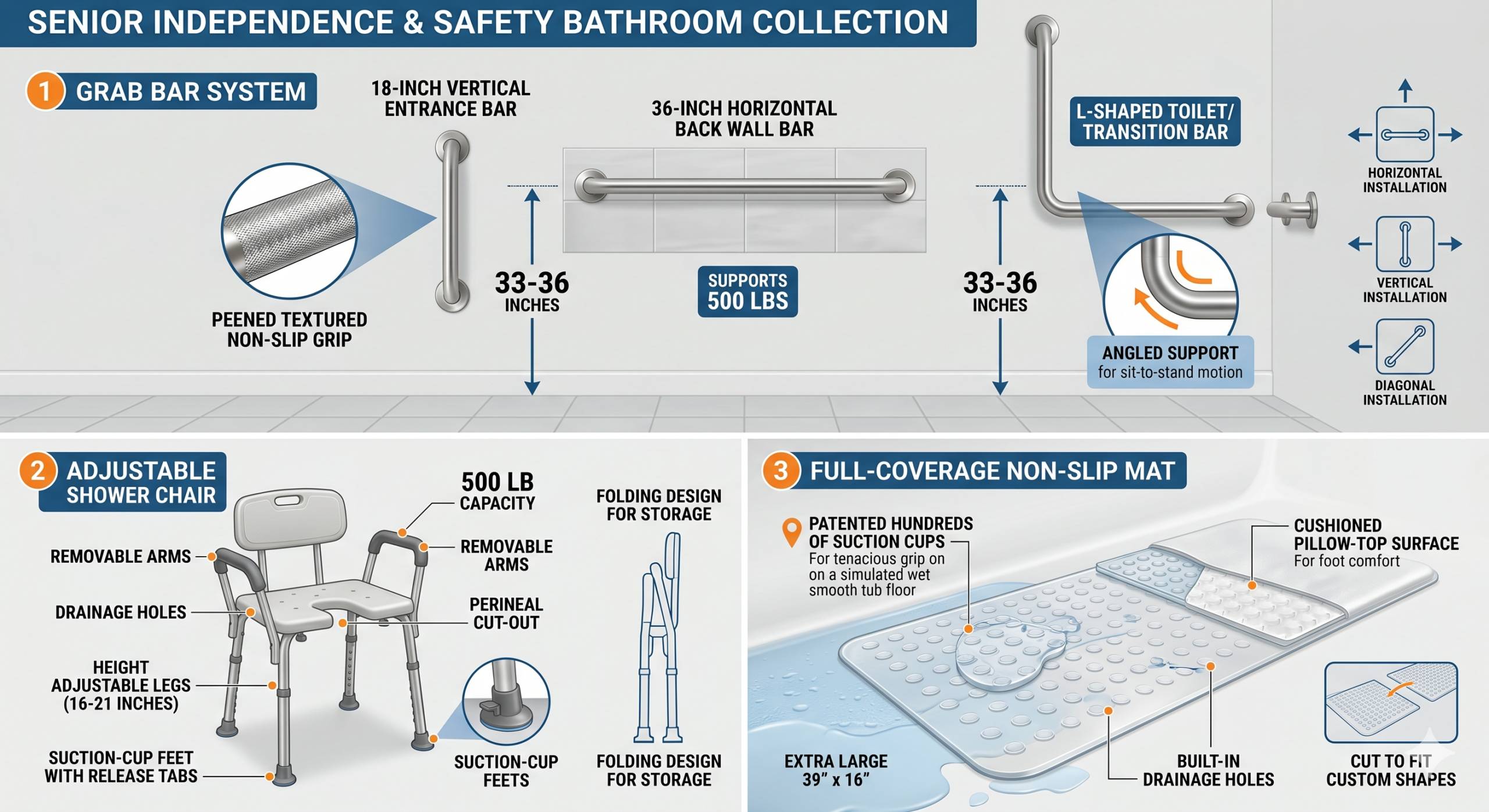
Bathrooms are one of the most common places where seniors experience slips and falls. Wet surfaces, tight spaces, and poor lighting can increase the risk of injury. Making simple safety improvements in the bathroom can significantly reduce accidents and help seniors maintain independence at home.
Why Bathrooms Are High-Risk Areas for Seniors
Bathrooms often have hard surfaces, water spills, and limited space to move safely. Seniors may also feel unsteady when standing up, sitting down, or stepping in and out of the shower.
These factors make bathrooms one of the most dangerous rooms in the home for older adults.
Common Bathroom Hazards for Seniors
Preventing slips and falls throughout the home is essential for senior safety.
Some common bathroom risks include:
- Slippery floors
- Lack of support when standing or sitting
- Poor lighting
- High bathtub or shower edges
- Loose rugs or mats
Identifying these hazards is the first step toward improving safety.
Simple Bathroom Safety Improvements That Help
Small changes can make a big difference in bathroom safety:
- Adding non-slip mats on floors
- Improving lighting near sinks and showers
- Keeping frequently used items within easy reach
- Removing loose rugs
These adjustments reduce fall risk without major renovations.
The Importance of Support and Stability
Support features help seniors maintain balance while moving in the bathroom. Stable surfaces and proper placement of support options allow seniors to move with confidence and reduce fear of falling.
Proper grab bar placement in the bathroom can greatly improve balance and reduce the risk of falls.
How Caregivers Can Improve Bathroom Safety
Caregivers can help by:
- Observing how seniors move in the bathroom
- Identifying unsafe areas
- Encouraging safety upgrades
- Making changes gradually
Caregiver involvement ensures safety improvements are effective and comfortable.
Frequently Asked Questions
Why are bathrooms dangerous for seniors?
Bathrooms have wet floors and limited space, increasing the risk of slips and falls.
Can small changes really improve bathroom safety?
Yes, simple changes like better lighting and non-slip surfaces can significantly reduce accidents.
Should seniors avoid using the bathroom alone?
With proper safety measures, many seniors can use the bathroom independently.
When should caregivers help with bathroom safety?
Caregivers should assist when balance issues or falls become a concern.
You may also find helpful:
- How to Prevent Slips and Falls at Home for Seniors
- Where to Place Grab Bars in a Bathroom for Seniors
Conclusion
Making a bathroom safer for seniors does not require major remodeling. Simple safety improvements can greatly reduce fall risk and help seniors maintain confidence and independence at home.
4 thoughts on “How to Make a Bathroom Safety for Seniors”
Comments are closed.