
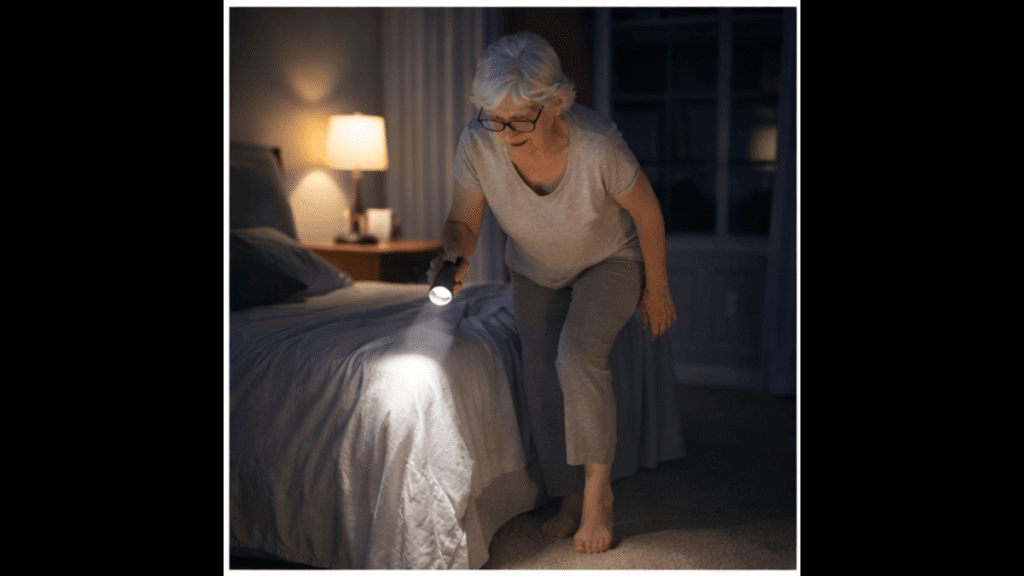
For seniors living alone, bedroom safety is just as important as bathroom and hallway safety. Poor lighting, clutter, and unstable furniture can increase the risk of falls, especially at night. Making simple safety adjustments in the bedroom can help seniors move confidently and reduce the risk of accidents.
Why Bedroom Safety Matters for Seniors
Seniors spend a significant amount of time in the bedroom, including during nighttime hours when visibility is low. Getting in and out of bed safely is essential to prevent slips, falls, and injuries.
A safe bedroom environment supports independence and peace of mind.
Common Bedroom Hazards for Seniors
Some common bedroom risks include:
- Poor nighttime lighting
- Cluttered walking paths
- Loose rugs or cords
- Unstable furniture
- Beds that are too high or too low
Identifying these hazards helps prevent accidents.
Lighting Improvements That Enhance Safety
Avoiding common lighting mistakes can further reduce fall risk for seniors.
Proper lighting plays a key role in bedroom safety. Helpful improvements include:
- Using bedside lamps within easy reach
- Installing nightlights along walking paths
- Ensuring light switches are easy to access
Good lighting reduces the risk of nighttime falls.
Bed Height and Accessibility
Bed height affects how easily seniors can sit down or stand up. Beds that are too high or too low may increase strain and instability.
A bed that allows feet to rest flat on the floor when sitting provides better balance and comfort.
Keeping Walkways Clear and Safe
Clear walking paths help seniors move safely around the bedroom. Removing clutter, securing cords, and arranging furniture thoughtfully reduces tripping hazards.
Simple organization can greatly improve safety.
How Caregivers Can Improve Bedroom Safety
Caregivers can help by:
- Assessing nighttime movement habits
- Identifying unsafe areas
- Encouraging gradual safety changes
- Supporting consistent routines
Caregiver involvement improves long-term safety outcomes.
Frequently Asked Questions
Why is bedroom safety important for seniors living alone?
Bedrooms often have low lighting and obstacles that increase fall risk.
Can small bedroom changes reduce accidents?
Yes, simple adjustments can significantly improve safety.
Should seniors use nightlights?
Nightlights help improve visibility during nighttime movement.
When should caregivers reassess bedroom safety?
Safety should be reassessed after any fall or mobility change.
Related home safety resources:
Conclusion
Improving bedroom safety helps seniors living alone maintain independence and confidence. Simple changes in lighting, layout, and accessibility can greatly reduce the risk of falls and injuries at home.
2 thoughts on “Bedroom Safety Tips for Seniors Living Alone”
Comments are closed.