
Home Safety
Lighting Mistakes That Increase Fall Risk for Seniors
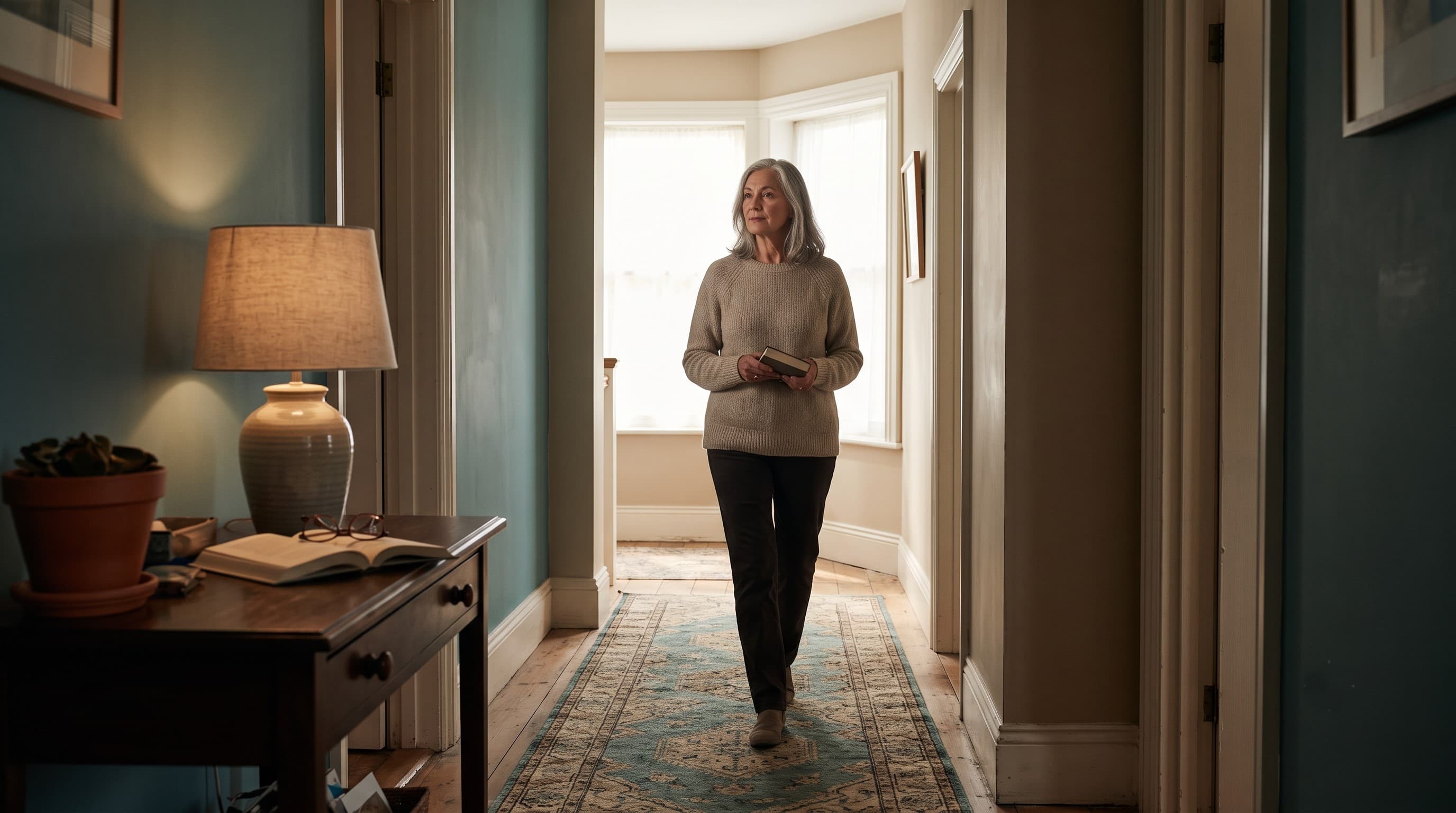
Most homes have "enough" lighting in the general sense, but fall-prevention lighting is about something more specific: consistent, glare-free visibility exactly along the paths and transitions where falls actually happen. This guide walks through the mistakes that undermine that goal even in homes that otherwise seem well-lit. It is written for adult children, spouses, and caregivers who want clear recommendations without sales pressure or medical jargon.
Some links may be affiliate links. We may earn a commission at no extra cost to you. See our affiliate disclosure.
Dark path from bed to bathroom
The single most common lighting gap is the route used most at night: from bed to bathroom. Many homes have adequate lighting in each room individually but nothing along the connecting hallway, which forces navigation by memory in the dark — reasonable during the day, considerably riskier at 2am when disoriented from sleep. A continuous, low-level light source along this specific path (not bright enough to fully wake the person, but enough to see clearly) closes this gap directly — our night lights guide covers specific product types and placement for exactly this route.
One bright overhead light only
A single central overhead fixture can make a room feel generally bright while still leaving specific zones — a shower corner, the space beside a favorite reading chair, a closet interior — in relative shadow that isn't obvious until actually standing in that spot. This mismatch between "the room feels well-lit" and "this specific transfer or activity zone is actually shadowed" is a common and easy-to-miss lighting mistake, since it requires checking each functional zone individually rather than judging the room as a whole.
Overly bright single-source lighting can also create glare issues of its own: a single harsh overhead bulb, particularly one with a cooler blue-white color temperature, can cause enough contrast between the lit and unlit areas of a room that the unlit areas become harder to navigate by comparison, even though objectively there's more light in the room overall than a softer, more evenly distributed setup would provide.
Ignoring stairs and landings
Stairs deserve dedicated lighting attention beyond whatever general room lighting exists nearby, since shadows across steps can hide the actual edge of a tread — exactly the visual information needed to judge each step safely. A common mistake is having a light switch at only one end of the stairs, which means either climbing or descending in the dark until reaching the switch, precisely when good visibility matters most. Our stair safety guide covers handrails, tread contrast, and other stair-specific fixes alongside lighting.
Landings, particularly at a turn in the staircase, are also commonly under-lit, since they're often positioned between two light sources that don't quite overlap, creating a genuinely dark pocket exactly at a point requiring a directional change.
No light near chairs and entries
The transition into and out of a favorite chair, and the moment of entering the home through a front or side door, both deserve more lighting attention than they typically receive. A dim reading corner might feel atmospheric during the day but becomes a genuine hazard when standing up at dusk without adequate light to see the floor and any nearby furniture edges clearly.
Entryways, particularly exterior ones, are often lit for security (a porch light) but not necessarily for the specific task of seeing a threshold, doormat edge, or the first interior step clearly while carrying keys, mail, or grocery bags.
Uneven brightness between rooms
Moving from a brightly lit room into a much dimmer one (or vice versa) requires the eyes to adjust, and this adjustment takes meaningfully longer for older eyes than younger ones — often several times longer. A home with wildly inconsistent brightness between adjoining rooms forces this adjustment repeatedly throughout a normal day, and a fall can happen during exactly that brief adjustment window, when vision temporarily lags behind actual movement into the new space.
Aiming for more consistent brightness levels between frequently connected rooms, rather than one very bright room next to one quite dim one, reduces how often this adjustment lag becomes a factor.
A practical correction plan
A reasonable sequence for fixing these issues: start with the bedroom-to-bathroom nighttime path, since it's the highest-frequency, highest-risk gap in most homes. Next, address stairs specifically, checking for switches at both ends and adequate landing lighting. Then walk each room checking specific functional zones (chairs, closets, shower areas) rather than judging general room brightness, and finally aim to even out jarring brightness differences between rooms that connect directly to each other.
Bulb color temperature is worth standardizing as part of this plan too — mixing cool blue-white bulbs in some rooms with warm bulbs in others adds yet another layer of adjustment difficulty beyond brightness alone, so choosing one consistent, warm-leaning color temperature throughout the main living and nighttime-use areas simplifies the visual experience of moving between them.
Key takeaways
- The bedroom-to-bathroom nighttime path is the highest-priority lighting gap in most homes — address it first if only one change is possible right now.
- A room can feel generally well-lit while specific functional zones (chairs, shower areas, closets) remain shadowed — check each zone individually, not just overall room brightness.
- Stairs need dedicated attention: switches at both ends and lighting that reaches landings, not just the general area nearby.
- Aging eyes take longer to adjust between light levels than younger eyes — aim for more consistent brightness between rooms that connect directly rather than sharp contrasts.
- Standardize bulb color temperature across main living areas to reduce the visual adjustment required when moving between rooms.
Next steps for caregivers
Walk the home at night, lights off, tracing the actual paths used most — this reveals gaps that a daytime walkthrough with normal lighting won't show. Address the bedroom-to-bathroom path and stairs first, then work through individual functional zones room by room. Our bedroom safety guide covers the rest of that primary route in depth.
Motion-sensor lights are worth prioritizing for any gap identified this way, since they solve the "remembering to turn on a light while half-asleep" problem automatically, rather than relying on a habit that's genuinely hard to maintain at 2am.
If a recent fall happened at night, it's worth treating the lighting fixes above as an immediate priority while also mentioning the pattern to a doctor, since nighttime falls specifically can sometimes point to a medication timing issue or a vision change worth investigating alongside the environmental fix.
Frequently asked questions
Who should read this guide about lighting mistakes that increase fall risk for seniors?
Is this a substitute for medical advice?
How soon should we make changes after a fall or near-fall?
Related guides
Home Safety
Best Night Lights for Seniors to Prevent Falls
Discover the best night lights for seniors, where to place them, and which types prevent falls most effectively. A complete guide to senior home night lighting.
Home Safety
Bedroom Safety for Seniors: Complete Guide to Preventing Nighttime Falls
Complete bedroom safety guide for seniors covering bed height, bed rails, night lighting, flooring, furniture placement, and emergency access to prevent nighttime falls.
Home Safety
How to Prevent Slips and Falls at Home for Seniors
Learn how to prevent slips and falls at home for seniors with this room-by-room guide covering bathrooms, bedrooms, staircases, lighting, and more.
Home Safety
Best Non-Slip Flooring for Seniors: Room by Room Guide
Discover the best non-slip flooring for seniors room by room including bathrooms, bedrooms, kitchens and hallways. Covers full replacement options and affordable quick fixes.