
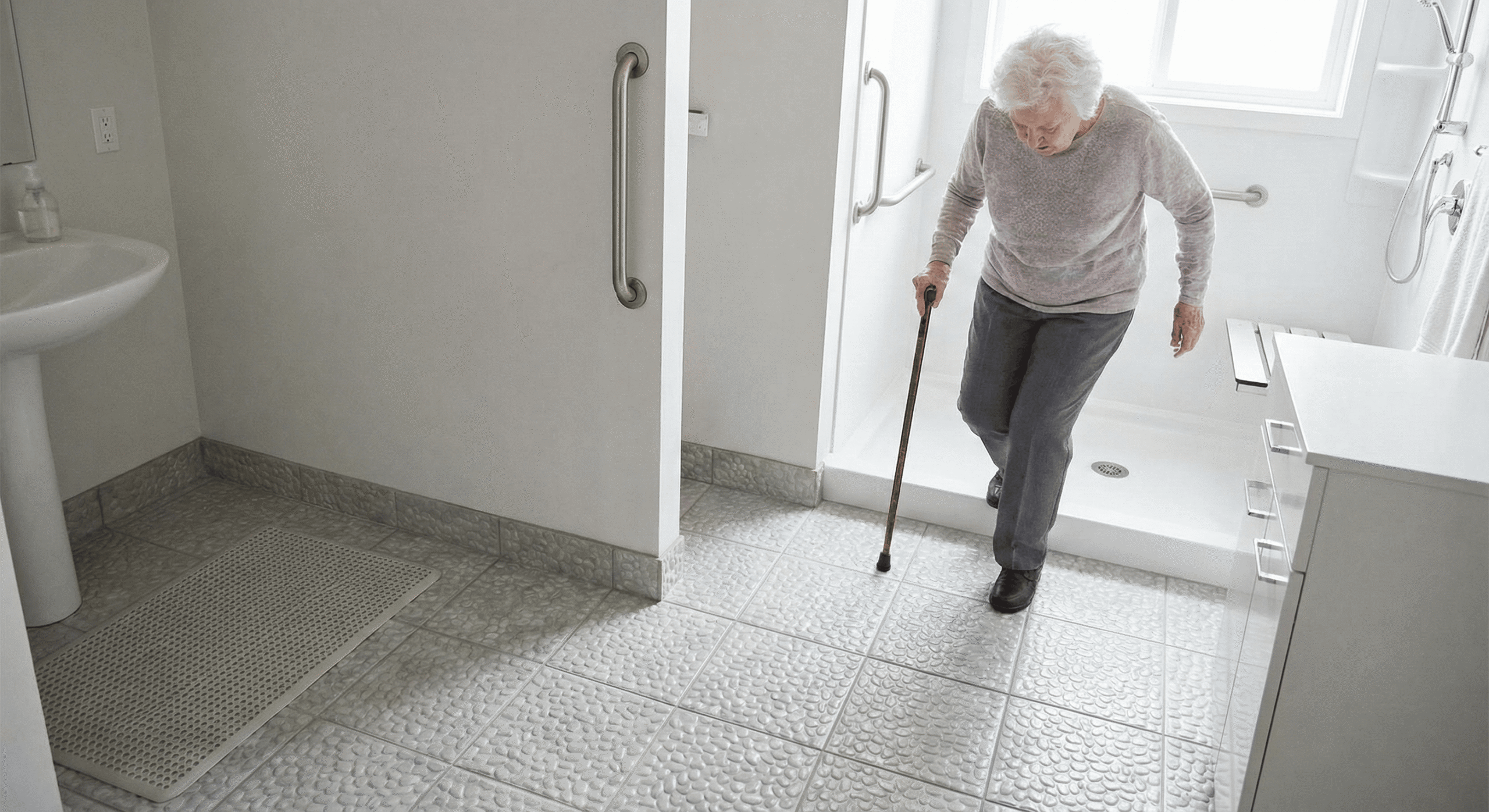
Bathrooms are one of the most dangerous areas in a home for seniors. Wet surfaces, smooth tiles, and poor traction significantly increase the risk of slips and falls. Choosing the right bathroom flooring can greatly reduce these risks and help seniors maintain independence and confidence while aging in place.
This guide explains the safest bathroom flooring options for seniors, what materials to avoid, and simple tips to improve traction without major renovations.
Why Bathroom Flooring Safety Matters for Seniors
Proper flooring is only one part of creating a safe bathroom environment, and seniors should also consider other essential modifications such as grab bars and layout improvements.
Slips in the bathroom are a leading cause of injury among older adults. Factors such as reduced balance, slower reaction time, and wet floors make bathrooms especially hazardous.
Safe flooring helps by:
- Improving traction when floors are wet
- Reducing impact in case of a fall
- Making movement easier for walkers and canes
- Supporting long-term independence at home
Best Bathroom Flooring Options for Seniors
1. Slip-Resistant Vinyl Flooring
Slip-resistant vinyl is one of the safest and most popular options for senior bathrooms.
Benefits:
- Water-resistant and easy to clean
- Softer underfoot than tile
- Available in textured, non-slip finishes
- Affordable and quick to install
Vinyl is ideal for seniors who use mobility aids or have joint pain.
2. Rubber Flooring
Rubber flooring provides excellent traction, even when wet.
Benefits:
- Naturally slip-resistant
- Cushioned surface helps reduce injury from falls
- Easy to maintain
- Comfortable for standing longer periods
This option is often used in hospitals and senior living facilities due to its safety profile.
3. Textured Ceramic or Porcelain Tile
If tile is preferred, textured or matte-finish tiles are safer than glossy options.
Safety tips:
- Choose tiles rated for slip resistance
- Avoid polished or shiny surfaces
- Use smaller tiles with more grout lines for better traction
Tiles should always be paired with proper lighting and grab bars for added safety.
4. Cork Flooring (With Caution)
Cork flooring offers a soft and warm surface but must be properly sealed.
Pros:
- Cushioned and comfortable
- Naturally resistant to mold
- Reduces joint stress
Cons:
- Requires professional sealing
- Can be damaged by standing water
Cork works best in low-moisture bathrooms with good ventilation.
Flooring Options Seniors Should Avoid
Some flooring types increase fall risk and should be avoided in bathrooms:
- Glossy ceramic or marble tiles
- Smooth stone surfaces
- Hardwood flooring
- Loose rugs without non-slip backing
These materials become extremely slippery when wet.
Simple Ways to Improve Bathroom Floor Safety Without Replacement
Installing support features alongside safer flooring further reduces fall risk and improves confidence while moving in the bathroom.
If replacing flooring isn’t possible, small changes can still make a big difference:
- Use non-slip bath mats with rubber backing
- Apply anti-slip floor treatments or coatings
- Install grab bars near showers and toilets
- Improve lighting to reduce visibility issues
Choosing the Right Flooring Based on Mobility Needs
Seniors who use walkers, canes, or wheelchairs should prioritize flooring that offers stability and smooth movement. Slip-resistant vinyl or rubber flooring provides the best balance of traction and mobility support.
Final Thoughts
Bathroom flooring safety should be part of a larger home fall-prevention strategy to protect seniors throughout the house.
Bathroom flooring plays a crucial role in preventing slips and falls for seniors. Choosing slip-resistant materials and making small safety upgrades can significantly reduce injury risk and help seniors live safely and independently at home.