
Home Safety
How to Make a Bathroom Safety for Seniors
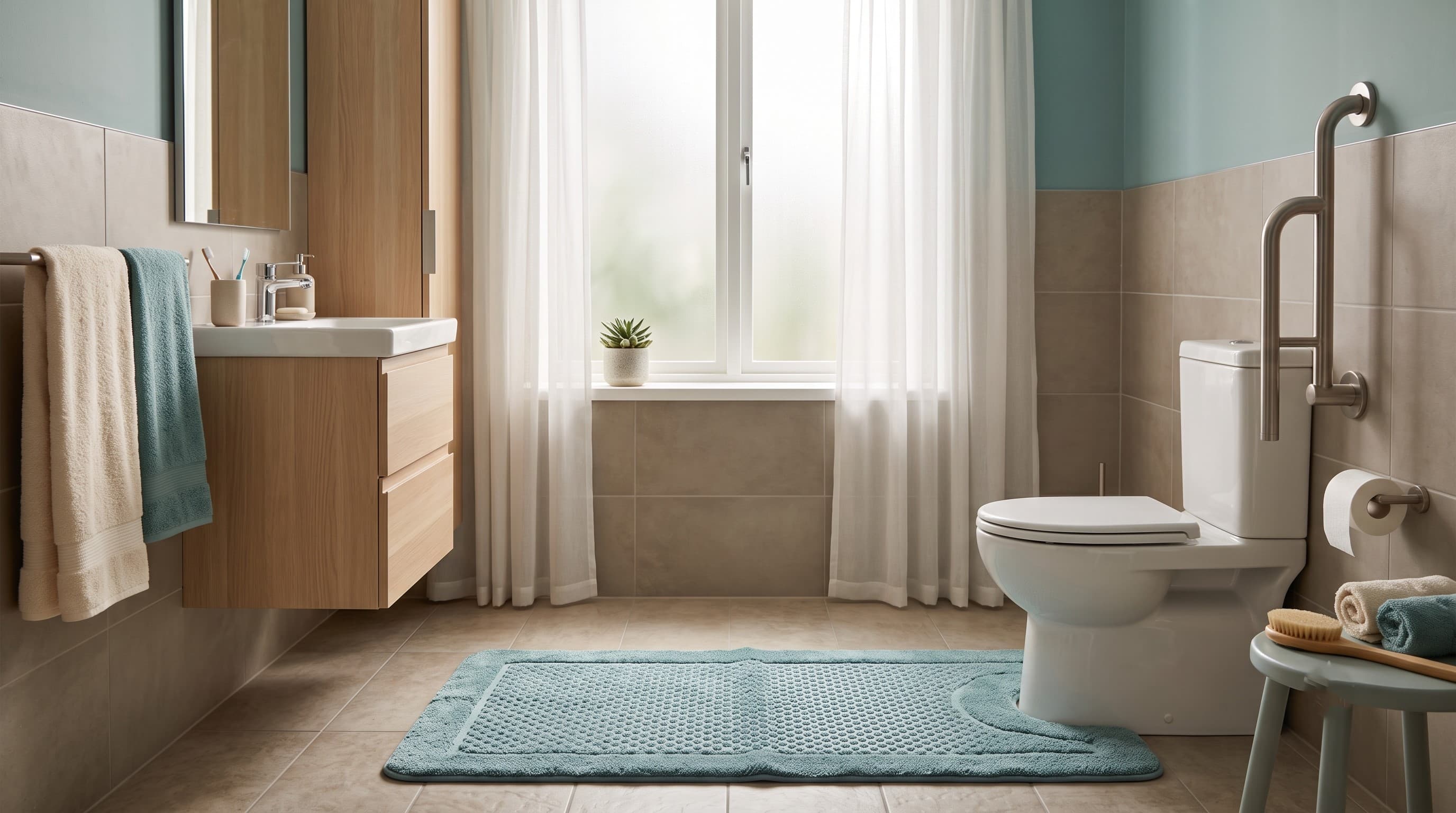
This guide is the overview of bathroom safety as a whole system — lighting, support points, footing, and a sensible order to tackle them in. It is written for adult children, spouses, and caregivers who want clear recommendations without sales pressure or medical jargon. For the deep dive on any single piece, see our dedicated guides on flooring, products, and budget renovations.
Some links may be affiliate links. We may earn a commission at no extra cost to you. See our affiliate disclosure.
Why bathrooms are high risk
Bathrooms combine three risk factors that rarely occur together anywhere else in the home: hard, unforgiving surfaces (tile, porcelain, fiberglass), water that reduces traction the moment it touches the floor, and physically demanding transfers like sitting down, standing up, and stepping over a tub wall. Any one of these alone is manageable; together, they explain why bathrooms account for a disproportionate share of home falls for older adults.
Because the room does several different jobs (toileting, bathing, grooming) in a small footprint, a safety plan for it needs to work as a system rather than a single fix — a grab bar without good lighting, or good lighting without secure footing, only solves part of the problem.
Lighting and visibility
Bathroom lighting matters most at two specific moments: the transition from a dark hallway into the room (which is where eyes are least adjusted) and the shower or tub zone itself, where steam and reflective tile surfaces can create glare that a dry hallway doesn't have. A single overhead fixture often leaves the shower and toilet areas in relative shadow even when the room feels "well lit" as a whole, so a second, lower light source aimed specifically at those transfer zones is usually worth adding.
A night light or motion-sensor light just outside the door, paired with a light source inside that doesn't require finding a switch in the dark, closes the gap for the middle-of-the-night trips where most bathroom falls actually happen.
Toilet area priorities
The toilet transfer — sitting down and standing back up — is one of the highest-frequency movements in the entire home, often happening several times a day, which makes even a small improvement here worth disproportionate attention. A securely mounted grab bar on the stronger side (see our placement guide for exact positioning) is the single highest-value addition most bathrooms are missing.
Seat height matters almost as much as the bar: a standard toilet seat is often lower than ideal for someone with weak knees or hips, and a raised toilet seat or comfort-height toilet reduces the amount of leg strength needed for both the sit-down and stand-up motion.
Shower and tub safety
Unlike the toilet, the shower or tub involves three distinct risk moments — entering, standing while washing, and exiting — and each benefits from a slightly different solution. A grab bar handles the entry and exit; a shower chair or transfer bench removes the standing-on-wet-surface risk entirely for someone whose balance doesn't reliably support standing washing; and a hand-held showerhead makes seated bathing far more practical than a fixed overhead spray.
These three elements work best planned together rather than added one at a time in response to a scare, since a shower chair chosen without also checking hand-held showerhead compatibility, for example, can end up being less useful than expected.
Flooring, rugs, and clutter
Bath mats and rugs are a common and underappreciated risk: a mat without a genuinely non-slip backing can slide the moment weight shifts onto it, which is exactly the moment stability matters most. Any rug in the bathroom should have a backing that grips the floor firmly, or be secured with rug tape, and worn-out backing (which degrades with repeated washing) should be checked periodically rather than assumed to still be effective.
Beyond rugs, keeping the floor genuinely clear — no laundry baskets, step stools, or stray towels in the walking path between the door, toilet, and shower — removes a category of hazard that costs nothing to fix but is easy to overlook in a small room used daily.
A phased upgrade plan
Not every bathroom needs a full renovation, and trying to fix everything at once is often unrealistic on both budget and timeline. A reasonable sequence: start with lighting and clutter removal (essentially free, doable in a weekend), then add grab bars and check rug security (low cost, may need a handyman for secure mounting), then consider seating and a hand-held showerhead if standing balance is a concern, and finally evaluate larger renovations — like a walk-in shower conversion — only if the underlying tub or shower structure itself is the remaining barrier.
This order prioritizes the changes with the best safety return for the lowest cost and effort first, which matters both for budget reasons and because urgent risks (poor lighting, a missing grab bar) deserve to be addressed before cosmetic or larger-scope projects.
Key takeaways
- Treat the bathroom as a system — lighting, support, and footing all need to work together, not as isolated fixes.
- The toilet transfer happens more often than any other bathroom movement, making it the highest-value place to start with a grab bar and seat height check.
- Shower entry, standing, and exit are three separate risk moments that benefit from being planned together (bar, seating, hand-held showerhead), not added piecemeal.
- Sequence changes by cost and urgency: free/cheap fixes (lighting, clutter, rug security) first, then support and seating, then larger renovations only if still needed.
Getting buy-in for changes
Bathroom changes can feel more personal than other home safety updates, since the room is tied closely to privacy and independence. Involving the person in decisions — which grab bar style, whether a shower chair is needed yet, what the new lighting looks like — tends to produce better follow-through than presenting a finished plan, even when the underlying safety logic is identical either way.
If there's resistance to a specific change, it's often worth understanding the actual objection (appearance, cost, feeling "old") rather than assuming it's about the safety benefit itself, since the real objection usually has a more specific and addressable fix than simply repeating why the change matters.
Next steps for caregivers
Walk through this list room by room with the actual person, at a normal time of day and, if possible, once at night, since bathroom risk often looks different in the dark. Use the phased plan above to decide what to tackle first, and lean on our dedicated flooring, products, and renovation-budget guides once ready to go deeper on any single piece.
Frequently asked questions
Who should read this guide about how to make a bathroom safety for seniors?
Is this a substitute for medical advice?
How soon should we make changes after a fall or near-fall?
Related guides
Home Safety
Bathroom Flooring Safety for Seniors: Best Options to Prevent Slips
Discover the safest bathroom flooring options for seniors to prevent slips and falls. Learn which materials to choose and which to avoid.
Home Safety
Bathroom Safety Products for Seniors: Complete List
Discover the complete list of bathroom safety products for seniors including grab bars, shower chairs, raised toilet seats, non-slip mats, and more. Keep seniors safe at home.
Home Safety
Senior Bathroom Renovation Ideas on a Budget: Complete Guide
Discover practical senior bathroom renovation ideas on a budget covering grab bars, non-slip mats, shower chairs, raised toilet seats and walk-in shower conversions by cost level.
Home Safety
Best Non-Slip Flooring for Seniors: Room by Room Guide
Discover the best non-slip flooring for seniors room by room including bathrooms, bedrooms, kitchens and hallways. Covers full replacement options and affordable quick fixes.