
Home Safety
Senior Bathroom Renovation Ideas on a Budget: Complete Guide
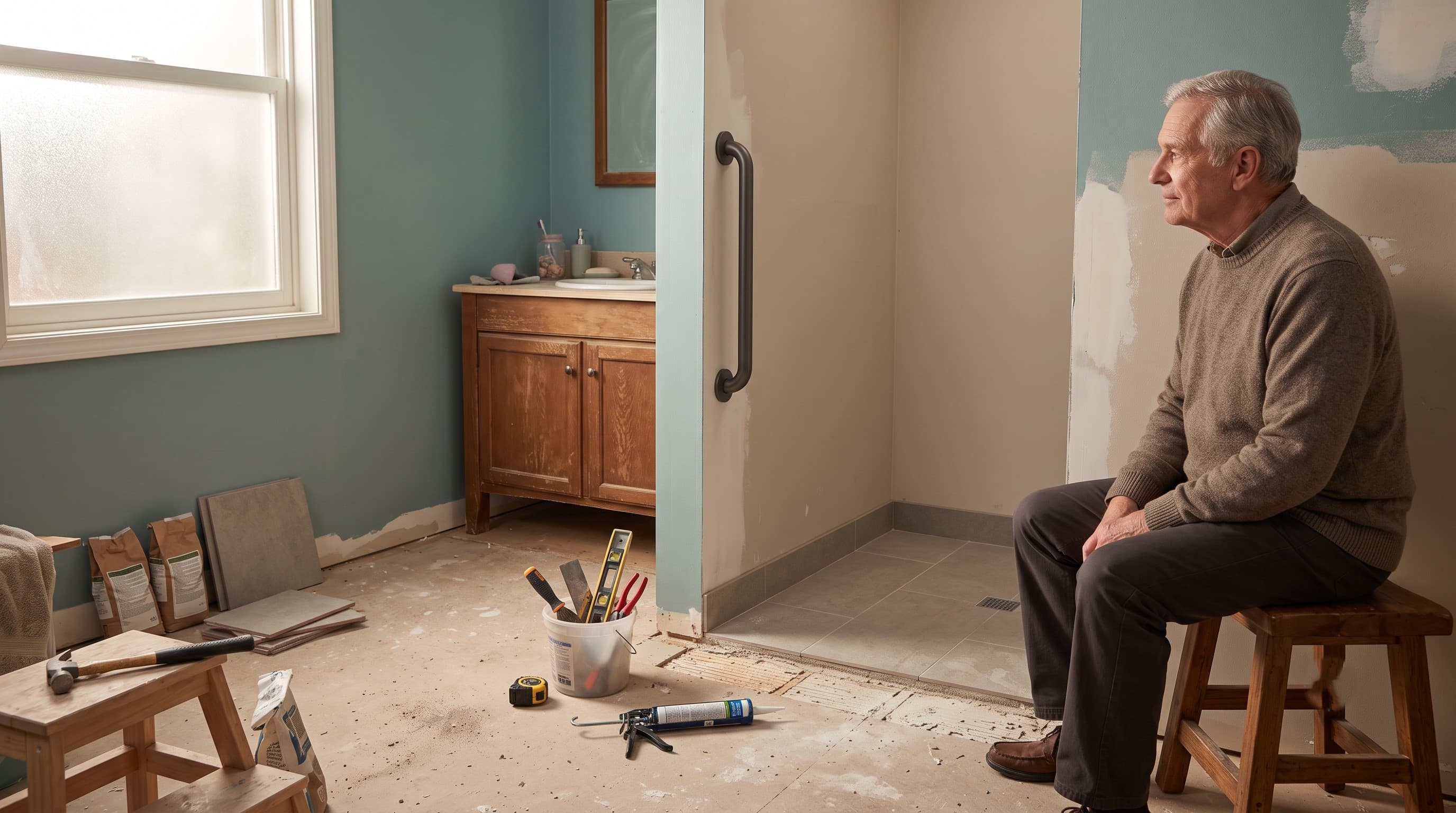
This guide explains phased bathroom remodel ideas organized by cost level, so a renovation plan can be built to match whatever budget is actually available right now. It is written for adult children, spouses, and caregivers who want clear recommendations without sales pressure or medical jargon.
Some links may be affiliate links. We may earn a commission at no extra cost to you. See our affiliate disclosure.
Budget philosophy for safety remodels
The instinct with any renovation is often to think in terms of one big project, but bathroom safety upgrades work well as a phased investment instead — each phase delivers real safety benefit on its own, rather than requiring the full budget before anything changes. This matters because waiting to save for a complete remodel means living with unaddressed risk in the meantime, when several of the highest-impact changes cost very little.
The general principle: spend first on changes that reduce the chance of a fall this week (lighting, clutter, a properly mounted grab bar), and treat cosmetic or larger structural changes as a separate, later-phase decision once the urgent items are handled.
Low-cost upgrades ($0-$100)
Improving lighting — adding a motion-sensor night light, replacing a dim or burned-out bulb with a brighter warm-white option, or adding a small plug-in light near the shower — typically costs under $30 total and can be done in an afternoon with no special tools. Clearing floor clutter and securing or replacing an unsafe bath mat with a properly backed non-slip version falls in the same low-cost, high-impact category.
A hand-held showerhead attachment, which replaces a fixed shower head with a flexible hose version, typically runs $20-40 and meaningfully improves the ability to bathe while seated, without any construction or professional installation required.
Mid-cost upgrades ($100-$800)
Professionally installed grab bars (accounting for both the hardware and a handyman's time to locate studs and mount securely) typically run $75-150 per bar including installation, and this is a category where paying for professional mounting is worth the modest added cost over a DIY suction or poorly anchored install. A raised toilet seat or toilet seat riser runs $30-100 depending on features, while a full comfort-height toilet replacement (taller bowl) runs closer to $300-500 installed.
A quality shower chair or transfer bench typically costs $50-200 depending on features like adjustable height, back support, and arm rests, and is one of the higher-value purchases in this tier given how often the shower-standing risk comes up.
Higher-cost changes ($800+)
A full walk-in shower conversion — removing a tub and replacing it with a curbless or low-threshold shower — is the highest-cost item on this list, typically running $3,000-8,000 or more depending on materials and whether plumbing needs to move, but it directly eliminates the tub-wall step-over risk that a grab bar or transfer bench can only partially mitigate.
Full bathroom flooring replacement with a genuinely slip-resistant material (see our flooring guide for material specifics) is a similarly larger project, often bundled with a shower conversion since both frequently involve the same contractor visit and demolition work.
Financing and assistance options
Some of the mid- and higher-cost items in this guide may be partially covered or offset through channels beyond a straightforward out-of-pocket purchase. Medicare and many private insurance plans cover a portion of certain durable medical equipment, like raised toilet seats or shower chairs, when a doctor documents medical necessity — worth checking before assuming full retail price applies. Some states and local Area Agencies on Aging also offer home modification grants or low-interest loan programs specifically for aging-in-place safety renovations, though availability and eligibility vary significantly by location.
For larger projects like a shower conversion, getting two or three contractor quotes is worth the time even under budget pressure, since bathroom renovation pricing varies considerably by region and contractor, and a rushed single quote can mean paying meaningfully more than necessary for the same work.
What to sequence first
Within a limited budget, the sequencing logic stays the same regardless of total available funds: address the highest-risk, lowest-cost items first (lighting, clutter, mat security), then move to grab bars and seating once those are handled, and treat the larger structural projects (shower conversion, full flooring replacement) as a longer-term goal to save toward rather than a prerequisite for improving safety today.
This sequencing also means a full renovation isn't actually necessary to meaningfully reduce fall risk — many of the highest-impact changes are the cheapest ones on this list, which is worth remembering if a full remodel budget isn't realistic in the near term.
How to avoid wasted spend
The most common wasted purchase in this category is a product that doesn't actually fit the room's layout or the user's specific needs — a shower chair too wide for a narrow tub, or a grab bar style that doesn't match the person's actual grip strength or reach. Measuring the actual space and, where possible, testing a product's fit before final purchase (many medical supply stores allow this) prevents this category of waste.
The second common mistake is skipping professional installation for grab bars specifically to save the modest labor cost — a bar mounted into drywall alone without hitting solid framing looks installed correctly but can fail under real fall-force weight, which defeats the entire purpose of the purchase.
Key takeaways
- Budget renovations work well as phases, not one big project — each phase delivers real safety value on its own without requiring the full budget upfront.
- The highest-impact, lowest-cost changes (lighting, clutter removal, mat security) often cost under $100 total and can be done immediately.
- Professional installation for grab bars is worth the modest added cost over DIY or suction-cup alternatives, given what's at stake if a bar fails.
- Larger structural projects (shower conversion, flooring replacement) are worth planning toward, but aren't a prerequisite for meaningful safety improvement today.
Next steps for caregivers
Start with the low-cost phase this week regardless of the larger budget picture — most of it can be done in a single afternoon with no contractor needed. From there, use this cost breakdown to plan mid- and higher-cost phases around whatever budget and timeline are realistic, rather than waiting to address everything at once.
Frequently asked questions
Who should read this guide about senior bathroom renovation ideas on a budget: complete guide?
Is this a substitute for medical advice?
How soon should we make changes after a fall or near-fall?
Related guides
Home Safety
How to Make a Bathroom Safety for Seniors
Learn simple ways to improve bathroom safety for seniors and reduce the risk of slips and falls at home.
Home Safety
Bathroom Flooring Safety for Seniors: Best Options to Prevent Slips
Discover the safest bathroom flooring options for seniors to prevent slips and falls. Learn which materials to choose and which to avoid.
Home Safety
Bathroom Safety Products for Seniors: Complete List
Discover the complete list of bathroom safety products for seniors including grab bars, shower chairs, raised toilet seats, non-slip mats, and more. Keep seniors safe at home.
Home Safety
Best Non-Slip Flooring for Seniors: Room by Room Guide
Discover the best non-slip flooring for seniors room by room including bathrooms, bedrooms, kitchens and hallways. Covers full replacement options and affordable quick fixes.