
Home Safety
Bathroom Safety Products for Seniors: Complete List
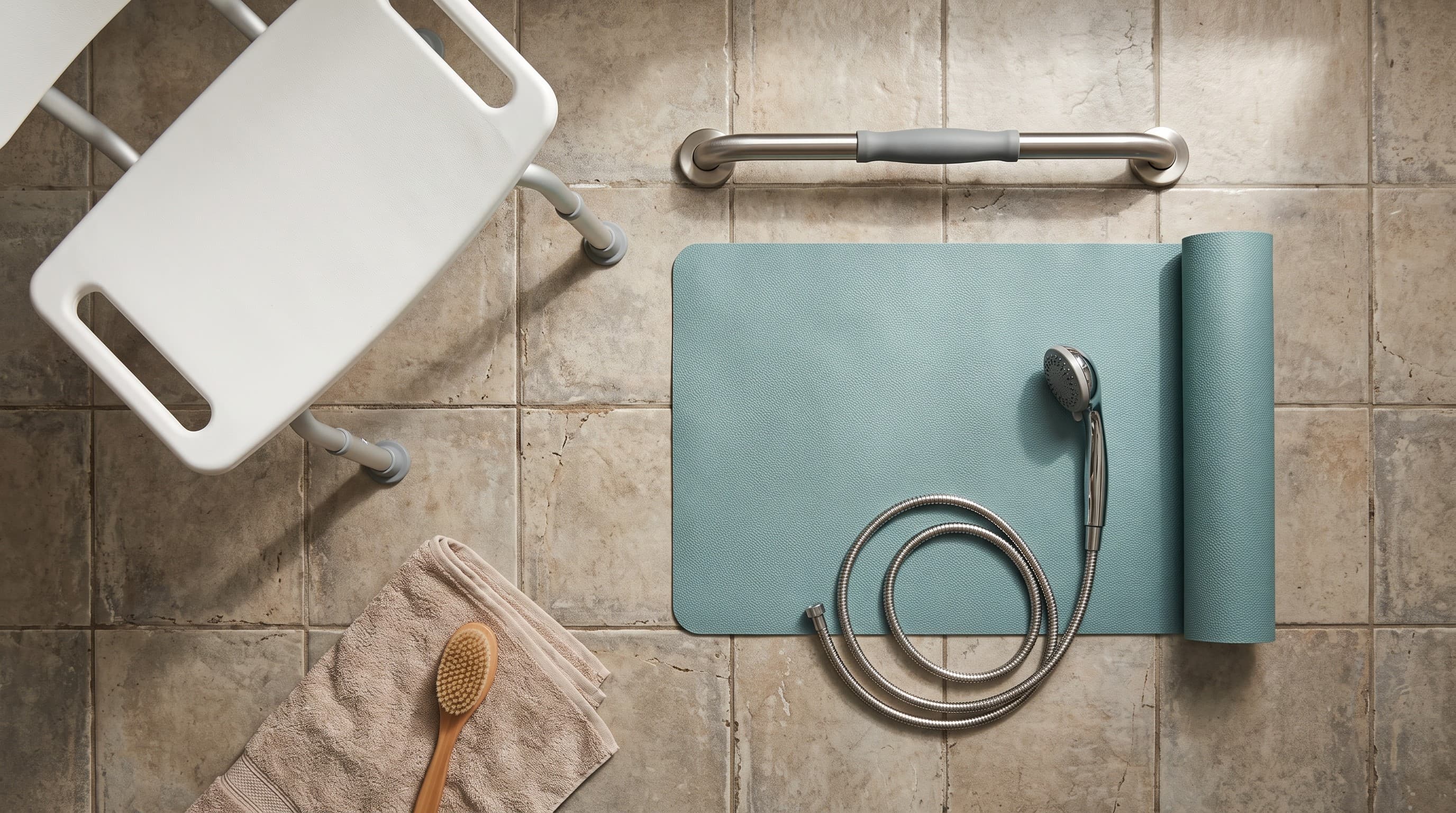
This guide is a prioritized product list for bathroom fall prevention — what to buy, in what order, and why. It is written for adult children, spouses, and caregivers who want clear recommendations without sales pressure or medical jargon.
Some links may be affiliate links. We may earn a commission at no extra cost to you. See our affiliate disclosure.
Prioritize by task risk
Rather than buying everything on a generic list at once, it helps to rank products by which task currently feels most unsafe. Toilet transfers and shower entry/exit are the two highest-frequency, highest-risk movements in the bathroom, so products addressing those two tasks specifically tend to deliver the most safety benefit per dollar spent, ahead of anything addressing lower-risk tasks like reaching for towels or adjusting water temperature.
A simple way to prioritize in practice: ask which specific moment in the bathroom already causes hesitation, a grab for the sink, or a request for help — that moment is where the first purchase should go.
Grab bars and supports
A permanently, securely mounted grab bar is meaningfully different from a suction-cup "grab bar" style product sold as a no-installation option — suction models can release unexpectedly under real body weight, precisely when they're needed most, and shouldn't be relied on as primary fall-prevention support. A properly anchored bar (see our installation guide for mounting specifics) is a modest one-time cost compared to the risk a suction alternative carries.
Toilet-area and shower/tub bars are typically the two highest-priority locations; a hallway or bedroom-adjacent bar is a reasonable second phase once the bathroom itself is addressed.
Seating and transfer aids
A shower chair or transfer bench removes the need to stand, balance, and wash all at the same time — a combination that's genuinely demanding even for someone without significant balance issues, and considerably riskier for someone who tires or feels unsteady. Transfer benches (which extend partly outside the tub) are particularly useful for someone who has difficulty stepping over a tub wall, since they allow sitting down outside the tub and then sliding across, rather than stepping over while already standing.
A raised toilet seat, or a comfort-height toilet if a fuller renovation is planned, reduces the leg strength required for both sitting and standing, which matters given how frequently this transfer happens throughout the day.
Traction products
Non-slip bath mats (with genuine rubber or silicone backing, not decorative rugs marketed loosely as "bathroom" style) belong both inside the tub/shower and immediately outside it, since the wet feet stepping out are just as much a slip risk as the standing-while-washing moment inside. Adhesive non-slip strips or textured decals applied directly to a tub or shower floor are a useful lower-cost complement, particularly on smooth fiberglass or acrylic surfaces that offer little grip on their own.
Any traction product only helps as long as it stays flat and clean — a curling mat edge or a strip with accumulated soap film underneath can become its own trip or slip hazard, so periodic checking matters as much as the initial purchase.
Lighting and visibility helpers
A motion-sensor night light positioned just outside the bathroom door, combined with a low-glare light source inside that doesn't require finding a switch in the dark, addresses the specific risk of a middle-of-the-night bathroom trip — one of the more common circumstances behind bathroom falls. Battery-powered motion lights are simple to add without any wiring, though batteries should be checked periodically so the light doesn't fail silently exactly when it's needed.
For the shower or tub area specifically, confirming that existing overhead lighting doesn't leave that zone in shadow (a common issue when a single central fixture is the room's only light source) is worth checking directly, since good general room lighting doesn't guarantee good lighting exactly where transfers happen.
What not to buy first
It's tempting to buy every product on a general safety list at once, but that approach can create clutter (multiple mats, extra grab handles in less critical spots) without necessarily addressing the highest-risk task first. Novelty products — decorative "safety" items with limited actual load-bearing rating, or gadgets addressing convenience rather than an identified risk — are worth deprioritizing until the core list above (bars, seating, traction, lighting) is genuinely in place.
The same logic applies to buying in bulk before testing fit: a shower chair, for example, has different height and width options, and buying the wrong size to save a return trip can mean an unused (or worse, actively used but ill-fitting) product sitting in the bathroom.
Trial periods and returns
Many medical supply retailers, and some insurance-covered durable medical equipment suppliers, offer a trial or return period on larger purchases like shower chairs and transfer benches, precisely because fit and comfort are hard to judge without real use. Checking a retailer's return policy before buying is worth the extra few minutes, since a product that seemed right in photos or a showroom can feel different after a week of actual use at home.
Keeping original packaging and receipts until a product has been used for at least a week or two preserves the option to exchange for a different size or style without added cost, which matters more in this category than it might for a typical household purchase.
Key takeaways
- Rank purchases by which specific task (toilet transfer, shower entry, standing while washing) already feels least safe, rather than buying a generic full list at once.
- Permanently mounted grab bars are meaningfully safer than suction-cup alternatives, which can release under real weight.
- Traction products (mats, adhesive strips) only help as long as they stay flat, clean, and free of soap-film buildup — check periodically, not just once at purchase.
- Deprioritize novelty or convenience-only products until the core safety list (bars, seating, traction, lighting) is actually in place.
Next steps for caregivers
Walk through the bathroom and identify the one task that already causes the most hesitation or requires help — that's the first product to address, regardless of what a generic checklist ranks first. From there, work down this list in priority order rather than trying to complete it all in a single shopping trip.
Frequently asked questions
Who should read this guide about bathroom safety products for seniors: complete list?
Is this a substitute for medical advice?
How soon should we make changes after a fall or near-fall?
Related guides
Home Safety
How to Make a Bathroom Safety for Seniors
Learn simple ways to improve bathroom safety for seniors and reduce the risk of slips and falls at home.
Home Safety
Bathroom Flooring Safety for Seniors: Best Options to Prevent Slips
Discover the safest bathroom flooring options for seniors to prevent slips and falls. Learn which materials to choose and which to avoid.
Home Safety
Senior Bathroom Renovation Ideas on a Budget: Complete Guide
Discover practical senior bathroom renovation ideas on a budget covering grab bars, non-slip mats, shower chairs, raised toilet seats and walk-in shower conversions by cost level.
Home Safety
Best Non-Slip Flooring for Seniors: Room by Room Guide
Discover the best non-slip flooring for seniors room by room including bathrooms, bedrooms, kitchens and hallways. Covers full replacement options and affordable quick fixes.