
Home Safety
Best Non-Slip Flooring for Seniors: Room by Room Guide
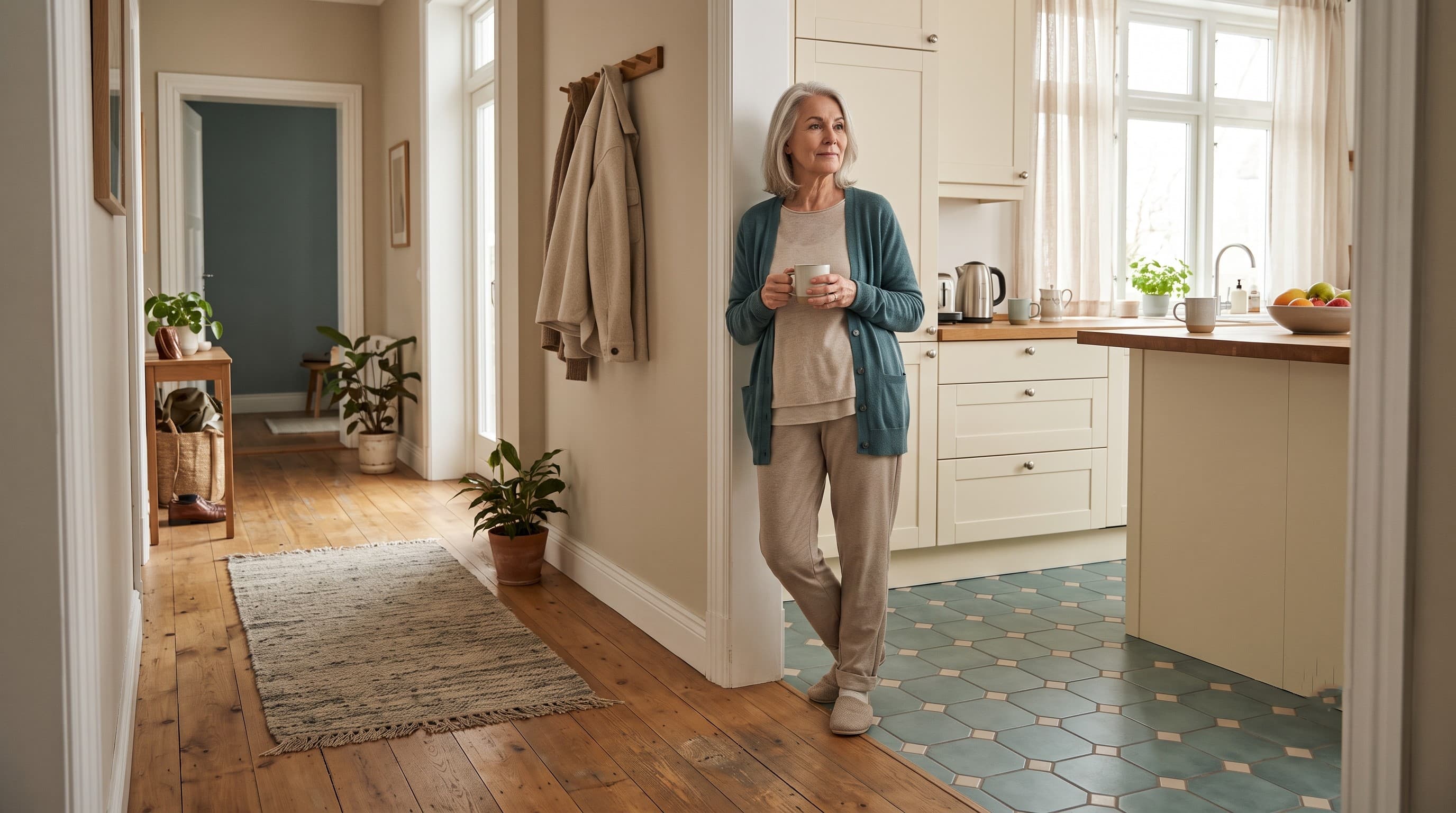
This guide covers flooring traction decisions across the whole home, room by room — for a bathroom-specific deep dive on wet-area materials, see our bathroom flooring guide instead. It is written for adult children, spouses, and caregivers who want clear recommendations without sales pressure or medical jargon.
Some links may be affiliate links. We may earn a commission at no extra cost to you. See our affiliate disclosure.
How to evaluate flooring for fall risk
Good flooring for an older adult balances several factors that can pull in different directions: enough texture to provide grip, but not so much that it catches a foot, cane tip, or walker wheel during a normal shuffling gait; low glare, since high-gloss finishes can both look slick and actually feel disorienting under certain lighting; and minimal transition height between rooms, since even small lips between flooring types are a common and underappreciated trip point.
A practical test that works in almost any room: walk the space slowly in socks or the footwear normally worn at home, paying attention to any spot that feels less stable, and separately roll a walker or push a cane tip across the same path to see whether wheels or tips catch anywhere unexpected.
Bathroom and kitchen
These two rooms share the highest wet-exposure risk in the home, since both regularly involve water on the floor — splashing at the kitchen sink, condensation, or direct wetting in the bathroom. Textured, matte-finish tile or slip-resistant-rated vinyl generally perform best in both rooms, and glossy or polished finishes are worth avoiding regardless of how attractive they look in a showroom, since gloss and wet traction tend to work against each other.
The bathroom deserves its own deeper look given how central it is to fall risk generally — our dedicated bathroom flooring guide covers shower-floor specifics, drainage slope, and material comparisons in more depth than fits here.
Bedroom and hallway
These rooms matter most for nighttime falls, since they form the route from bed to bathroom that gets used in low light and often in a hurry. Smooth, even transitions matter more here than raw traction — a well-secured, low-pile carpet or a smooth hard floor without loose rugs both work reasonably well, but a loose area rug that shifts underfoot is a genuine hazard regardless of how grippy the rug's own surface feels.
Where hallway flooring meets bedroom or bathroom flooring, a flush or gently beveled transition (rather than a raised threshold strip) reduces the risk of a caught foot or walker wheel during a groggy nighttime trip.
Living areas
Hardwood, tile, or laminate under frequently used seating and along regular walking paths is worth evaluating the same way as other rooms: check for glare, check for looseness in any area rugs, and confirm furniture placement doesn't create a narrow, awkward path that forces walking close to slick or uneven transitions. A polished hardwood floor that looks elegant can also be genuinely slicker than a matte-finish equivalent, particularly in socks or smooth-soled slippers.
Runners and area rugs in living spaces should follow the same non-slip-backing rule as bathroom mats — decorative rugs without proper backing are a common, easily overlooked hazard in rooms that otherwise feel perfectly safe.
Quick fixes vs. full replacement
Not every flooring concern requires tearing out and replacing a floor. Securing existing rugs with rug tape or non-slip pads, adding adhesive traction strips at specific problem spots (like a slick tile entryway), and simply removing rather than replacing a chronically unsafe rug are all reasonable interim or even permanent low-cost fixes. Full replacement makes more sense when the underlying material itself is the problem — polished stone, worn and slick hardwood finish, or cracked tile with sharp uneven edges — rather than something that can be addressed with a rug or strip.
Cost and disruption are worth weighing honestly here: a full flooring replacement is a significant project, and many homes can meaningfully reduce risk with targeted quick fixes in the specific spots that actually cause problems, reserving full replacement for rooms where the material itself is fundamentally unsuitable.
Walker and cane interactions
Flooring that works fine for regular walking can behave differently once a walker or cane is added to the picture. Deep-pile carpet can catch and slow a walker's wheels or a cane's rubber tip, requiring more effort to move through and potentially causing a stumble when the device suddenly catches or releases. Smooth, low-pile carpet or hard flooring generally works better with mobility aids than plush carpeting, even though plush carpet might otherwise seem like the "softer, safer" choice.
Testing the actual mobility aid on candidate flooring — rolling a walker across a sample, or trying a cane tip on a small installed section — before committing to a whole-room or whole-home flooring choice catches this interaction before it becomes a daily frustration or hazard.
Key takeaways
- Evaluate flooring room by room rather than choosing one material for the whole home — bathrooms and kitchens need wet-traction priority, while bedrooms and hallways need smooth, low-trip-edge transitions for nighttime use.
- Glossy, polished finishes look appealing but generally underperform matte or textured finishes for traction, especially when wet.
- Quick fixes (securing rugs, adhesive traction strips) can meaningfully reduce risk in specific trouble spots without requiring a full flooring replacement.
- Test how a walker or cane actually behaves on candidate flooring — deep-pile carpet in particular can catch wheels and tips in ways that aren't obvious from just walking on it.
Next steps for caregivers
Walk each room (in the footwear normally worn at home, and with any mobility aid in use) and note which specific spots feel unstable, rather than assuming one flooring type is safe or unsafe for the whole house. Start with the lowest-cost fixes in the highest-risk spots, and reserve full replacement for rooms where the material itself, not just a rug or transition, is the actual problem.
Frequently asked questions
Who should read this guide about best non-slip flooring for seniors: room by room guide?
Is this a substitute for medical advice?
How soon should we make changes after a fall or near-fall?
Related guides
Home Safety
Bathroom Flooring Safety for Seniors: Best Options to Prevent Slips
Discover the safest bathroom flooring options for seniors to prevent slips and falls. Learn which materials to choose and which to avoid.
Home Safety
How to Prevent Slips and Falls at Home for Seniors
Learn how to prevent slips and falls at home for seniors with this room-by-room guide covering bathrooms, bedrooms, staircases, lighting, and more.
Home Safety
Bedroom Safety for Seniors: Complete Guide to Preventing Nighttime Falls
Complete bedroom safety guide for seniors covering bed height, bed rails, night lighting, flooring, furniture placement, and emergency access to prevent nighttime falls.
Home Safety
Senior Bathroom Renovation Ideas on a Budget: Complete Guide
Discover practical senior bathroom renovation ideas on a budget covering grab bars, non-slip mats, shower chairs, raised toilet seats and walk-in shower conversions by cost level.