
Home Safety
Bedroom Safety for Seniors: Complete Guide to Preventing Nighttime Falls
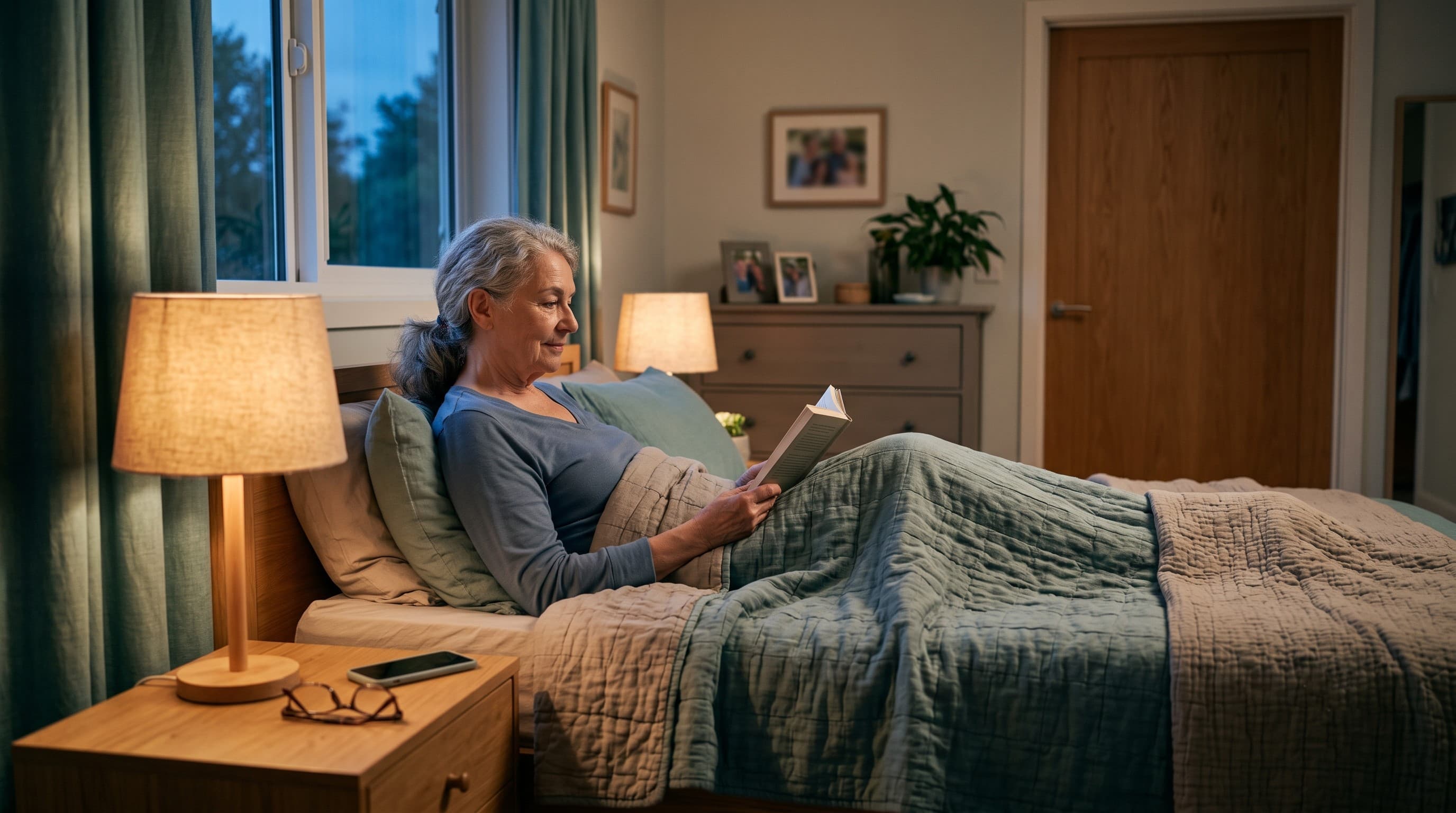
Bedroom falls have a distinct pattern from falls elsewhere in the home: they cluster heavily around nighttime, often involve waking from sleep, and combine urgency with reduced alertness in ways daytime falls don't. This guide addresses that specific pattern. It is written for adult children, spouses, and caregivers who want clear recommendations without sales pressure or medical jargon. For the rest of the home, our whole-house fall prevention guide covers the other high-traffic routes.
Some links may be affiliate links. We may earn a commission at no extra cost to you. See our affiliate disclosure.
Why nighttime bedroom falls happen
Waking suddenly, often to use the bathroom, means moving from a fully relaxed, low-alertness state directly into standing and walking, without the usual gradual transition that happens after a full night's rest. Add reduced light, unfamiliar disorientation in the first few seconds of waking, and sometimes genuine urgency, and the combination explains why nighttime bathroom trips are disproportionately involved in bedroom-area falls compared to daytime movement in the same room.
Blood pressure changes upon standing (a drop that can cause brief dizziness, sometimes worsened by certain medications) add a physiological risk factor specific to this exact transition — sitting on the edge of the bed for a few seconds before standing fully can allow this to stabilize before walking.
Bed height and edge support
A mattress top that sits at a height allowing feet to reach the floor while seated on the edge, without a jump down or a climb up, supports the safest possible transition in and out of bed. A bed that's notably higher or lower than this changes the mechanics of that transition in ways that can affect balance, particularly for someone with weaker legs or hips.
A sturdy bed rail, distinct from a decorative headboard feature, can provide a secure handhold for this transition, though it's worth choosing one rated and installed specifically for the purpose rather than any bar-shaped furniture accessory, since a rail that shifts or isn't rated for real body weight offers a false sense of security.
Clear paths and furniture layout
The direct path from bed to bedroom door (and onward to the bathroom) should be completely free of furniture, cords, and floor clutter — even a small footstool or a phone charger cord that's fine during the day can become a serious hazard when navigated half-asleep in the dark. Furniture that must remain in the room is best arranged along the walls rather than positioned in this direct path, even if it means a slightly less convenient daytime layout.
Area rugs in this path deserve particular scrutiny: only rugs with genuine non-slip backing belong along a nighttime walking route, and any rug without secure backing is worth removing entirely rather than risking a slide during a groggy trip.
Lighting for midnight trips
A light source that doesn't require finding a switch in full darkness — a plug-in nightlight along the path, or a motion-sensor light that activates automatically — removes the need to navigate purely from memory. Placing this light at floor or low-outlet level, rather than a bright overhead fixture, provides enough illumination to see the path without fully waking the person up, which matters for getting back to sleep afterward. Our night lights guide covers specific product types and placement in more depth.
A light source directly at the bedside, within reach without needing to stand first, allows a brief pause to get bearings before beginning to move, which is a meaningfully safer sequence than standing immediately in the dark.
Living-alone considerations
For someone living alone, a phone or emergency call device within reach of the bed matters more than it might for someone with a partner or caregiver nearby overnight, since there's no one else present to notice if something goes wrong. A personal emergency response device (a wearable button connecting to a monitoring service) is worth considering specifically for this scenario, separate from a regular phone, since it doesn't require reaching a specific location to use it after a fall.
It's also worth having a plan, discussed in advance with family or a caregiver, for a regular daytime check-in call or visit, so a missed connection is noticed reasonably quickly rather than going unaddressed for an extended period.
A bedroom safety checklist
Bringing the pieces together: confirm bed height allows feet to reach the floor while seated on the edge, clear the direct path to the door of furniture and cords, secure or remove any rugs along that path, add a low-level or motion-sensor light for the nighttime route, and keep a phone or emergency device within reach of the bed. For anyone living alone, add a plan for regular check-ins as a complement to, not a replacement for, the physical safety measures above. Our home safety checklist covers the rest of the house with the same room-by-room approach.
It's worth revisiting this checklist after any change in health, medication, or living situation, since a bedroom setup that was safe six months ago may need adjustment following a new prescription, a recent illness, or a change in who else is in the home overnight.
Key takeaways
- Nighttime bedroom falls cluster around the specific transition from sleep to standing — sitting briefly on the bed's edge before standing fully helps blood pressure stabilize during this vulnerable moment.
- Bed height should allow feet to reach the floor while seated on the edge; a sturdy, purpose-rated bed rail can add support for this transition if needed.
- Keep the direct path to the door completely clear, and only use rugs with genuine non-slip backing along that route.
- For anyone living alone, a phone or emergency device within reach of the bed, plus a regular check-in plan, adds a layer of protection physical fixes alone don't cover.
Next steps for caregivers
Walk through this checklist tonight, literally at bedtime, rather than only during a daytime review — several of these issues (lighting adequacy, rug security, path clarity) are easiest to properly assess in the actual nighttime conditions they're meant to address.
If nighttime falls or near-falls have already happened, treat the physical checklist above as an immediate first step, and separately flag the pattern to a doctor — recurring nighttime instability can sometimes point to a medication timing issue, a blood pressure concern, or another condition worth investigating alongside the home safety fixes.
Frequently asked questions
Who should read this guide about bedroom safety for seniors: complete guide to preventing nighttime falls?
Is this a substitute for medical advice?
How soon should we make changes after a fall or near-fall?
Related guides
Home Safety
Best Night Lights for Seniors to Prevent Falls
Discover the best night lights for seniors, where to place them, and which types prevent falls most effectively. A complete guide to senior home night lighting.
Home Safety
Home Safety Checklist for Seniors: Room by Room Guide
Use this complete room by room home safety checklist for seniors to identify and fix every fall risk in the home — from bathroom to bedroom, kitchen to staircase.
Home Safety
Best Non-Slip Flooring for Seniors: Room by Room Guide
Discover the best non-slip flooring for seniors room by room including bathrooms, bedrooms, kitchens and hallways. Covers full replacement options and affordable quick fixes.
Home Safety
Senior Bathroom Renovation Ideas on a Budget: Complete Guide
Discover practical senior bathroom renovation ideas on a budget covering grab bars, non-slip mats, shower chairs, raised toilet seats and walk-in shower conversions by cost level.