
Intro
Proper lighting is one of the most important factors in preventing falls at home for seniors. Poorly lit areas can increase the risk of trips and injuries, especially at night. A well-lit home improves visibility, confidence, and overall safety.
In this guide, we’ll cover how to properly light a home to reduce fall risks and create a safer environment for seniors.
Why Proper Lighting is Important
As people age, their vision becomes less sensitive to low light and contrast. This makes it harder to detect obstacles, changes in floor level, and hazards.
Good lighting helps:
- Improve visibility in all areas of the home
- Reduce shadows and dark spots
- Support safer movement at night
To understand common mistakes, see Lighting Mistakes That Increase Fall Risk for Seniors.
Key Areas That Need Proper Lighting
Hallways and Walkways
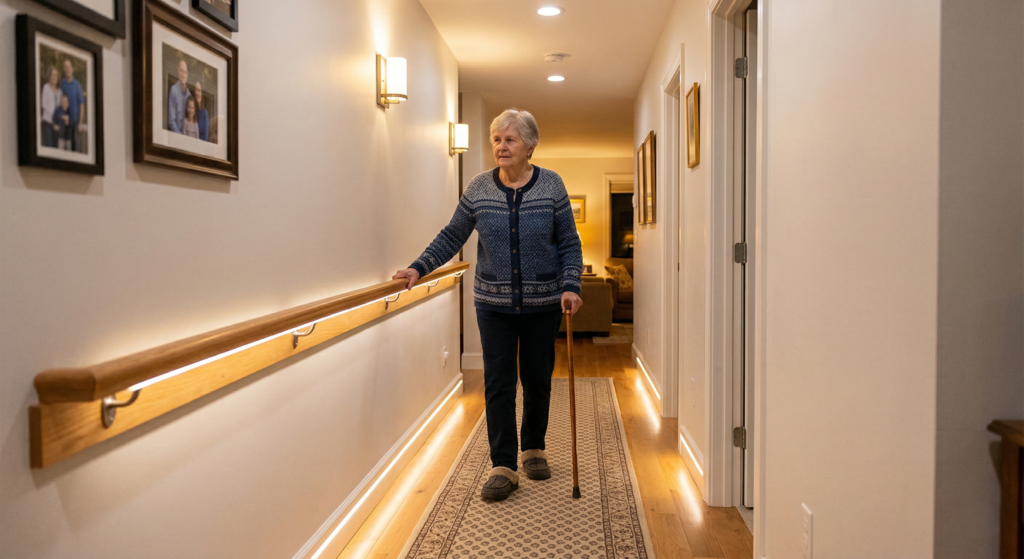
These areas should always be well-lit, especially at night. Use continuous lighting or motion-sensor lights to avoid dark paths.
Bedrooms
Ensure easy access to lighting from the bed. Bedside lamps or touch lights can help seniors avoid walking in the dark.
You can also use Best Night Lights for Seniors to Prevent Falls to improve nighttime safety.
Bathrooms
Bathrooms are high-risk areas for slips. Bright, even lighting helps prevent accidents.
You can combine lighting with other safety measures discussed in How to Prevent Slips and Falls at Home for Seniors.
Staircases
Stairs should always be clearly visible. Use bright overhead lights and consider adding step lighting.
Best Types of Lighting for Seniors
- Ambient Lighting: General lighting that illuminates the entire room
- Task Lighting: Focused lighting for specific activities
- Motion Sensor Lights: Automatically turn on when movement is detected
- Night Lights: Provide low-level illumination during nighttime
Tips to Improve Home Lighting
- Replace dim bulbs with brighter, energy-efficient ones
- Reduce glare by using soft white lighting
- Eliminate shadows in corners and hallways
- Ensure light switches are easy to reach
- Use multiple light sources instead of a single overhead light
FAQs
What type of lighting is best for seniors?
A combination of ambient, task, and motion-sensor lighting works best to ensure full visibility and safety.
How can I improve lighting at night?
Use night lights, motion sensors, and easily accessible bedside lamps to improve nighttime visibility.
Conclusion
Proper lighting is essential for creating a safe home environment for seniors. By improving visibility in key areas and using the right types of lighting, you can significantly reduce the risk of falls and injuries.
1 thought on “How to Light a Home Safely for Seniors (Complete Guide)”
Comments are closed.