
Home Safety
Best Night Lights for Seniors to Prevent Falls
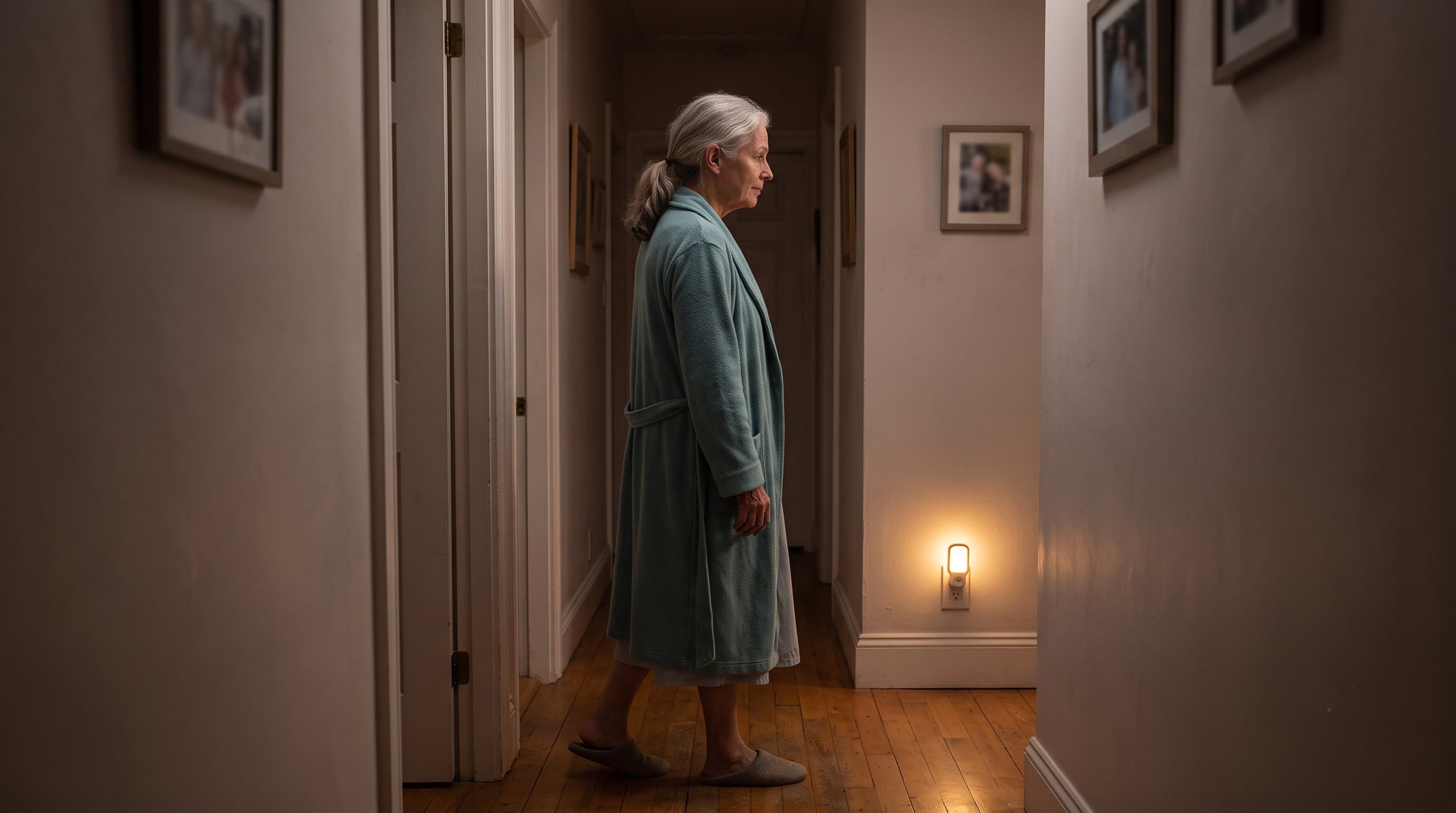
This guide explains night lighting strategy, placement, and light types that reduce falls. It is written for adult children, spouses, and caregivers who want clear recommendations without sales pressure or medical jargon. Our bedroom safety guide covers the rest of that nighttime route in more depth.
Some links may be affiliate links. We may earn a commission at no extra cost to you. See our affiliate disclosure.
Why night lighting prevents falls
Aging eyes take longer to adjust between light and dark — often several times longer than younger eyes — which means the walk from a dark bedroom to a bathroom is genuinely more hazardous for an older adult than it would be for someone younger, even in a completely familiar home. Add in an urgent need to reach the bathroom, and the combination of dim light, disorientation, and hurrying is one of the most common circumstances behind nighttime falls.
Good night lighting doesn't need to be bright — in fact, overly bright lighting can be worse, since it causes pupils to constrict and makes the transition back to a dark hallway or bedroom harder. The goal is a low, continuous glow that shows the edges of the path (doorframes, the first stair, the transition from carpet to tile) without waking the person up fully or creating glare.
Pathway lighting beats spotlighting
A single lamp or overhead light illuminates one area brightly but leaves everything else in darker shadow, which can actually make depth perception worse at the edges of that bright zone. Pathway-style lighting — a series of small, low-set lights along the actual walking route — keeps the whole path visibly lit at a consistent, gentler brightness.
This matters most at transition points: where a hallway meets a bedroom doorway, where flooring changes from carpet to tile, and at the top and bottom of any stairs. These are the spots where a sudden shift from light to dark (or a change in floor texture that isn't visible) most often causes a stumble.
Motion sensor vs always-on options
Motion-sensor lights are ideal for hallways and bathrooms because they turn on automatically the moment someone starts moving, without requiring a switch to be found in the dark or a hand free to operate one. The tradeoff is that sensors can occasionally miss very slow or still movement (for example, someone standing still to steady themselves), and battery-powered sensor lights need their batteries checked periodically or they'll fail silently exactly when needed.
Always-on plug-in nightlights avoid the sensor-miss problem entirely, since they simply stay lit continuously, but they provide a fixed amount of light regardless of whether someone is actually in the room, and a poorly chosen bulb color can create glare that's more disruptive to sleep than helpful. Many households do well with a mix: motion sensors in high-traffic transition zones (hallway, bathroom entrance) and a low always-on light directly at the bedside so there's no darkness at all in the first few steps out of bed.
Where to place lights first
If only a few lights can be added, the highest-value spots are: directly beside the bed at floor or low-outlet level, the hallway between the bedroom and bathroom (ideally at the midpoint, not just the ends), just inside the bathroom entrance, and at both the top and bottom of any staircase used at night.
Kitchen and living room lighting matters less for nighttime falls specifically, since those rooms are visited less often overnight — the bedroom-to-bathroom route is where the highest volume of nighttime walking actually happens, so that's where lighting investment pays off first.
Color temperature and glare
Warm-white light (often labeled around 2700K-3000K on the packaging) is generally easier on aging eyes at night than the cooler blue-white light common in daytime bulbs (5000K and above). Cooler light mimics daylight and can suppress the body's natural sleep signals more, making it harder to fall back asleep after a nighttime trip to the bathroom, while warm light is both gentler on adjusting pupils and less disruptive to sleep.
Glare is a separate issue from color and is worth checking directly: stand or sit at the height the person would be at (in bed, or at floor level walking) and look toward the light source itself, not just at the area it illuminates. If it's uncomfortable to look at directly, it's likely too bright or too exposed for that location, even if it does a good job lighting the path.
A room-by-room setup plan
Start with the bedroom-to-bathroom route, since this is where the majority of nighttime walking happens and where a fall is most likely. Once that's covered, extend to any staircase used at night, since stairs combine the risks of poor lighting with the added danger of a fall from height — our stair safety guide covers that in full.
Living areas only need night lighting if the person routinely gets up to use them overnight (for example, checking on a call bell, getting water from the kitchen, or letting a pet out) — otherwise, that lighting investment is better spent reinforcing the primary bedroom-to-bathroom route with a second light at a tricky transition point, like a doorway threshold or the first stair tread.
Key takeaways
- Warm, low, continuous pathway light beats a single bright fixture — brightness isn't the goal, uninterrupted visibility of the path is.
- Prioritize the bedroom-to-bathroom route and any nighttime staircase first; other rooms are lower priority unless regularly used overnight.
- Combine motion sensors in transition zones with an always-on light at the bedside to cover the gap sensors sometimes miss.
- Check for glare by looking directly at the light source from the person's actual eye level, not just by checking how well it lights the floor.
Next steps for caregivers
Walk the actual nighttime route yourself, at night, with the lights off, before buying anything — it's the fastest way to find the specific dark spots and floor-transition points that matter most in that particular home, rather than guessing from a general checklist. Our lighting mistakes guide covers other common gaps worth checking for at the same time.
If falls or near-falls have already happened at night, treat lighting as the first and fastest fix while also flagging the pattern to a doctor, since recurring nighttime falls can sometimes point to a medication or health issue beyond what better lighting alone can solve.
Frequently asked questions
Who should read this guide about best night lights for seniors to prevent falls?
Is this a substitute for medical advice?
How soon should we make changes after a fall or near-fall?
Related guides
Home Safety
Lighting Mistakes That Increase Fall Risk for Seniors
Learn common lighting mistakes that increase fall risk for seniors and how to improve home lighting safety.
Home Safety
Bedroom Safety for Seniors: Complete Guide to Preventing Nighttime Falls
Complete bedroom safety guide for seniors covering bed height, bed rails, night lighting, flooring, furniture placement, and emergency access to prevent nighttime falls.
Home Safety
How to Prevent Slips and Falls at Home for Seniors
Learn how to prevent slips and falls at home for seniors with this room-by-room guide covering bathrooms, bedrooms, staircases, lighting, and more.
Home Safety
Best Non-Slip Flooring for Seniors: Room by Room Guide
Discover the best non-slip flooring for seniors room by room including bathrooms, bedrooms, kitchens and hallways. Covers full replacement options and affordable quick fixes.