
Mobility Aids
Mobility Aids for Seniors: Complete Comparison Guide
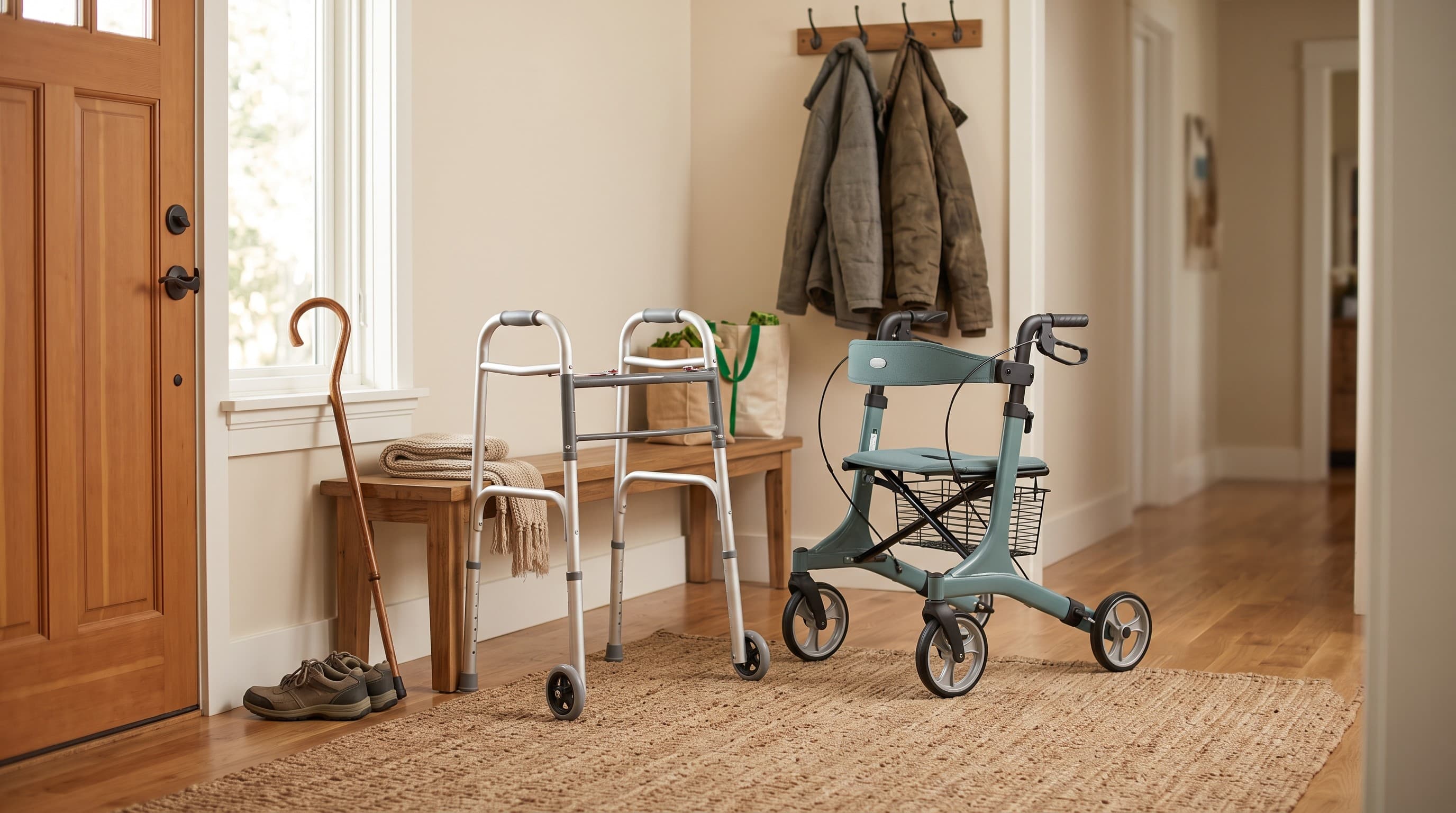
This guide explains comparing major mobility aid categories side by side. It is written for adult children, spouses, and caregivers who want clear recommendations without sales pressure or medical jargon. For a deeper dive into any single category, see our dedicated guides on walker types and cane vs. walker.
Some links may be affiliate links. We may earn a commission at no extra cost to you. See our affiliate disclosure.
How to use this comparison
Rather than starting with "which product should I buy," it helps to start with "what job does this person actually need done." A mobility aid is solving one of three fundamentally different problems: extra stability for short indoor distances, endurance support for longer trips, or full weight-bearing assistance when walking itself isn't safe. Each category below fits one of those jobs — matching the category first, then narrowing down to a specific model within it, tends to prevent the most common and expensive mistakes.
Canes
A cane is the lightest-touch option, best suited to mild balance concerns or extra support on one weaker side, when overall walking ability is otherwise fairly reliable. It's the right starting point for someone who occasionally feels unsteady on uneven ground or after standing for a while, but who doesn't need a wide base of support for most of their daily movement.
The tradeoff is that a cane offers a single point of ground contact, so it isn't designed to compensate for significant instability affecting both legs, or for the kind of sudden balance loss that can accompany certain neurological conditions — in those cases, a walker's wider base is the safer match even if a cane feels like the more dignified or convenient choice.
Walkers and rollators
This category covers a wide range, from a standard four-point walker with no wheels (maximum stability, requires lifting) to a wheeled rollator with a seat and hand brakes (much easier to move, requires the coordination to operate brakes safely). What unites the category is a much wider base of support than a cane, which makes it the right fit for anyone whose instability affects both legs or whose balance has become less predictable overall.
The right choice within this category depends heavily on arm strength (can they lift a frame, or do they need wheels), hand coordination (can they reliably squeeze a brake), and typical walking distance (a rollator's seat is genuinely useful for anyone who needs to rest partway through a longer walk).
Wheelchairs
A wheelchair becomes the right category once walking any meaningful distance is no longer safe or sustainable, whether due to severe balance issues, pain, fatigue, or a combination of conditions. Manual wheelchairs require either the user or a caregiver to propel them, while transport chairs (lighter, smaller wheels) are designed specifically to be pushed by someone else rather than self-propelled, which matters when comparing options.
This is also the category where a professional assessment tends to matter most, since wheelchair sizing (seat width, depth, and back height) affects both comfort and pressure-injury risk over time, and an ill-fitting chair used daily can create new problems rather than solving the original one.
Scooters and power options
A mobility scooter extends independent range for someone who can safely walk short distances at home but struggles with the longer distances involved in errands, appointments, or getting around a larger property. Unlike a wheelchair, scooters are generally used for community and outdoor mobility rather than continuous indoor use, since their turning radius and size make them less practical in tight indoor spaces like bathrooms or narrow hallways.
Because scooters are motorized and require steering, judgment, and reaction time similar to a bicycle, they're a poor fit for anyone with significant cognitive changes affecting decision-making or reaction speed, even if their physical strength would otherwise support the choice.
Cost and insurance coverage
Costs vary widely within each category, not just between them: a basic cane runs $15-30, a standard walker $30-60, and a rollator with seat and brakes typically $80-200, while wheelchairs and scooters range from a few hundred dollars for basic manual models into the thousands for power options with custom fitting.
Medicare Part B and many private insurance plans cover a portion of the cost for canes, walkers, and wheelchairs when a doctor documents medical necessity, though the specific coverage rules, required paperwork, and approved supplier networks vary by plan. It's worth asking the prescribing doctor's office about durable medical equipment (DME) coverage before purchasing out of pocket, since a covered device from an approved supplier can cost significantly less than the same category bought retail.
Choosing with a clinician
A physical or occupational therapist evaluation, often available through a doctor's referral and covered at least partially by Medicare or private insurance, directly tests grip strength, gait pattern, balance, and endurance — the actual variables that determine which category fits, rather than relying on how a device looks or what a well-meaning relative recommends. This is especially valuable after a hospital stay, a new diagnosis, or a recent fall, when the right category may have genuinely changed from what worked even a few months earlier.
Key takeaways
- Match the category (cane, walker/rollator, wheelchair, or scooter) to the actual mobility problem first — brand and model choice come second.
- Canes offload one side; walkers and rollators offer a wider base for broader instability; wheelchairs and scooters address distance and endurance limits rather than balance alone.
- Hand coordination and arm strength determine which sub-type within a category is actually usable, not just which one looks most supportive.
- A PT or OT evaluation is the fastest way to settle an uncertain choice, particularly after a fall, hospital stay, or new diagnosis.
Next steps for caregivers
If it's genuinely unclear which category fits, a professional evaluation is worth pursuing before purchasing anything — it typically costs far less than buying the wrong equipment and having to replace it. If a general direction is already clear, the individual category guides linked above go into the specific decision points for canes and walkers in more depth.
Frequently asked questions
Who should read this guide about mobility aids for seniors: complete comparison guide?
Is this a substitute for medical advice?
How soon should we make changes after a fall or near-fall?
Related guides
Mobility Aids
Types of Walkers for Seniors: How to Choose the Right One
Compare the 8 different types of walkers for seniors, from standard and rollator to knee and folding walkers, plus how to choose the right one for safe mobility.
Mobility Aids
Lightweight Walkers Explained: Pros and Cons for Seniors
Learn the pros and cons of lightweight walkers for seniors and how they support safe and comfortable mobility.
Mobility Aids
How to Choose the Right Walker for Indoor Use
Learn how to choose the best walker for indoor use. Discover key features, safety tips, and which walker types work best inside the home.
Mobility Aids
Walker Height Adjustment: Why It Matters for Senior Safety
Learn why proper walker height adjustment is essential for senior safety, balance, and comfort. Avoid strain and reduce fall risk with correct setup.