
Home Safety
Home Safety Checklist for Seniors: Room by Room Guide
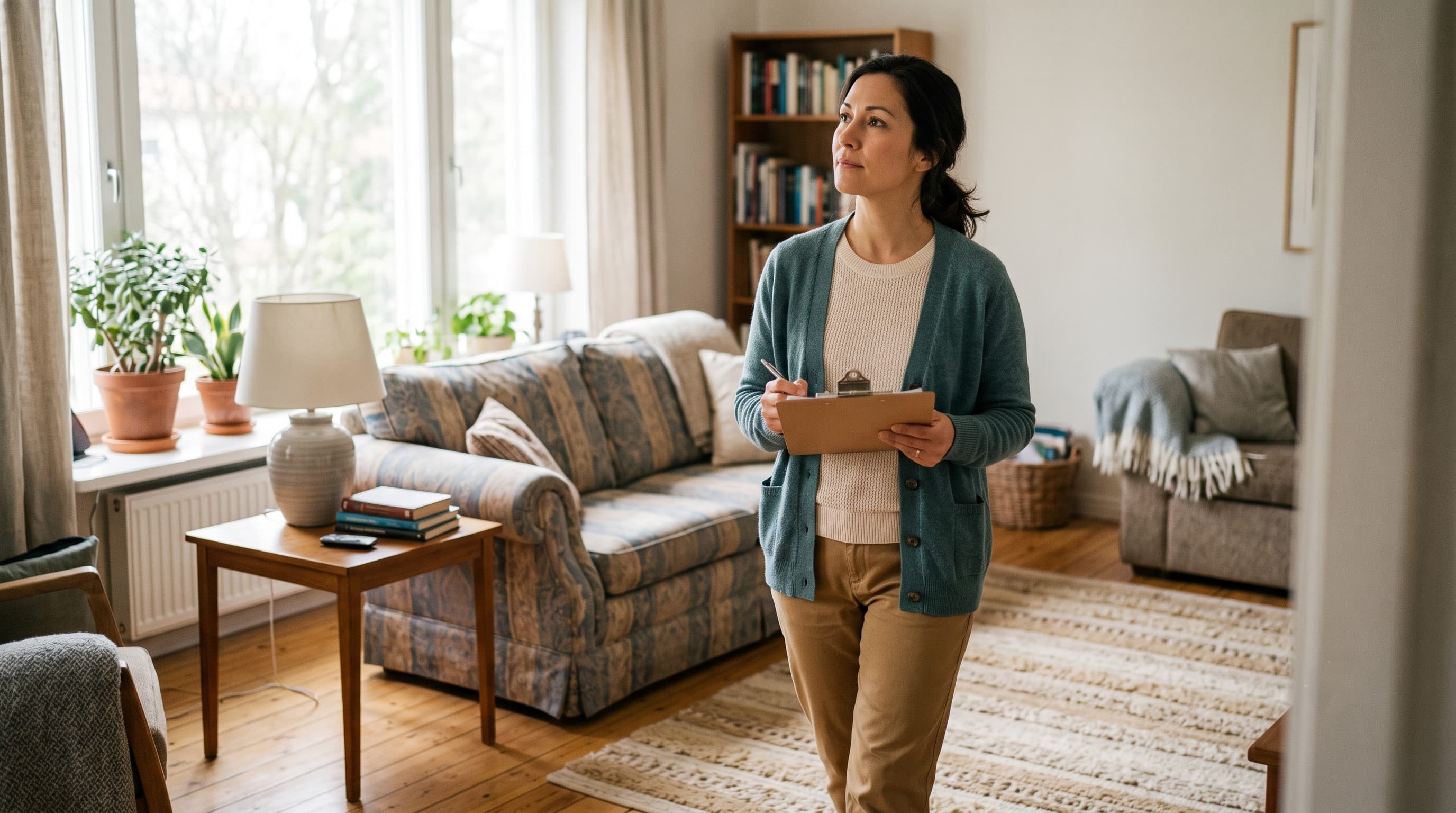
This guide explains a practical checklist families can run in one afternoon. It is written for adult children, spouses, and caregivers who want clear recommendations without sales pressure or medical jargon.
Some links may be affiliate links. We may earn a commission at no extra cost to you. See our affiliate disclosure.
How to use this checklist
The most useful version of this checklist isn't done from memory — it's done by physically walking each room, ideally at more than one time of day, since risks that are invisible in bright daytime light (a dim hallway, a loose rug edge) become obvious at dusk or at night. If possible, do the walkthrough with the older adult present rather than about them, since they often know which spots already feel unsteady, even if they haven't mentioned it.
Work room by room rather than trying to fix everything from a general mental list — it's easy to miss small but important details (a single loose stair tread, a rug edge that's curled for months) when trying to hold an entire house in your head at once.
Entry and living areas
Check the threshold at every exterior door for a raised lip or uneven transition, which is a common and often-overlooked trip point, especially in older homes. Loose area rugs without non-slip backing are worth either securing with rug tape or removing entirely, since a rug that slides even slightly underfoot is a genuine fall risk regardless of how attractive it looks.
Trailing cords from lamps, phone chargers, or space heaters across walking paths should be rerouted along walls rather than left crossing the floor. Finally, check that any frequently used seating (a favorite chair or sofa) is at a height that allows standing up without excessive pushing or rocking momentum — a seat that's too low can itself contribute to falls during the standing motion.
Kitchen hazards
Spills on hard flooring are an obvious risk, but the less obvious one is storage height: items used daily should be within easy reach without a step stool, since step stools are involved in a disproportionate number of home falls for older adults reaching for something on a high shelf. If frequently used items are currently stored high, moving them to a lower shelf is a simple, no-cost fix.
Check that kitchen flooring, especially near the sink where splashing is common, isn't worn smooth or slick, and that any kitchen rugs or mats have a non-slip backing that's still intact (backing can degrade and lose grip over years of washing).
Bedroom checklist
Bed height matters more than most people expect: the mattress top should generally sit at a height where feet can reach the floor while seated on the edge, without a jump down or a climb up. A bed that's too high or too low changes the mechanics of getting in and out in ways that affect fall risk.
The path from bed to bathroom door should be completely clear of furniture, cords, or floor clutter, and should have a light source reachable without leaving the bed (a bedside lamp within arm's reach, or a plug-in night light along the path). A phone or call device within reach of the bed is also worth confirming, in case help is needed overnight.
Bathroom checklist
The bathroom deserves particular attention since it combines hard, often-wet flooring with the physical demands of sitting, standing, and stepping over a tub wall. Check for a non-slip bath mat both inside and immediately outside the tub or shower, adequate lighting that doesn't leave the shower area in shadow, and whether grab bars are present at the toilet and shower — if not, our grab bar placement guide covers exactly where they're most useful.
Also check under-sink and cabinet storage for anything requiring an awkward bend or reach, since bathroom falls often happen not during bathing itself but while reaching for a towel or toiletry stored in a difficult spot.
Stairs and follow-up
Every staircase used regularly should have a secure handrail running its full length (not just partway), good lighting at both the top and bottom, and clear visual contrast between the edge of each step and the rest of the tread, especially important for anyone with reduced depth perception. Loose carpet or a worn stair runner is worth fixing immediately, since a single unstable step undermines the safety of the entire staircase.
Once the full walkthrough is done, the most useful next step is turning the notes into a short, prioritized list: which issues are urgent (a loose rug, a missing handrail) versus which are longer-term upgrades (a full bathroom renovation). Tackling the urgent list first, even if the bigger projects take longer to plan and budget for, addresses the highest-risk items right away.
Footwear and lighting, checked everywhere
Two items are worth checking across every room rather than room by room: footwear and overall lighting. Loose slippers, socks alone on hard flooring, or shoes with worn-down soles contribute to falls regardless of how safe the room itself is, so it's worth confirming the person has supportive, well-fitted footwear or non-slip socks for regular use at home, not just for outings.
Lighting deserves a whole-house pass separate from the room-by-room walkthrough: check that light switches are reachable without navigating a dark room first (a switch just inside a doorway, not across the room), that bulbs are bright enough for aging eyes without creating harsh glare, and that any burned-out bulbs get replaced immediately rather than left for "next time."
Key takeaways
- Walk each room in person, ideally at more than one time of day, rather than relying on memory alone.
- Kitchen step-stool use, bedroom bed height, and bathroom grab bars are commonly overlooked compared to more obvious hazards like loose rugs.
- Separate findings into urgent fixes versus longer-term upgrades, and tackle the urgent list first.
- Redo the walkthrough after any fall, hospital stay, or noticeable change in balance or strength, since a home that was safe six months ago may not be today.
Next steps for caregivers
Print or save this checklist and actually walk through it room by room rather than treating it as a mental reference — a physical walkthrough consistently catches details that reviewing a list from memory misses. If several rooms turn up genuine hazards, prioritize by risk (bathroom and stairs first, in most homes) rather than trying to fix everything in a single weekend.
Frequently asked questions
Who should read this guide about home safety checklist for seniors: room by room guide?
Is this a substitute for medical advice?
How soon should we make changes after a fall or near-fall?
Related guides
Home Safety
How to Prevent Slips and Falls at Home for Seniors
Learn how to prevent slips and falls at home for seniors with this room-by-room guide covering bathrooms, bedrooms, staircases, lighting, and more.
Home Safety
Fall Prevention Exercises for Seniors at Home
Discover the best fall prevention exercises for seniors at home. This complete guide covers seated, standing, and balance exercises that reduce fall risk and build strength.
Home Safety
Best Night Lights for Seniors to Prevent Falls
Discover the best night lights for seniors, where to place them, and which types prevent falls most effectively. A complete guide to senior home night lighting.
Home Safety
Bedroom Safety for Seniors: Complete Guide to Preventing Nighttime Falls
Complete bedroom safety guide for seniors covering bed height, bed rails, night lighting, flooring, furniture placement, and emergency access to prevent nighttime falls.