
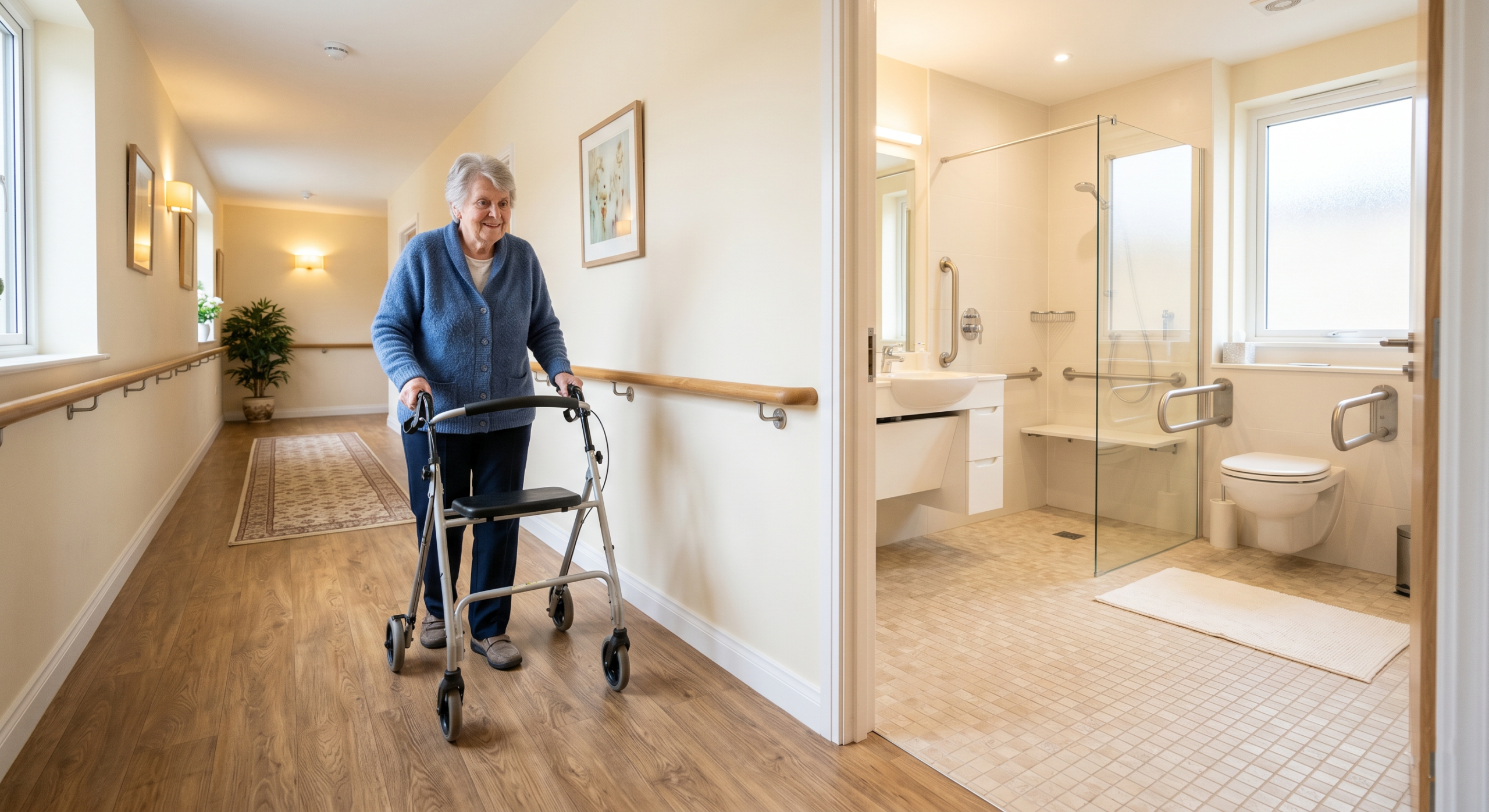
Flooring is one of the most overlooked fall risk factors in senior homes. The wrong flooring surface — smooth tile, polished hardwood, or loose rugs — creates significant slip risk during everyday movement. The right flooring provides reliable grip, reduces fatigue, and gives seniors the confidence to move freely throughout their home.
This guide covers the best non-slip flooring options for seniors in every room, what to look for, and practical solutions for improving existing floors without full replacement.
A Note From Margaret Collins
Flooring is something families rarely think about until after a fall. In my home safety assessments, I find dangerous flooring in almost every senior home I visit — polished tiles in the bathroom, smooth hardwood in the hallway, loose rugs in the bedroom. The good news is that most flooring safety problems can be fixed without replacing the floor entirely. Non-slip treatments, mats, and surface additions can transform a dangerous floor into a safe one at a fraction of the cost of replacement. This guide covers both full replacement options and practical quick fixes.
Why Flooring Matters So Much for Senior Safety
Senior falls on hard flooring surfaces cause the most serious injuries — hip fractures, head injuries, and wrist fractures from instinct-driven attempts to break the fall. The combination of reduced balance, slower reaction time, and reduced bone density makes hard slippery floors particularly dangerous for seniors.
According to the Centers for Disease Control and Prevention (CDC), slippery and uneven surfaces are among the leading environmental contributors to senior falls at home. Flooring modification is one of the most direct and cost-effective fall prevention measures available.
What Makes Flooring Safe for Seniors
Not all non-slip flooring is equal. The safest flooring for seniors has these characteristics:
Slip resistance — The surface provides reliable grip whether dry or wet. Measured by the coefficient of friction (COF). A COF of 0.6 or higher is recommended for senior homes.
Cushioning — Softer flooring surfaces reduce injury severity when a fall does occur. Vinyl, cork, and carpet all provide more cushioning than tile or hardwood.
Low maintenance — Flooring that requires frequent waxing or polishing creates slip hazards. Choose surfaces that maintain their grip with standard cleaning.
Even surface — No raised edges, uneven joints, or height transitions between rooms that can catch a foot or walker tip.
Visibility — High contrast between the floor and walls or furniture helps seniors with reduced vision navigate safely.
Best Flooring Options for Senior Homes
1. Luxury Vinyl Plank (LVP) — Best Overall Choice
Luxury vinyl plank is the single best flooring option for most senior homes. It combines slip resistance, cushioning, durability, and low maintenance in one product.
Why it works for seniors:
- Naturally slip-resistant surface even when slightly damp
- Softer underfoot than tile or hardwood, reducing fall injury severity
- Water-resistant — ideal for kitchens and bathrooms
- Easy to clean without waxing or polishing
- Available in realistic wood and stone appearances
- Relatively affordable compared to hardwood or tile
Best rooms for LVP: Kitchen, hallway, living room, bedroom
Recommended option: LifeProof Luxury Vinyl Plank is widely used in senior homes for its combination of slip resistance, waterproofing, and durability. Available at most home improvement stores.
2. Cork Flooring — Best for Cushioning
Cork is a natural flooring material that provides excellent cushioning underfoot. It is softer than any hard flooring option, which significantly reduces injury severity in the event of a fall.
Why it works for seniors:
- Naturally cushioned surface absorbs impact
- Slightly textured surface provides reasonable grip
- Warm and comfortable underfoot
- Sound-absorbing — reduces noise from walker tips and footsteps
- Naturally antimicrobial
Limitation: Cork requires sealing to resist moisture. Unsealed cork in wet areas becomes slippery and can deteriorate quickly.
Best rooms for cork: Bedroom, living room, home office
3. Textured Ceramic or Porcelain Tile — Best for Bathrooms
Smooth tile is one of the most dangerous surfaces for seniors. However, textured or matte-finish tile provides good slip resistance and is the most practical choice for bathrooms and kitchens where water resistance is essential.
What to look for:
- Matte or textured finish — never polished or glazed smooth
- Small format tiles with more grout lines provide better grip than large format tiles
- COF rating of 0.6 or higher for wet areas
- R10 or higher slip resistance rating for bathroom use
Recommended option: Daltile Retro Floor Tile in matte finish provides reliable wet grip and is widely used in senior bathroom renovations for its slip resistance and durability.
Best rooms for textured tile: Bathroom, shower floor, kitchen
4. Low-Pile Carpet — Best for Bedrooms
Carpet provides the best cushioning of any flooring material and is the safest surface in the event of a fall. However, not all carpet is appropriate for seniors.
What to look for:
- Low pile height — Less than half an inch. High pile or shag carpet catches walker tips and cane tips, creating trip hazards.
- Dense construction — Firm carpet that does not compress significantly underfoot provides better stability than soft plush carpet.
- Secure installation — Wall-to-wall carpet with no loose edges or raised seams.
Avoid: Loose area rugs on top of carpet, high-pile or shag carpet, carpet with thick cushioning that causes instability when standing.
Best rooms for low-pile carpet: Bedroom, living room
5. Rubber Flooring — Best for Garages and Utility Areas
Rubber flooring provides excellent slip resistance and cushioning. It is commonly used in gyms and commercial spaces but is increasingly popular in senior home utility areas and garages.
Why it works for seniors:
- Extremely high slip resistance even when wet
- Excellent cushioning in the event of a fall
- Durable and easy to clean
- Available in interlocking tile format for easy DIY installation
Best rooms for rubber flooring: Garage, utility room, basement
Room by Room Flooring Recommendations
Bathroom The bathroom is the highest priority room. The combination of water, smooth surfaces, and physical exertion makes it the most dangerous floor in the home.
For a full breakdown, see our complete guide to bathroom flooring safety for seniors.
- Best choice: Textured matte porcelain tile with R10 or higher slip rating
- Quick fix: Non-slip bath mat inside shower, non-slip mat outside shower, non-slip strips across the full shower floor
Recommended option: The Vive Non-Slip Bath Mat uses strong industrial suction cups and covers the full shower floor area, providing immediate grip improvement without tile replacement.
Kitchen Kitchen floors become dangerous when wet from spills or cooking. Slip-resistant flooring that is easy to clean is the priority.
- Best choice: Luxury vinyl plank or textured tile
- Quick fix: Anti-fatigue mat in front of the sink and stove, immediate cleanup of all spills
Bedroom The bedroom floor between the bed and the bathroom door is walked on multiple times every night in low light conditions.
- Best choice: Low-pile wall-to-wall carpet or luxury vinyl plank
- Quick fix: Remove all loose rugs, add non-slip strips along the walking path
Hallway Hallways connect all rooms and are walked through multiple times daily. They must be safe for walker and cane use.
- Best choice: Luxury vinyl plank or low-pile carpet
- Quick fix: Remove any rugs, ensure all carpet edges are fully secured, eliminate any height transitions between rooms
Living Room Living rooms typically have more furniture obstacles than other rooms. A stable, slip-resistant surface is essential.
- Best choice: Low-pile carpet or luxury vinyl plank
- Quick fix: Remove all loose rugs and area rugs, or secure them fully with non-slip backing and carpet tape on all edges
Quick Fix Solutions for Existing Floors
Full floor replacement is not always necessary or practical. These quick fix solutions significantly improve existing floor safety at low cost.
Anti-slip floor treatment
Non-slip floor treatments are clear liquids applied to existing tile or hardwood that create a micro-texture on the surface, improving grip without changing the floor’s appearance.
Non-slip area rug backing
If rugs cannot be removed, use both non-slip backing AND carpet tape on all four edges. This significantly reduces movement but does not eliminate all risk.
Non-slip stair treads
Stair treads add grip to each step surface and provide visual contrast that helps seniors judge step edges clearly.
Recommended option: The Electriduct Non-Slip Stair Treads adhere firmly to most stair surfaces and are available in colors that contrast clearly with most stair finishes.
Transition strips between rooms
Any height difference between floor surfaces in adjacent rooms is a trip hazard. Install beveled transition strips to create a smooth, flush transition at every doorway.
Flooring to Avoid in Senior Homes
These flooring types create specific safety risks for seniors and should be avoided or replaced:
Polished hardwood or laminate — Beautiful but extremely slippery, especially with socks. If keeping hardwood, apply non-slip floor treatment and enforce non-slip footwear.
Large format smooth tile — Fewer grout lines means less grip. Large polished tiles are among the most dangerous surfaces for seniors.
High-pile or shag carpet — Catches walker tips and cane tips. Creates instability when standing.
Loose area rugs — The single most common trip hazard in senior homes. Remove entirely rather than adding non-slip backing.
Vinyl sheet flooring when worn — Old sheet vinyl becomes slippery as the surface texture wears away. Replace rather than treat.
Frequently Asked Questions
What is the safest flooring for seniors? Luxury vinyl plank is the safest overall flooring choice for most senior home areas because it combines slip resistance, cushioning, water resistance, and durability. For bathrooms specifically, textured matte porcelain tile with an R10 or higher slip rating is the best choice.
Is carpet safer than hardwood for seniors? Yes. Low-pile wall-to-wall carpet is safer than hardwood for seniors because it provides cushioning that reduces injury severity in the event of a fall. However, carpet must be low pile and firmly installed — loose rugs and high-pile carpet are more dangerous than hardwood.
How can I make tile floors less slippery for seniors without replacing them? Apply a non-slip floor treatment to existing tile. These clear treatments create a micro-texture on smooth surfaces that improves grip significantly without changing the floor’s appearance. Adding non-slip mats in wet areas provides immediate improvement.
Are area rugs safe for seniors? Loose area rugs are not safe for seniors and should be removed. If an area rug must be kept for warmth or comfort, use both non-slip backing and carpet tape on all four edges, and choose a very low-pile rug with no fringe or raised edges.
What flooring is best for seniors who use walkers? Hard, smooth flooring with a non-slip surface is best for walker users because walker tips grip it reliably. Luxury vinyl plank is ideal. Avoid thick carpet as it increases the effort required to push a walker and can cause walker tips to catch.
Conclusion
The right flooring significantly reduces fall risk for seniors throughout the home. Luxury vinyl plank provides the best combination of safety features for most rooms. Textured matte tile is the correct choice for bathrooms. Low-pile carpet provides the best cushioning for bedrooms.
Where full floor replacement is not practical, non-slip treatments, mats, and transition strips provide meaningful safety improvements at low cost. Removing all loose rugs — at no cost — is the single most impactful flooring change any senior home can make immediately.
1 thought on “Best Non-Slip Flooring for Seniors: Room by Room Guide”
Comments are closed.