
Paste this full content now:
Installing grab bars in the correct locations throughout the home is one of the most effective ways to prevent falls and improve daily independence for seniors and individuals with disabilities. The challenge is knowing exactly where to place them — the wrong location provides little benefit, while the right location can prevent a life-changing fall.
This complete guide covers the correct handicap grab bar locations for every room in the home, with specific measurements and placement recommendations.
A Note From Margaret Collins
Grab bar placement is something I feel strongly about because I have seen the consequences of getting it wrong. A grab bar installed in the wrong position gives a false sense of security — the senior reaches for it at the wrong moment and it is not where they need it. I have also seen grab bars installed correctly transform a senior’s confidence in their own home. The difference between correct and incorrect placement is often just a few inches, but those inches matter enormously.
Why Grab Bar Location Is Everything
A grab bar only helps if it is exactly where the person needs it at the moment they need support. This means thinking carefully about every movement a senior makes throughout the day — stepping into the shower, sitting on the toilet, getting up from bed — and placing bars to support each of those specific moments.
According to the American Journal of Preventive Medicine, installing grab bars in the bathroom reduces bathroom fall risk by up to 60%, making them one of the most evidence-backed home safety investments available for seniors.
Bathroom Grab Bar Locations
The bathroom is the highest priority room for grab bar installation. It combines wet surfaces, smooth floors, and physically demanding movements into the most dangerous room in the home.
Toilet Area
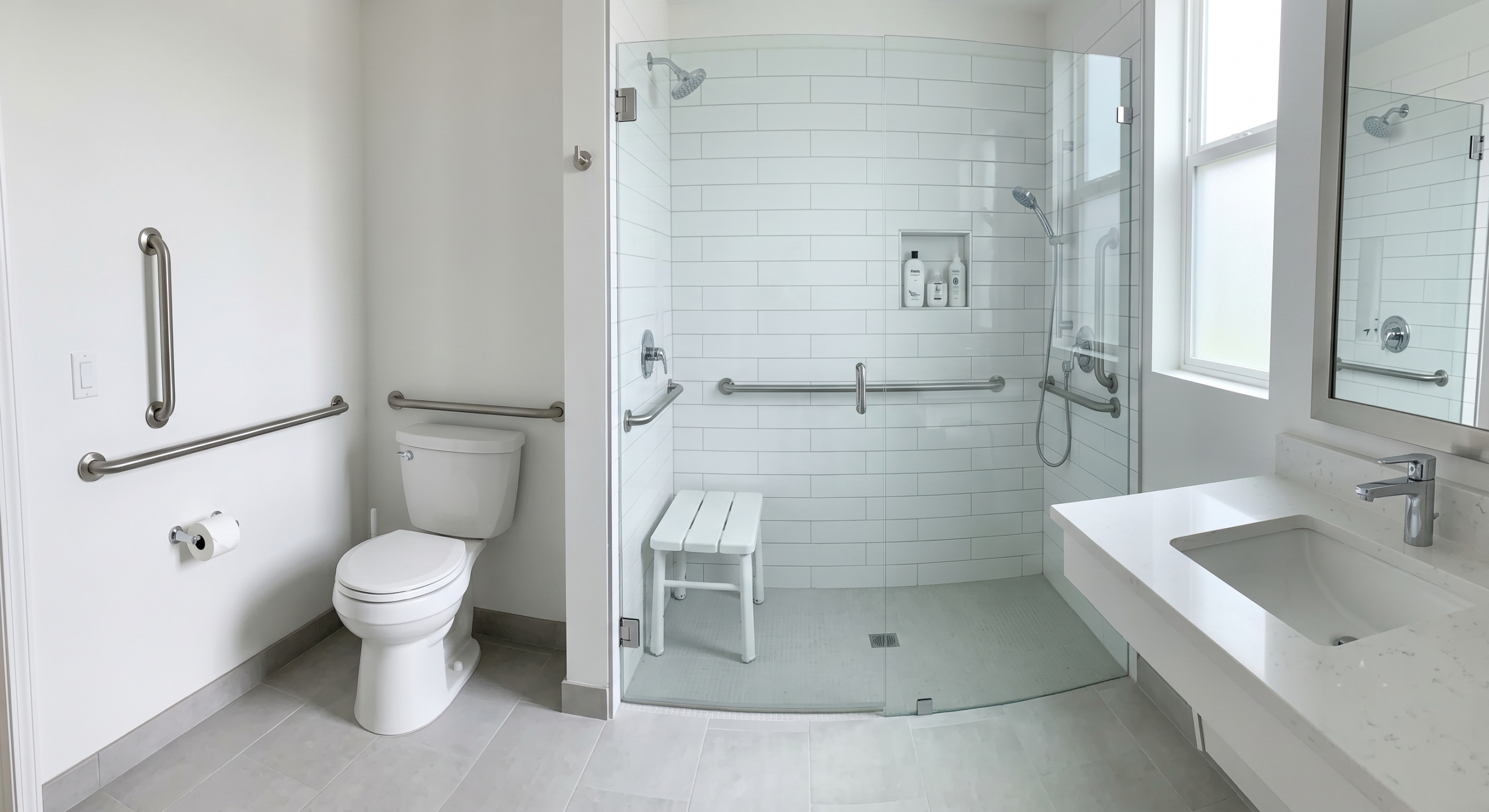
Side wall bar — most important installation
- Mount a horizontal bar on the wall beside the toilet
- Height: 33 to 36 inches from the floor
- Length: 36 to 42 inches
- The bar should run parallel to the floor and extend from behind the toilet seat to in front of it
- Position on the dominant hand side of the senior if possible
Rear wall bar
- Mount a horizontal bar on the wall directly behind the toilet
- Height: 33 to 36 inches from the floor
- Length: 24 to 36 inches
- Centre the bar directly behind the toilet seat
Recommended option: The Moen Home Care 42-Inch Grab Bar is one of the most widely installed toilet-area grab bars, with a 500 lb weight capacity and available in chrome, brushed nickel, and white finishes. It mounts into wall studs for maximum security.
Shower Area Grab Bar Locations
Shower entry bar
- Mount a vertical bar at the shower entry point on the wall beside the door opening
- Height: 34 to 48 inches from the floor
- This bar supports the senior as they step in and out of the shower
Horizontal shower bar
- Mount a horizontal bar on the side wall inside the shower
- Height: 33 to 36 inches from the floor
- This bar provides support while the senior is standing and washing
Angled shower bar
- An angled bar mounted diagonally supports both the stepping-in phase and the standing phase
- Mount at approximately 45 degrees with the lower end at 28 to 30 inches and the upper end at 48 to 52 inches from the floor
Recommended option: The Moen Home Care Angled Grab Bar is designed specifically for shower installations, providing grip support during both the entry and standing phases with a textured surface for wet grip.
Bathtub Grab Bar Locations
Bathtub entry bar
- Mount a vertical bar on the wall at the entry end of the bath
- Height: 34 to 48 inches from the floor
- This supports the senior as they step over the tub edge
Bathtub side bar
- Mount a horizontal bar on the long wall of the bathtub
- Height: 33 to 36 inches from the floor
- This supports the senior while seated in the bath and when standing up
Bedroom Grab Bar Locations
Many falls happen in the bedroom, particularly when seniors get in and out of bed at night.
Bedside bar
- Mount a vertical or angled bar on the wall next to the bed
- Position so the senior can reach it easily from a lying position
- Height: 28 to 36 inches from the floor at the grip point
- The bar should help the senior push themselves from lying to sitting, and from sitting to standing
Alternative: A floor-mounted bed safety rail attached to the bed frame provides similar support without wall mounting — useful for renters or situations where wall modification is not possible.
Staircase Grab Bar Locations
Staircases are among the most dangerous areas in any senior home.
Stair handrails
- Install handrails on both sides of every staircase
- Height: 34 to 38 inches above the stair nosing — the front edge of each step
- Handrails must run the full length of the staircase from top to bottom without interruption
- Extend horizontally at least 12 inches beyond the top and bottom steps
Recommended option: The Mophorn Stair Handrail is a popular wall-mounted option for indoor staircases, available in multiple lengths with a straightforward bracket installation system.
Hallway Grab Bar Locations
For long hallways, a continuous handrail along one wall provides support between rooms.
- Mount at 33 to 36 inches from the floor
- Run the full length of the hallway if possible
- For shorter hallways, a single grab bar near the doorway end provides a useful anchor point
Entrance and Exterior Grab Bar Locations
Door frame bar
- Mount a vertical bar on the wall adjacent to the entrance door
- Height: 34 to 48 inches from the floor
- Helps the senior balance while stepping over a threshold or navigating entry steps
Exterior step rail
- Install a handrail on at least one side of any exterior steps, preferably both
- Height: 34 to 38 inches above the step surface
How to Install Grab Bars Correctly
Correct installation is as important as correct placement. A grab bar mounted incorrectly will fail under load.
Always mount into wall studs
Wall studs provide the structural support needed for a grab bar to hold body weight safely. Use a stud finder to locate studs before drilling.
Stud spacing is typically 16 inches apart in most homes.
Minimum screw penetration into the stud should be at least 1.5 inches.
If studs are not in the right position, use specialist toggle bolts rated for the required load. Standard drywall anchors are never sufficient for grab bars.
Testing after installation
After mounting, apply firm downward and outward force to the bar. It must not move at all. A grab bar that shifts under pressure is dangerous and must be remounted.
Grab Bar Materials and Finishes
Stainless steel — Most durable and moisture-resistant. Recommended for all bathroom installations.
Chrome-plated steel — Strong, affordable, and the most common choice for bathroom grab bars.
Avoid plastic grab bars — Plastic decorative bars are not rated for body weight and should never be used for safety purposes.
Finish considerations: Choose textured or matte finishes for better grip, especially in wet shower and bath areas. Smooth polished finishes are more slippery when wet.
How Many Grab Bars Does a Senior Home Need?
A fully equipped senior home typically includes:
- 2 bars in the toilet area (side wall and rear wall)
- 2 to 3 bars in the shower or bath area
- 1 to 2 bars in the bedroom
- Continuous handrails on all staircases
- 1 bar at the home entrance
- 1 bar in long hallways
Frequently Asked Questions
What height should handicap grab bars be installed? The standard height for horizontal grab bars is 33 to 36 inches from the floor. Stair handrails should be mounted at 34 to 38 inches above the stair nosing.
How far should a grab bar be from the toilet? The side wall grab bar should be within easy reach from the toilet seat — typically 6 to 8 inches from the centre of the toilet to the bar.
Do grab bars need to be installed by a professional? Not necessarily, but they must be mounted correctly into wall studs or with load-rated anchors. If there is any uncertainty, hire a professional. Many local councils and disability organisations offer grab bar installation assistance for seniors at low or no cost.
Are suction cup grab bars safe for seniors? No. Suction cup grab bars are not reliable enough for fall prevention. They can release without warning. Only permanently mounted grab bars should be used for safety purposes.
What is the difference between a grab bar and a towel rail? A grab bar is specifically engineered to support body weight and is mounted into structural supports. A towel rail is decorative only and will fail if used for support. Never use a towel rail as a grab bar.
How much weight must a grab bar support? Grab bars should be installed to support a minimum of 250 lbs of force in any direction. Quality grab bars and correct installation easily exceed this standard.
Conclusion
Correct handicap grab bar locations throughout the home create a network of support that significantly reduces fall risk for seniors and individuals with disabilities. The bathroom remains the highest priority, but bedrooms, hallways, staircases, and entrances all benefit from strategically placed grab bars.
Follow the standard height recommendations, always mount securely into structural supports, and test every installation before use. A properly equipped home gives seniors the confidence to move safely and independently throughout their daily lives.