
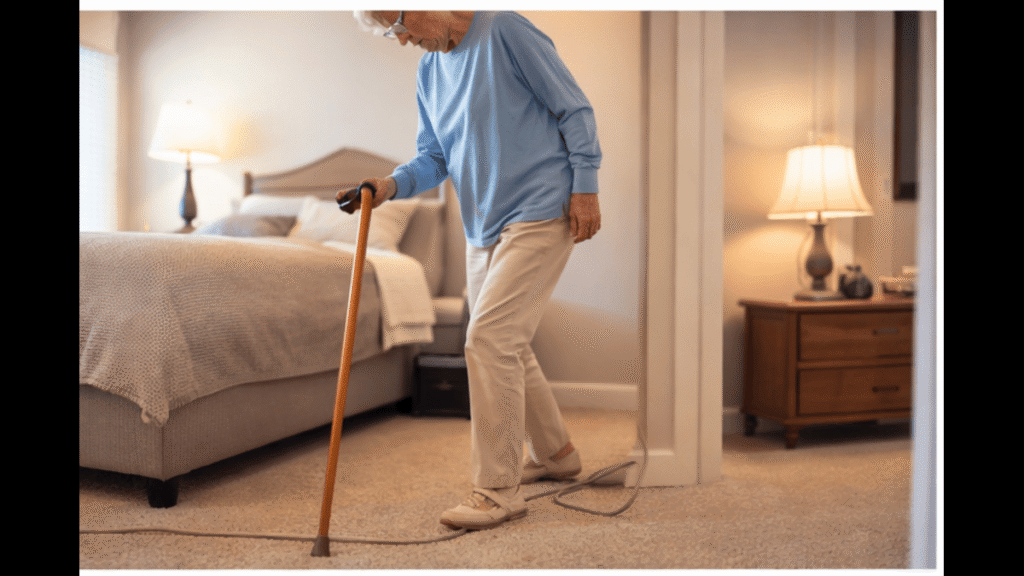
Quick Answer: The most effective ways to prevent slips and falls at home for seniors are installing grab bars in the bathroom, removing all loose rugs, adding non-slip mats in the shower and bathroom floor, improving night lighting on the path from bedroom to bathroom, and securing all loose carpeting on stairs. According to the CDC, approximately 80% of serious senior falls occur in the bathroom — making it the highest priority room to address first.
Falls are the leading cause of injury among seniors. According to the Centers for Disease Control and Prevention, one in four adults over 65 experiences a fall each year. The good news is that most falls at home are preventable with practical, targeted changes to the living environment.
This guide covers every room in the home with specific, actionable steps to reduce fall risk for seniors.
A Note From Margaret Collins
In my years working with senior families, bathroom falls are the single most preventable tragedy I encounter. I have visited homes where the only thing standing between a senior and a serious hip fracture was the absence of a single grab bar. The changes in this guide are not expensive or complicated — but they are genuinely life-changing. I have seen them make the difference between a senior staying in their own home and being moved to assisted living.
Why Seniors Are at Higher Risk of Falls
Several factors make seniors more vulnerable to falls:
- Reduced muscle strength and balance
- Slower reflexes and reaction time
- Vision changes that affect depth perception
- Medication side effects including dizziness
- Chronic conditions such as arthritis, Parkinson’s disease, or diabetes
- Improper footwear or walking aids
Understanding these risk factors helps identify which home changes will have the greatest impact.
The Most Dangerous Areas in the Home
Not all rooms carry equal risk. These areas cause the most senior falls:
Bathroom — wet surfaces, low toilet seats, and no grab bars make this the highest risk room in the home.
Bedroom — falls often happen when getting in and out of bed, especially at night in low light.
Staircase — stairs require significant balance and leg strength, and poor lighting makes them especially dangerous.
Kitchen — reaching for high shelves, wet floors, and bending down to low cabinets all create risk.
Hallways — inadequate lighting and loose rugs are common causes of hallway falls.
Bathroom Safety: The Highest Priority
The bathroom is where the majority of serious senior falls occur. These changes make the biggest difference:
Install grab bars — Place grab bars next to the toilet and inside the shower or bath. Grab bars must be mounted into wall studs to support body weight. Towel rails are not a substitute — they will pull away from the wall.
Recommended option: The Moen Home Care Grab Bar is one of the most trusted bathroom safety brands, available in multiple lengths and finishes, with a weight capacity of 500 lbs when correctly installed.
Use a non-slip bath mat — Place a rubber non-slip mat inside the shower or bath. Place a separate non-slip mat on the floor outside.
Recommended option: The Vive Non-Slip Bath Mat uses strong suction cups and a textured surface specifically designed for senior safety, covering the full shower floor area.
Install a walk-in shower — If possible, replace a bathtub with a walk-in shower. Stepping over a bathtub edge is one of the most common causes of serious falls.
Add a shower chair or bench — A shower chair allows seniors to wash while seated, eliminating the risk of losing balance while standing on wet surfaces.
Raise the toilet seat — A raised toilet seat reduces the effort required to sit down and stand up, significantly reducing fall risk.
Check the floor — Bathroom flooring should be non-slip. If tiles are smooth, apply non-slip strips or replace with textured flooring.
Bedroom Safety
Many bedroom falls happen in the middle of the night when seniors get up to use the bathroom.
Install a night light — Place a night light between the bedroom and the bathroom so the path is always visible without turning on bright overhead lights.
Check the bed height — The bed should be at a height where the senior can sit on the edge with feet flat on the floor. If the bed is too high or too low, use bed risers or a lower bed frame.
Clear the path — Remove any items between the bed and the bathroom door. This includes loose rugs, furniture, and electrical cords.
Use a bed rail — A bed rail gives seniors something to hold while getting in and out of bed, significantly reducing fall risk during this vulnerable moment.
Keep essentials within reach — Phone, glasses, and any medications needed at night should be on the bedside table so the senior never has to get up unexpectedly.
Living Room and Common Areas
Remove loose rugs — Loose rugs are one of the most common causes of trips and falls. Either remove them entirely or secure them with non-slip backing and double-sided tape.
Rearrange furniture — Create clear, wide pathways through every room. Remove low coffee tables, ottomans, or other items that can be tripped over.
Secure electrical cords — Tape cords to the wall or use cord covers. A loose cord across a walkway is a serious trip hazard.
Check chair and sofa height — Chairs that are too low make it difficult to stand up safely. Use chair risers or replace with higher seating if needed.
Staircase Safety
Install handrails on both sides — If the staircase only has one handrail, add a second on the other side. Both handrails should be secure and run the full length of the stairs.
Improve stair lighting — Install light switches at both the top and bottom of the stairs. Consider motion-sensor lighting that activates automatically.
Mark the edge of steps — Apply non-slip strips or contrasting tape to the edge of each step to make them clearly visible.
Remove clutter from stairs — Never store items on stairs, even temporarily. Any object on a stair is a fall waiting to happen.
Kitchen Safety
Reorganize storage — Move frequently used items to shelves and cupboards at waist to shoulder height. Avoid storing anything that requires reaching above the head or bending to floor level.
Use a grabber tool — A long-handled grabber allows seniors to reach items on high or low shelves without stretching or bending dangerously.
Clean spills immediately — Water, oil, or any liquid on a kitchen floor must be cleaned up immediately. Keep a mop or paper towels within easy reach.
Use a kitchen stool — If the senior needs to stand for extended periods while cooking, a tall kitchen stool allows them to sit while working at the counter.
Lighting Throughout the Home
Poor lighting is a major contributor to falls, especially at night. Every area of the home should be well lit.
- Install night lights in hallways, bathrooms, and bedrooms
- Use motion-sensor lights that activate automatically
- Replace dim bulbs with bright LED bulbs
- Ensure light switches are easy to reach at the entrance to every room
- Consider smart lighting that can be controlled by voice or remote
Footwear and Clothing
What a senior wears at home significantly affects fall risk.
- Never walk in socks on smooth floors
- Wear shoes or slippers with non-slip rubber soles at all times
- Avoid loose-fitting trousers or long robes that can catch underfoot
- Replace worn-out footwear that has lost its grip
Exercise and Strength
Home modifications alone are not enough. Physical strength and balance are equally important.
Regular exercise that improves balance and leg strength significantly reduces fall risk. Activities that help include:
- Walking daily, even short distances
- Chair-based exercises for strength
- Tai chi, which is proven to improve balance in seniors
- Physical therapy if recommended by a doctor
Medical Factors to Address
Some falls are caused or worsened by medical issues that can be managed.
Review medications — Some medications cause dizziness or affect balance. Ask a doctor to review all current medications for fall-related side effects.
Get vision checked — Poor vision is a significant fall risk. Annual eye examinations and updated glasses prescription can make a major difference.
Manage chronic conditions — Conditions such as low blood pressure, diabetes, and inner ear problems all affect balance. Proper management reduces fall risk.
Using Mobility Aids Correctly
If a senior uses a cane or walker, using it correctly is essential. An incorrectly used mobility aid can increase rather than decrease fall risk.
- Make sure the aid is the correct height
- Never lean too heavily on a cane
- Always engage the brakes on a rollator before sitting
- Replace worn rubber tips on walkers and canes immediately
When to Ask for a Home Safety Assessment
An occupational therapist can conduct a full home safety assessment and identify fall risks that are easy to miss. This is especially recommended after a fall has already occurred or when a senior’s mobility is declining.
A home safety assessment typically covers every room and provides specific recommendations tailored to the individual senior’s needs and home layout.
Frequently Asked Questions
What is the most common cause of falls in seniors at home? The most common causes are loose rugs, poor lighting, wet bathroom floors, and the absence of grab bars. Addressing these four areas alone significantly reduces fall risk.
How can I make my elderly parent’s home safer quickly? Start with the bathroom — install grab bars and non-slip mats. Then remove all loose rugs from the home. These two steps have the highest impact in the shortest time.
Are grab bars worth installing? Yes. Grab bars are one of the most effective and affordable fall prevention measures available. They must be properly installed into wall studs to be effective.
How often do seniors fall at home? One in four seniors over 65 falls each year. Falls are the leading cause of both fatal and non-fatal injuries in this age group.
Can exercise really prevent falls? Yes. Research consistently shows that balance and strength exercises significantly reduce fall frequency and severity in seniors. Even gentle daily walking makes a meaningful difference.
What flooring is safest for seniors? Non-slip flooring with a matte finish is safest. Avoid high-gloss tiles, polished wood, and loose rugs. Carpet provides more grip but must be well secured with no curling edges.
According to the CDC, about 80% of falls in seniors occur in the bathroom, with the majority happening while entering or exiting the shower or bath.
Conclusion
Preventing falls at home requires a whole-home approach. No single change is enough on its own — but a combination of bathroom safety improvements, better lighting, removal of trip hazards, appropriate footwear, and regular exercise can dramatically reduce the risk of falls for seniors.
Start with the highest-risk areas first — the bathroom, bedroom, and staircase — and work through the rest of the home systematically. Every change made is a step toward safer, more confident independent living.
7 thoughts on “How to Prevent Slips and Falls at Home for Seniors”
Comments are closed.